/images/avatar.png

Xiaopeng Xu, Ph.D.

Research Scientist @ KAUST · Agentic AI for scientific discovery, protein design & synthetic biology

Recent News

  • Sep 23, 2026, my Co-I Shaheen III Grand Challenge Project proposal on “Multi-Scale AI-MD-QM/MM Platform for Next-Generation Biologics Design” was appproved on Shaheen III GPU! Cheers!
  • Aug 2, 2026, my Co-I Translational Research Grants (TRG2026) on AI-based protein design solutions for industrial biologics and medical applications was funded by KAUST! ~1 million USD fund to support our research! Cheers!
  • Jun 23, 2026, started as a Research Scientist at SFB@KAUST.
  • Jun 8, 2026, Mater-trends — to track researches on material science — up and alive.
  • Jun 3, 2026, AI-trends — to track research trends on artificial intelligence — and Bio-trends — to track researches on bioscience — up and alive.
  • Mar 25, 2026, the first tool buddle in MacromNex, ProteinMCP — an agentic AI framework for autonomous protein engineering, published in Protein Science!
  • Mar 24, 2026, SegDesign — a framework for protein segment engineering — published in Protein Science.
  • Jan 22, 2025, AggNet — a Deep Learning method for protein aggregation prediction — published in Protein Science.
  • Oct 3, 2024, AutoBA — for multi-omics analysis with Agentic AI — published in Advanced Science.
  • Jul 18, 2024, SANTO — a method for alignment and stitching in spatial omics — published in Nature Communications.
  • Jun 12, 2024, HELM-GPT — de novo macrocyclic peptide design — published in Bioinformatics!
  • Jun 23, 2024, started as a Postdoctorate Research Fellow at SFB@KAUST.
  • May 13, 2024, my Co-I Shaheen III proposal on “Molecular dynamics simulations-enhanced AI for enzyme design and optimization” was appproved on Shaheen III CPU! Cheers!
  • May 5, 2024, defended my Ph.D Dissertation — “A ChatGPT-like solution for protein design: combining generative and predictive AI to design functional proteins”! Cheers!
  • Jun 28, 2023, SGPT-RL — for chemical drug design with GPT and RL — published in F1000Research!
  • Feb 20, 2023, AB-Gen — for antibody with GPT and RL — published in Genomics, Proteomics & Bioinformatics!
  • Nov 11, 2021, an AI guided review of 17 000 studies in COVID-19 computational research published in Briefings in Bioinformatics

Recent Notes

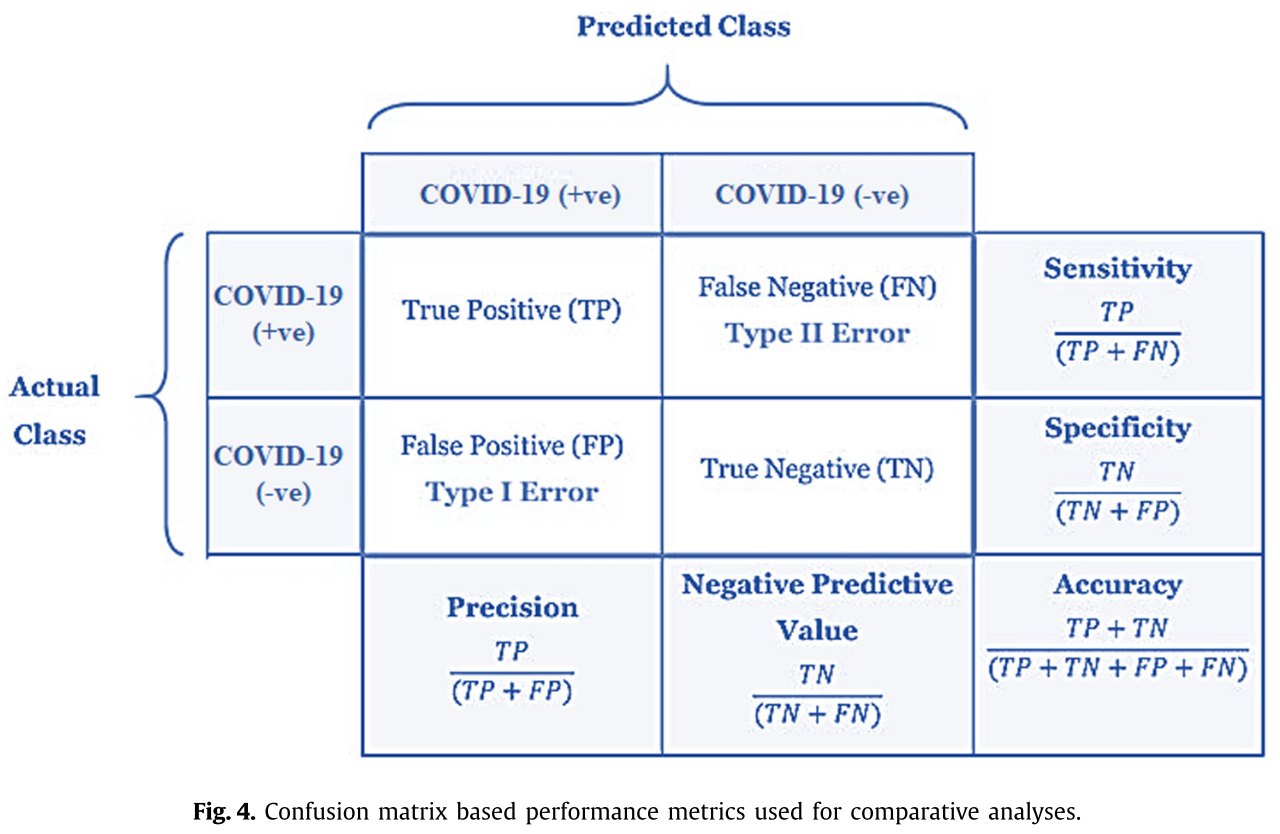
Metrics 评估指标

https://xux-zotero-img.oss-cn-beijing.aliyuncs.com/img/20260612235711658.png

准确性 Accuracy

Acc. = (TP + TN)/(TP + FP + TN + FN)

精确性 Precision or Positive Predictive Value (PPV)

PPV = TP / (TP + FP)

召回率/敏感性 Sensitivity, Recall, or True Positive Rate (TPR)

TPR = TP / (TP + FN)

特异性/选择性 Specificity, Selectivity, or True Negative Rate (TNR)

TNR = TN / (TN + FP)

Negative Predictive Value (NPV)

NPV = TN / (TN + FN)

Python 常用命令

Pandas 列过滤

用某列对 dataframe 做过滤

papers_dates[(papers_dates.preprint_test == True) & ~ papers_dates.acptDate.isna()]
# 两列做 or 运算
df_all_norm[(df_all_norm["CO2"] > 0.8) | (df_all_norm["CO"] > 0.8)]

用日期列对 dataframe 做过滤

papers_age[papers_age.pubDate >= "2028-03-01"]

用日期间隔列对 dataframe 做过滤

papers_dates[papers_dates.preprint_age > pd.Timedelta(30,'D')]

去除空列

df.dropna(subset=['name', 'toy'])

Pandas Dataframe 合并

同长 dataframe 合并

pd.concat([papers, CSCoV_scores], axis=1)

两个 dataframe 做 left outer join

papers_redup.merge(all_rxiv_redup[['subDate', 'title']], left_on='title', right_on='title',how='left')

Pandas 数据替换

值替换

df.replace([0, 1, 2, 3], [4, 3, 2, 1])

Pandas 数据查看/分析

展示长 string

pd.set_option('display.max_colwidth', None)

查看 string 是否在某个 string list 中

X_lxd[X_lxd.title.isin(selected)][['title', 'pub_prob']]

查看日期列数据分布

papers_dates[['subDate', 'acptDate', 'pubDate']].describe(datetime_is_numeric=True)

按某列倒序排列

X_lxd.sort_values(by='pub_prob', ascending=False)

Numpy 向量计算

标量和向量的加减乘除

x = np.random.rand(3,1)
1 + x # element-wise operation
1 - x
1 * x
1 / x

初始化向量或者矩阵 np.zeros, np.ones

x = np.zeros((10, 1))
x = np.ones((10, 1))

Mean, std,max,min,median

x = np.random.rand(3,1)
x.mean()
x.std()
x.max()
x.min()
np.median(x)

两个向量各对应元素求最大值

x = np.random.rand(3,1)
y = np.random.rand(3,1)
np.maximum(x, y) # also np.maximum(x, 0) broadcast by default
# Out: array([[0.88240057], [0.38776741], [0.72610557]])

向量和向量的运算 *, /, dot

x = np.random.rand(3,1)
y = np.random.rand(3,1)
x * y # element-wise multiplication, return vector (3,1), or np.multiply()
np.transpose(x).dot(y) # return scalar
x / y # element-wise division, return vector (3,1)

向量绝对值 absolute

np.absolute(np.random.rand(3, 2,2)-10)

Numpy 矩阵计算

矩阵重新设置大小 reshape

x = np.random.rand(3, 2,2)
x.shape   # (3, 2,2)
x.reshape(-1, 1) # a column vector, 1 f

# reshape a np.array of images
train_set_x_flatten = train_set_x_orig.reshape(train_set_x_orig.shape[0], -1).T

scipy 相关命令

truncnorm 分布区间矫准

将标准正态分布校准到区间 [a, b] 上

AI 在药物研发中的应用

Response to: AI has dispointed on Covid

Geeks piled in when the pandemic broke but great promise has not been fulfilled.

Need:

  • Data & Method

Result

  • CS: ChEMBL

  • Wet lab: Examining the data from the ChEMBL SARS-CoV-2 drug repurposing screens

Sources of data: Instrumental to the development of ML algorithms

  • Frank et al., In vitro screening of a FDA approved chemical library reveals potial inhibitors of SARS-CoV-2 replication

  • Tesia et al., Discovery of synergistic and antagonistic drug combinations against SARS-CoV-2 in vitro

智能系统调研

结论

大部分的 智能系统,主要是面向 “SDAF” 闭环中的 “A” 步骤。针对业务流程的具体任务,实现 AI 化,提升效率。

此外,很多大企业提供了 AI 开放平台,提供通用的 AI 云服务。

CL 对比学习介绍

对比学习简介 2021-01-07

参考:Understanding Contrastive Learning https://towardsdatascience.com/understanding-contrastive-learning-d5b19fd96607

对比学习是一种机器学习技术,通过教导数据点相似或不同,让模型无需标签就能学习到数据集的一般特征。

背景:和 word2vec 类似,将样本投射到另一个空间维度,成为一个 vector,相似的样本 cosine 距离小,不相似的距离大。