Xiaopeng Xu
AI 在药物研发中的应用
Response to: AI has dispointed on Covid
Geeks piled in when the pandemic broke but great promise has not been fulfilled.
Need:
- Data & Method
Result
CS: ChEMBL
Wet lab: Examining the data from the ChEMBL SARS-CoV-2 drug repurposing screens
Sources of data: Instrumental to the development of ML algorithms
Frank et al., In vitro screening of a FDA approved chemical library reveals potial inhibitors of SARS-CoV-2 replication
Tesia et al., Discovery of synergistic and antagonistic drug combinations against SARS-CoV-2 in vitro
Bernhard et al., Indentification of inhibitors of SARS-CoV-2 in-vitro cellular toxicity in human (Caco-2) cells using a large scale drug repurposing collection
ML methods: COVID-motivated trends
De-novo design: not relevant due to time constraints
Virtual screening: limited to safe compounds
Combinations are crucially important
Tight integration of biology and chemistry
Presentations
Learning the language of viral evolution and escape – Bonnie Berger (MIT, Science)
Problem: Viral escape
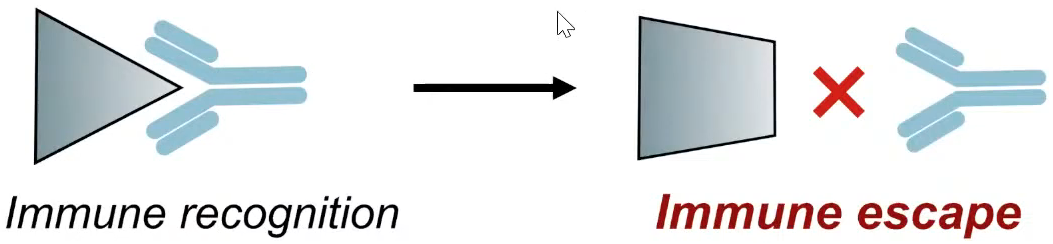
Alergy: Grammar & sematic change
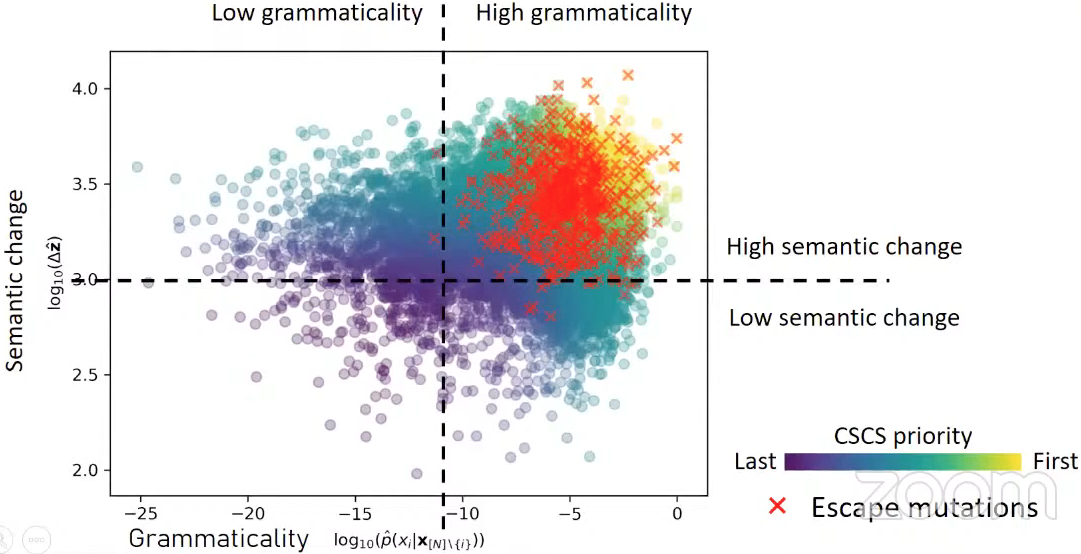
Novel approach: learn both “grammaticality” and “semantics” using lanaguage model
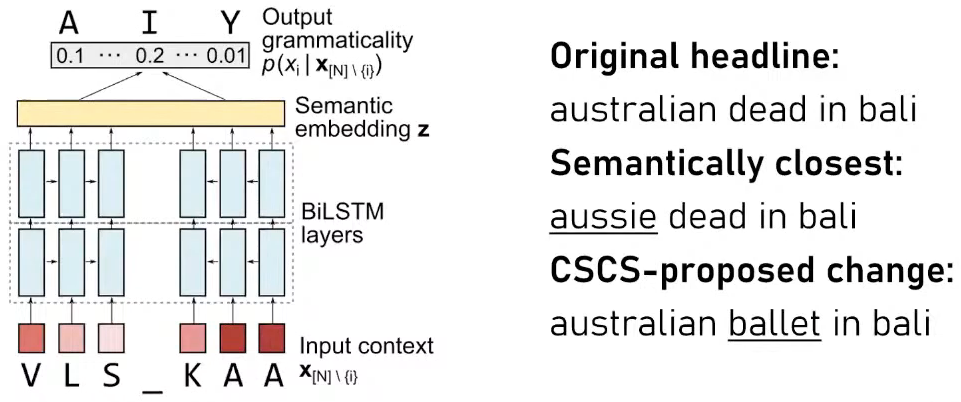
Results:
Learn viral sequence patterns
Learn “semantic embeddings” of viral sequences
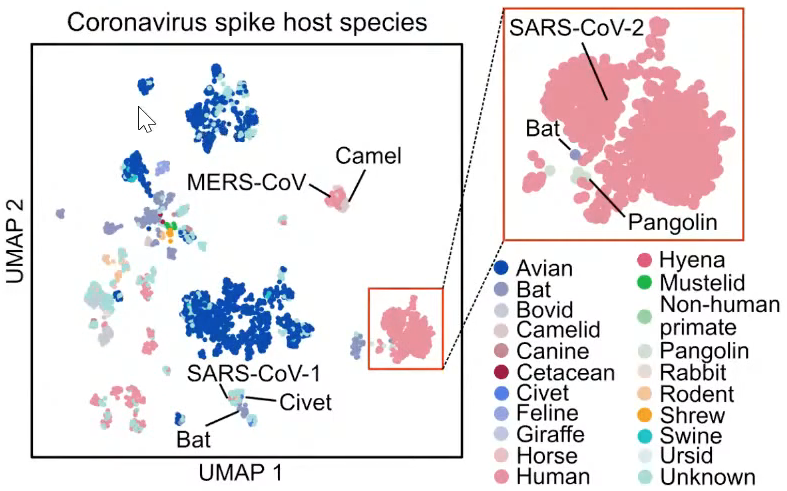
Zero-shot prediction of escape mutations
Model not trained on known escape mutations
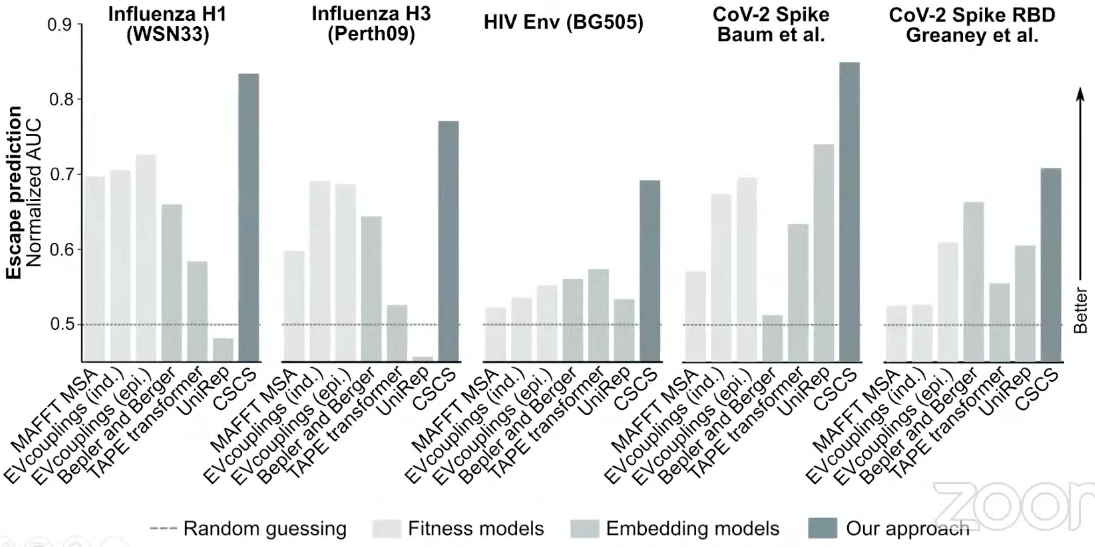
State-of-the-art preformance across viruses
Towards therapeutics and vaccines: identify target regions less prone to escape
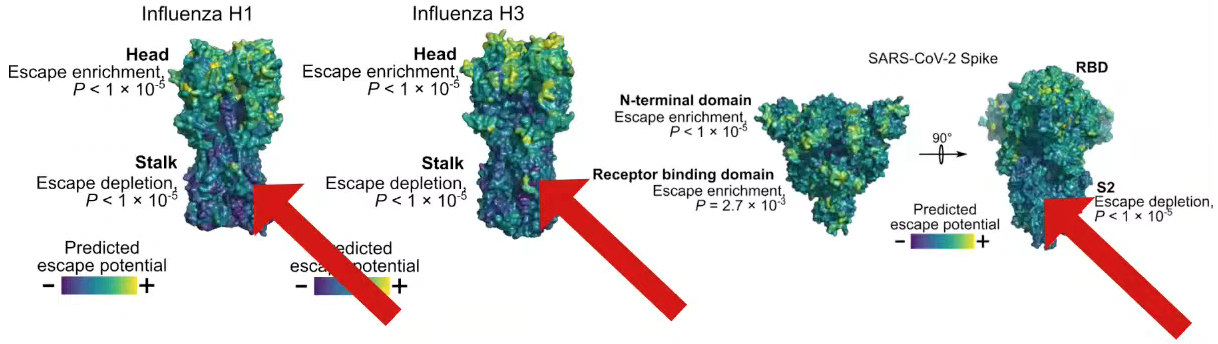 Language modelling can shed light on those parts of a protein not prone to escape
Software: viral language learning
https://github.com/brianhie/viral-mutation
Casual network models of SARS-CoV-2 and ageing for drug repurposing – Caroline Uhler (MIT, Nature communication)
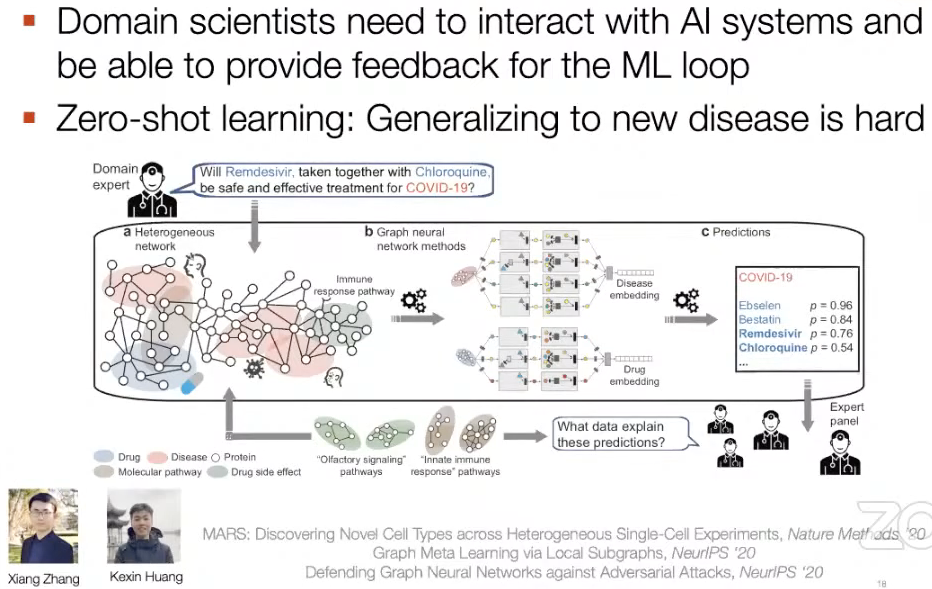
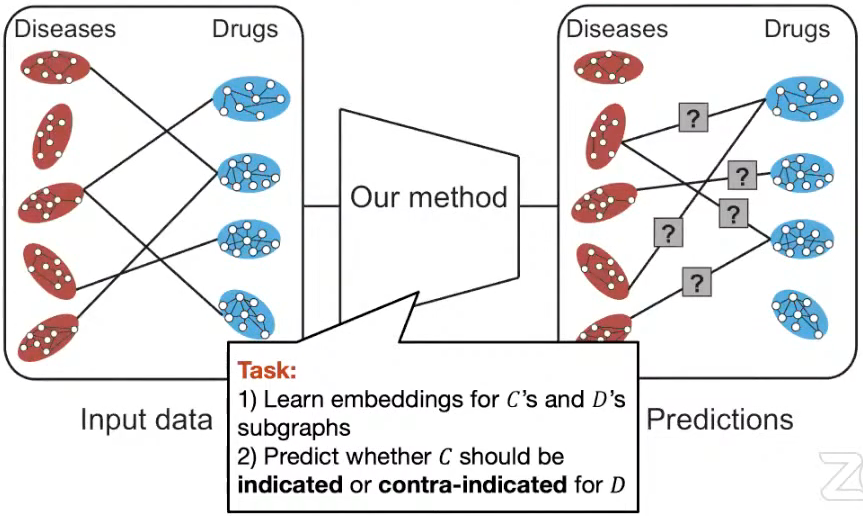
Graph neural netwoks for COVID-19 drug repurposing
Problem: Never-before-seen disease
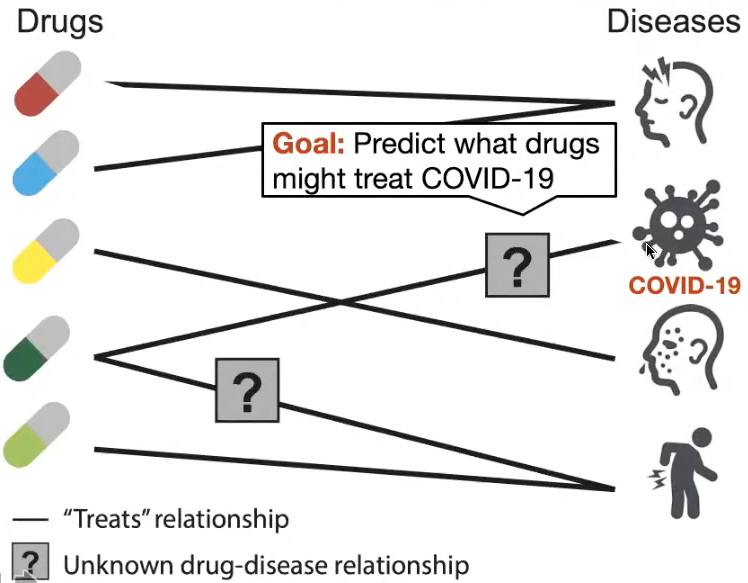
Problem: How to represent COVID-19? Map SARS-CoV-2 targets to the human interactome
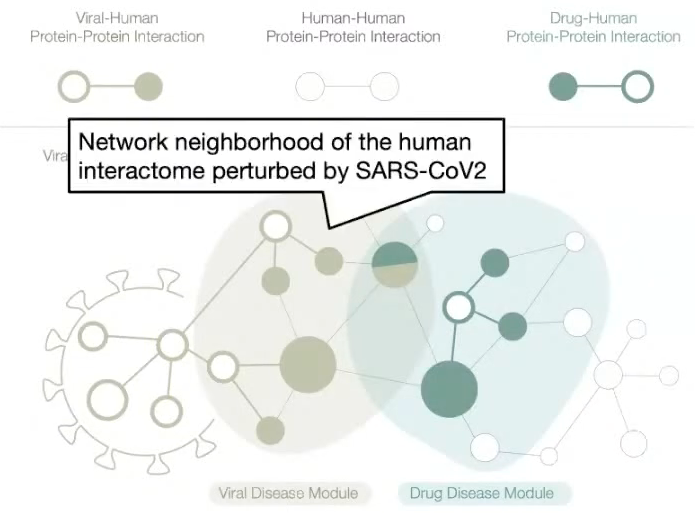
COVID-19 subgraph
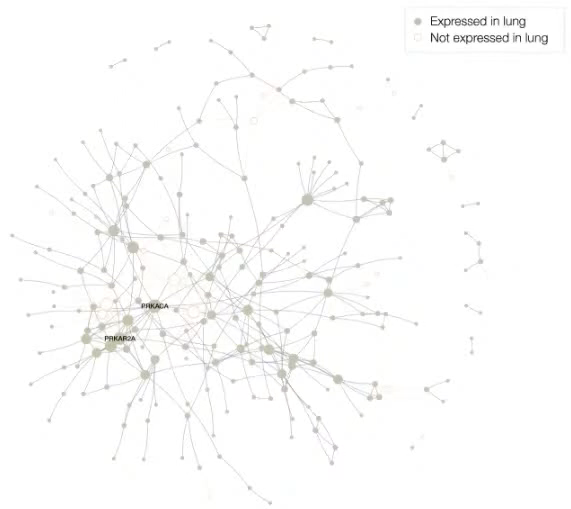
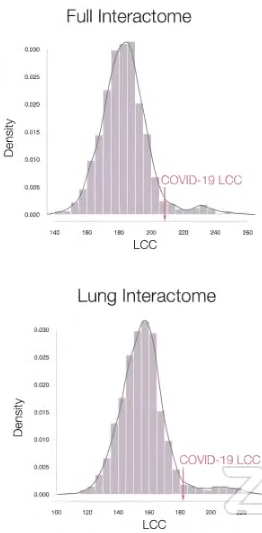 Gordon et al. expressed 26 of the 29 sars-cov-2 proteins and use ap-ms to identify 332 human proteins to which viral proteins bind.
https://www.nature.com/articles/s41586-020-2286-9
Key insight: subgraphs
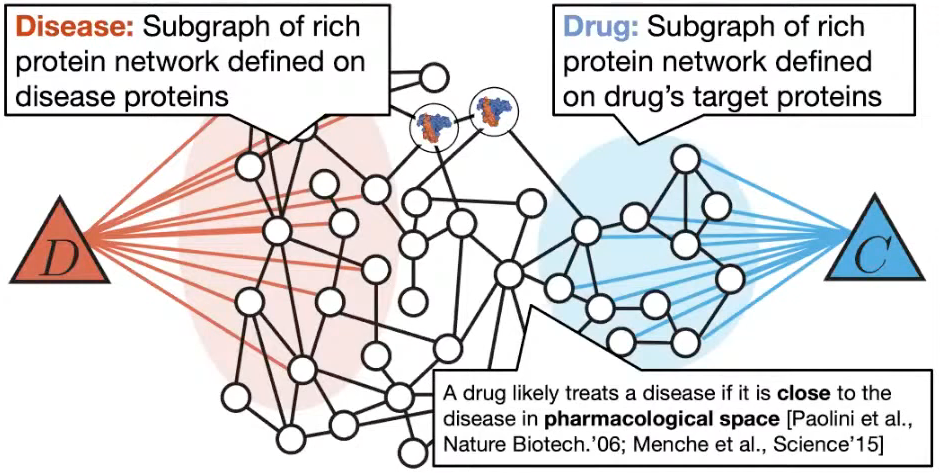 Idea: Use the pradigm of embeddings to operationalize the concept of closeness in pharmacological space.
Problem: Why are subgraphs challenging?
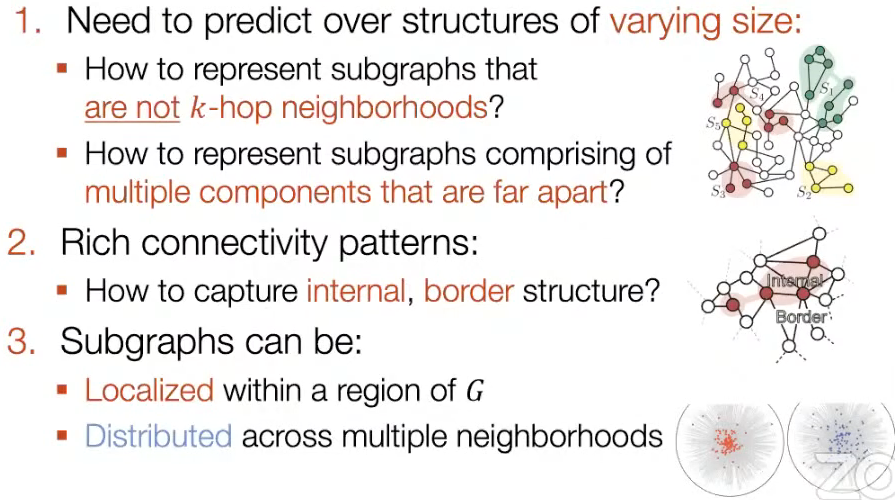
Problem formulation: Predict links between drug and disease subgraphs
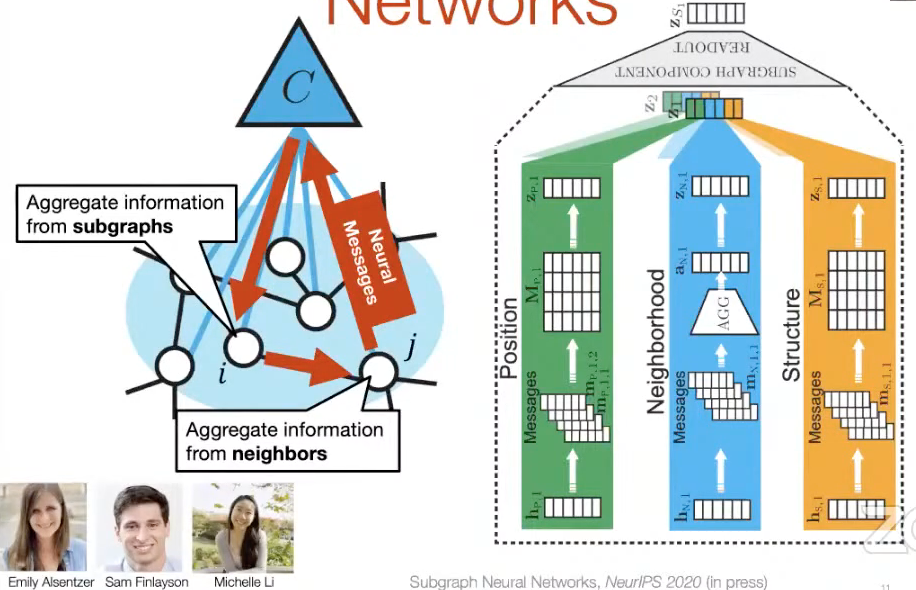
Method: SubGNN – Subgraph Neural networks
Results
Embedding space of COVID-19
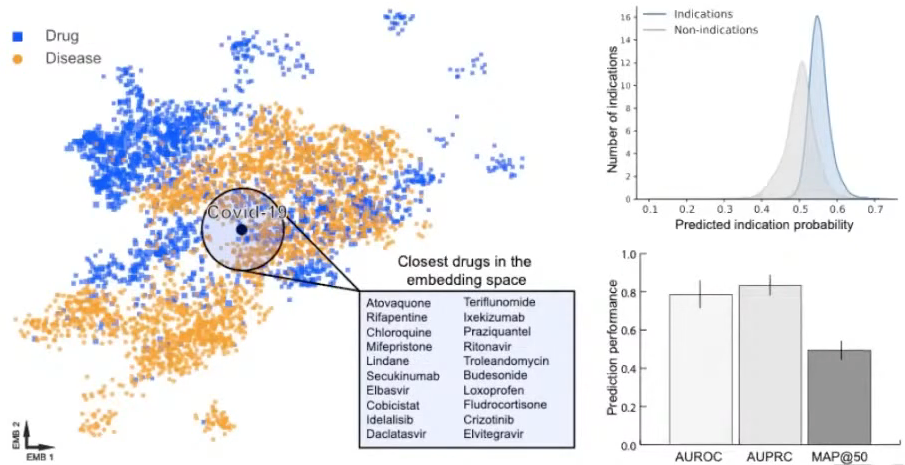 https://www.ncbi.nlm.nih.gov/pmc/articles/PMC7280907/
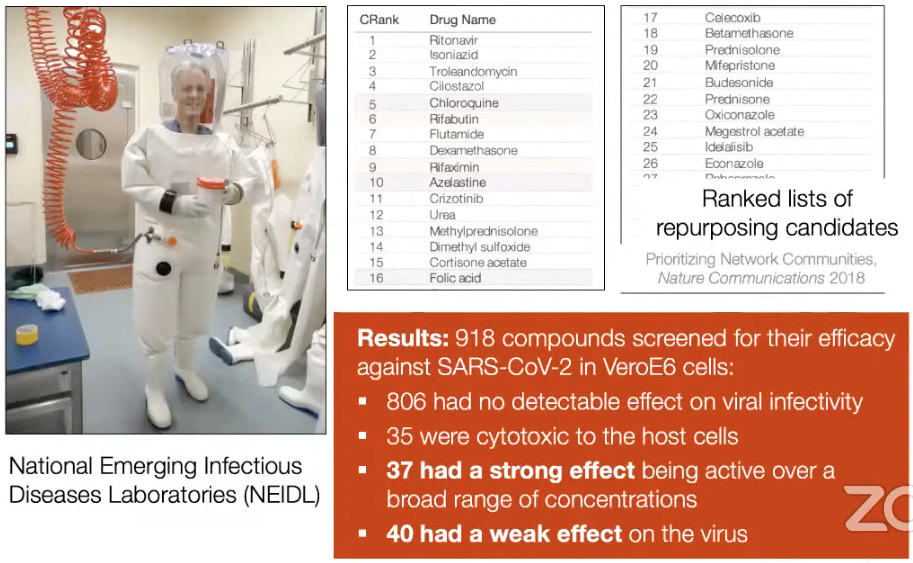
Experimental validations of predictions
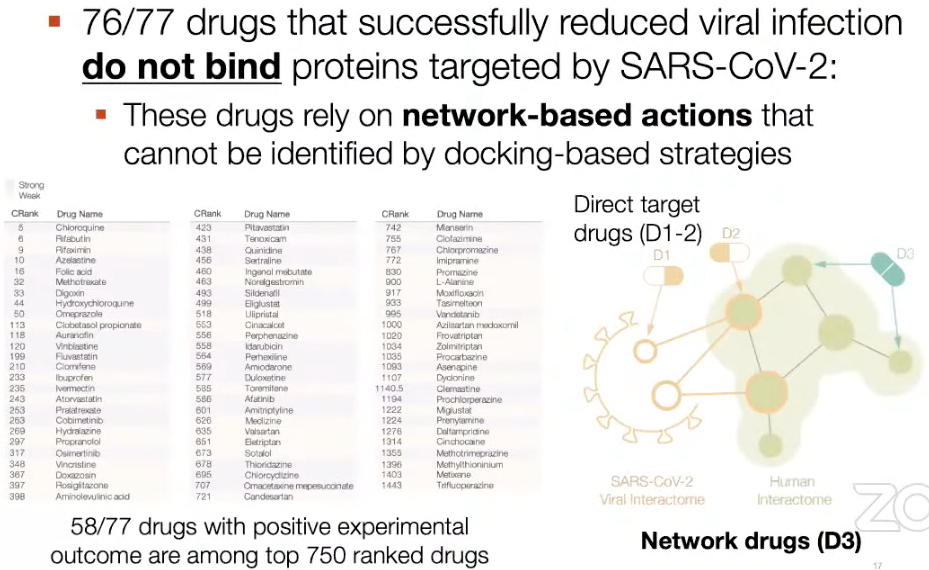
Network drugs
Key ML lessions