Xiaopeng Xu
DL 深度学习笔记
NN 基础
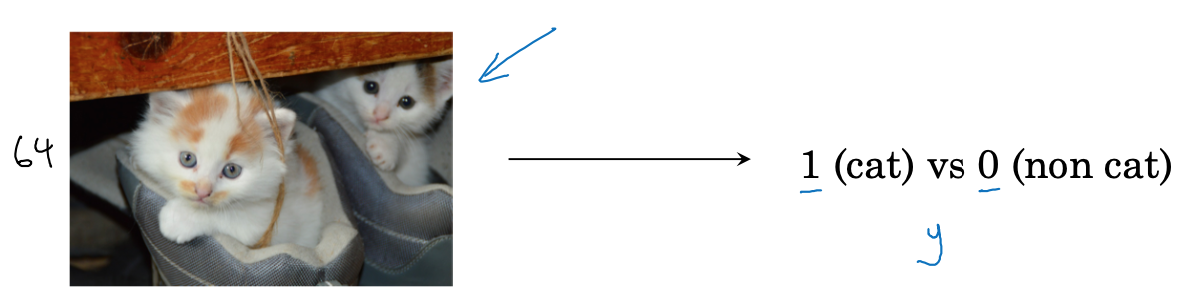
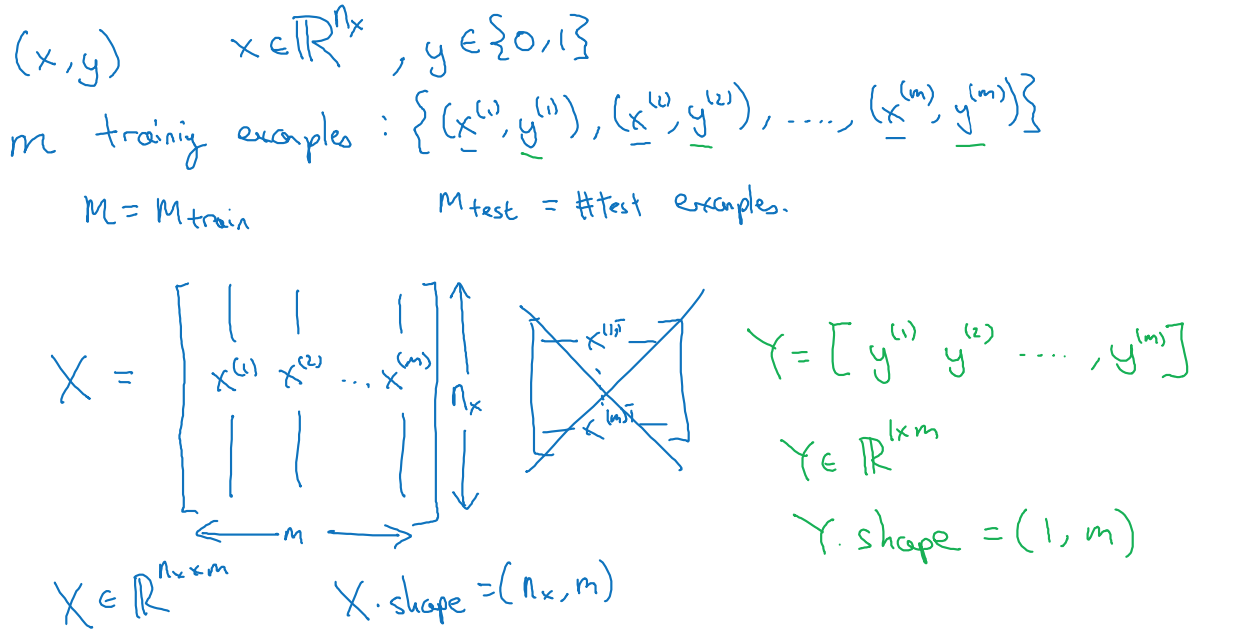
二分类问题
- 对 64x64x3 的图片,判断是否有猫(1/0)

基本标记
X 的每一行对应的是一个样本,每一列对应的是一个特征。
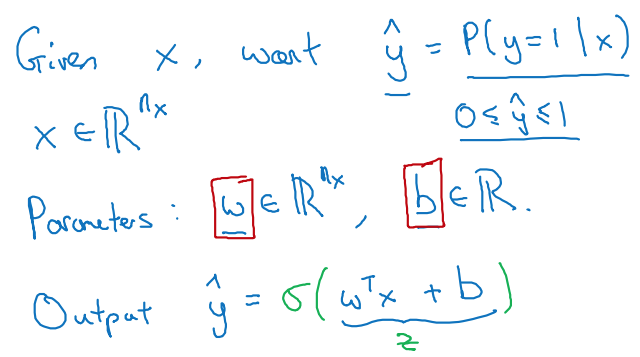
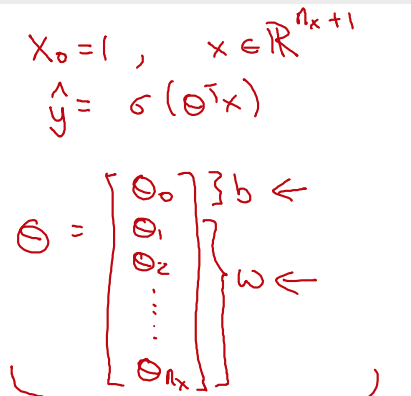
逻辑回归 (Logistics regression)
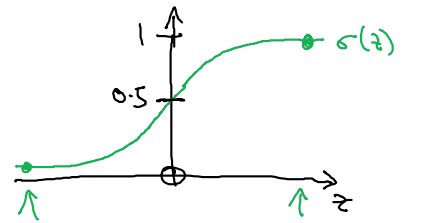
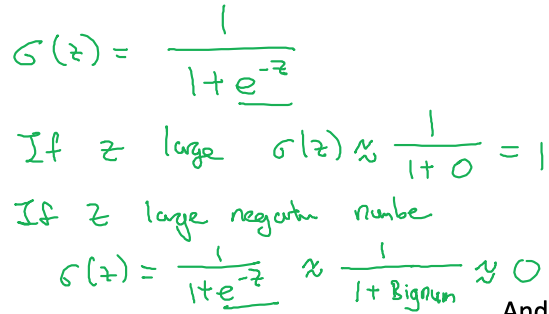
二分类情况下,对应的 delta 函数是 sigmoid 函数。
Sigmoid 函数
代价函数 (cost function)
- 目标:

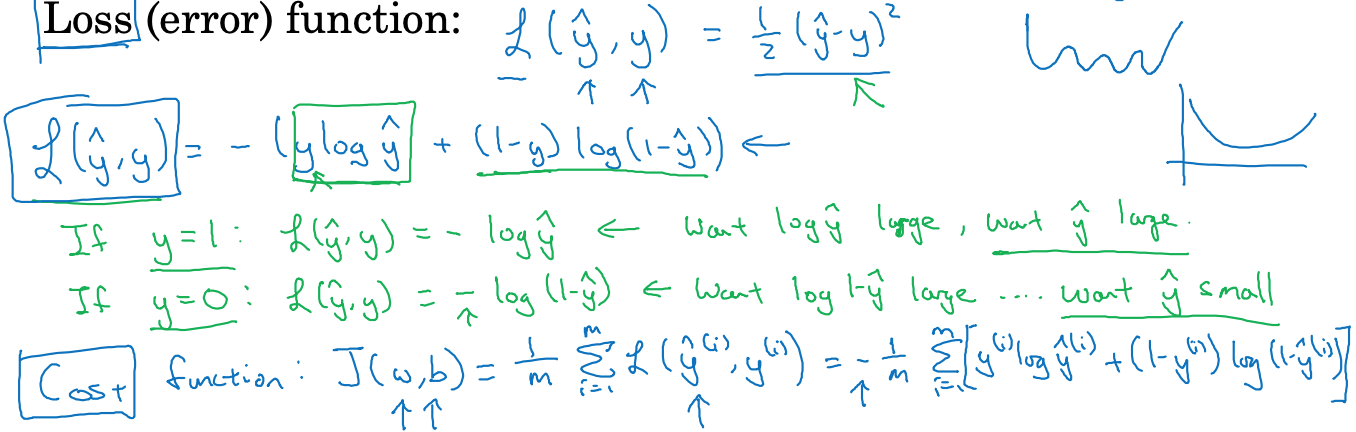
损失函数 (loss/error function)
损失函数 (loss function) 针对每一个样本计算的误差
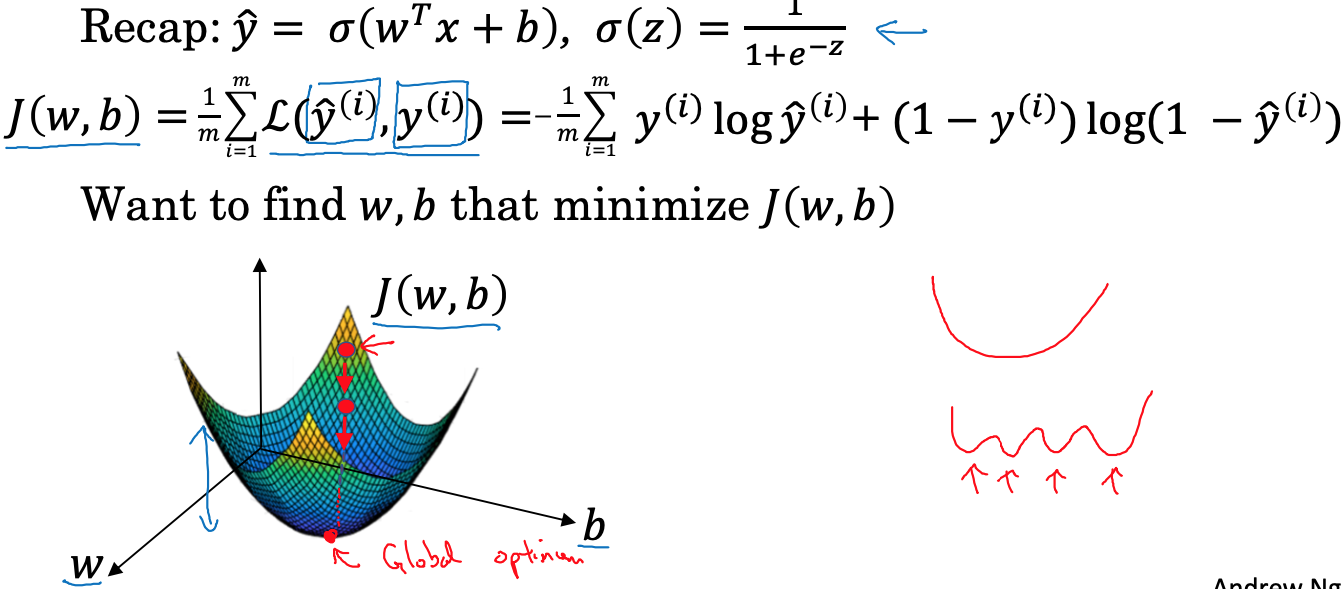
MSE 通常会受限于局部最小值 (local minimum) 而不能找到全局最小值 (global minimum) 因而实际中不常使用。
实际中更常用的是下面这个:
- 举例分析:
- 举例分析:



代价函数 (cost function)
- 代价函数是损失函数的平均值,在一个循环中只计算一次。

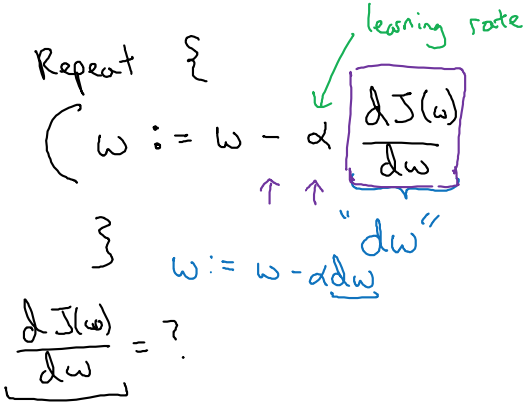
梯度下降法 (Gradient descent)
- 目标:找到 w 和 b,以最小化损失函数 (loss function)
梯度 (gradient)
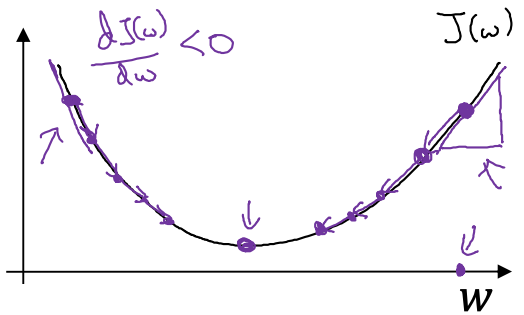
思想:在每次循环中,叠加导数值,这样可以逼近最优点 (mimimum)
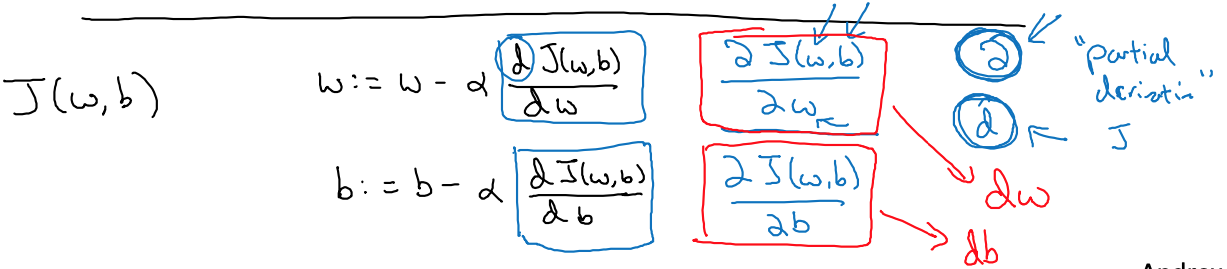
通过偏导数,来计算导数函数。
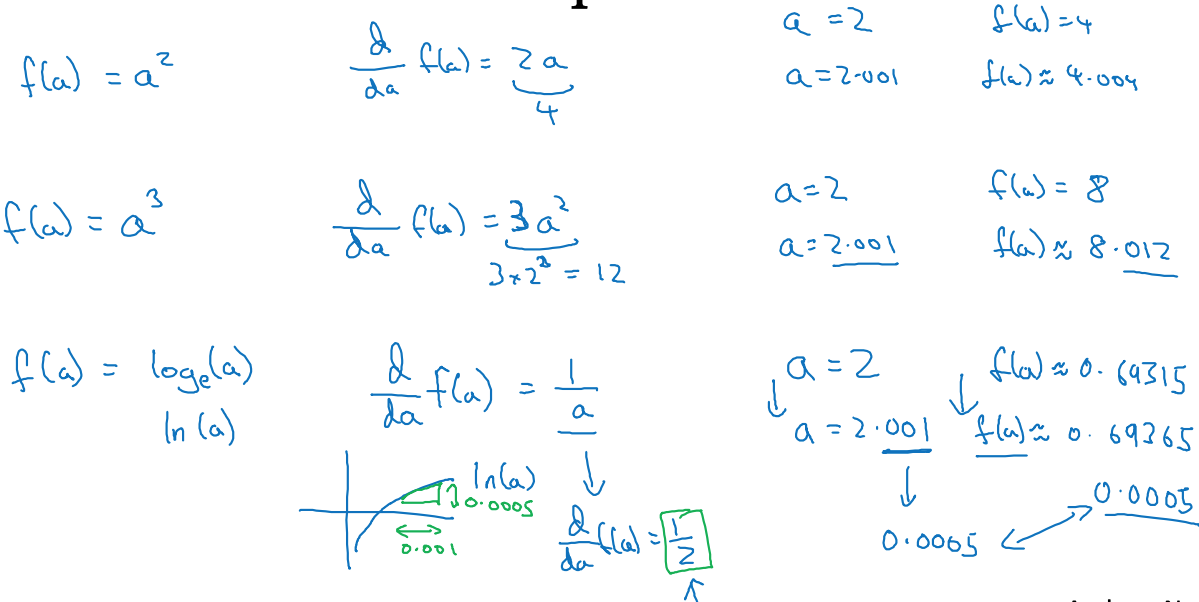
导数 (derivative)
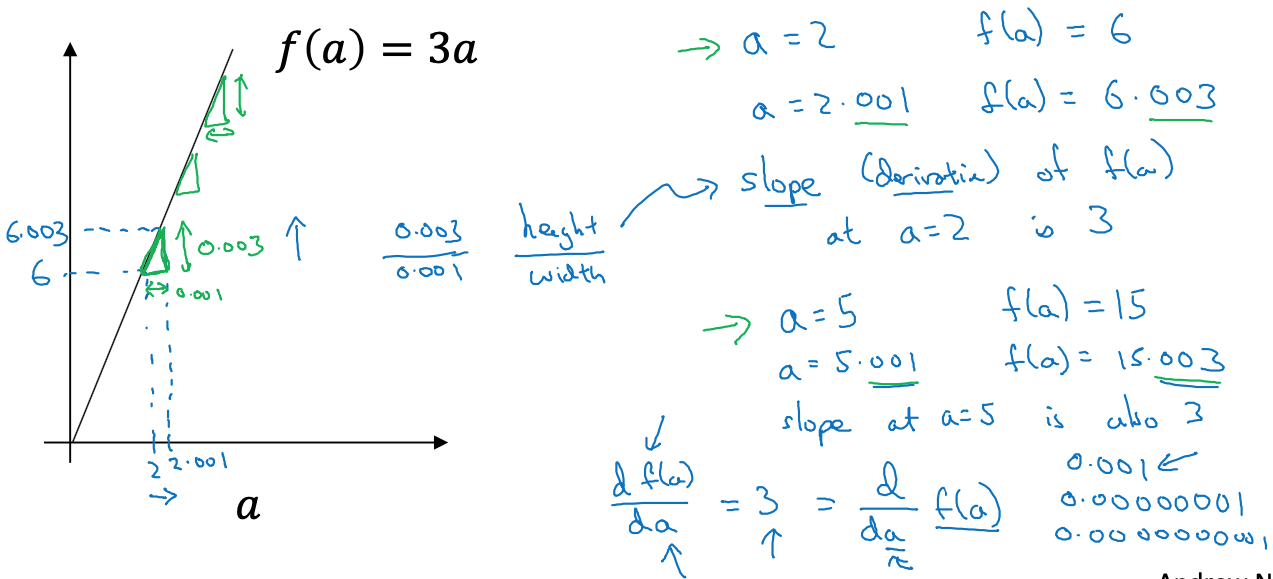
线性函数的导数
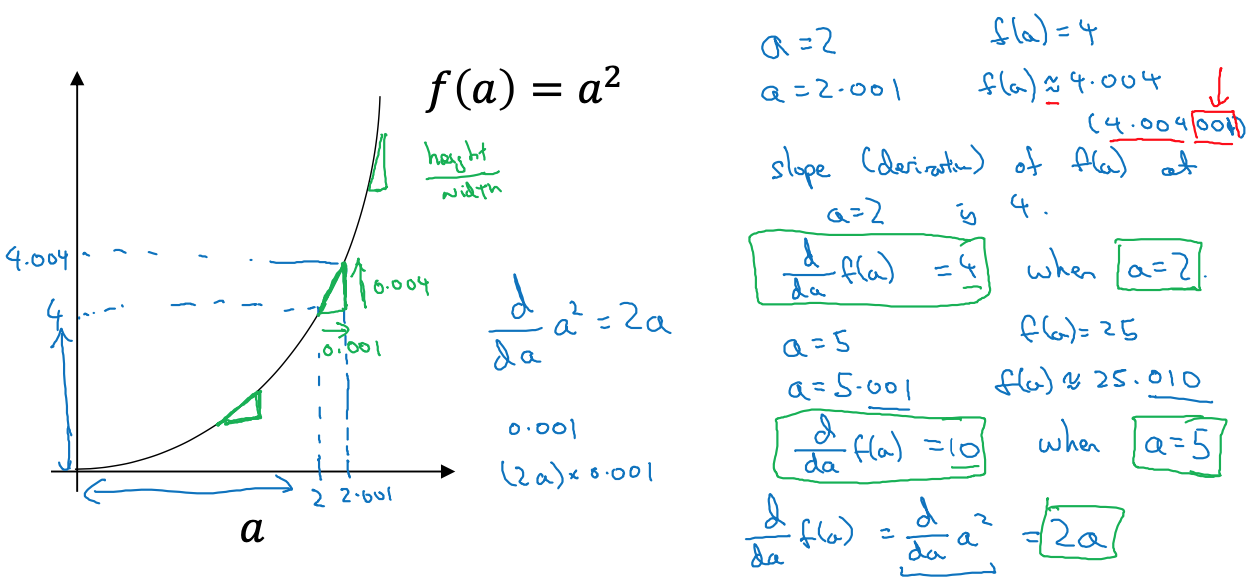
二次方程的导数
更多导数
计算图
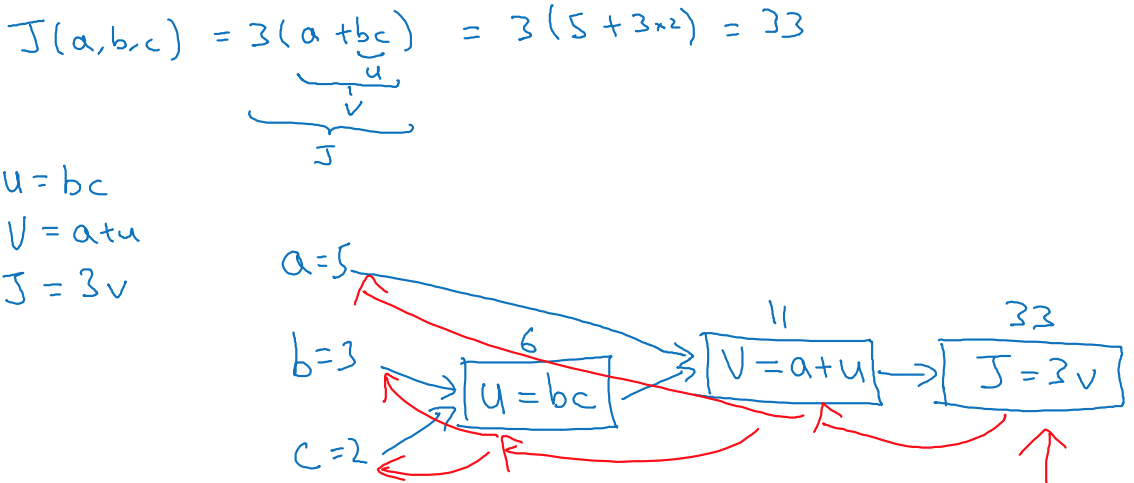
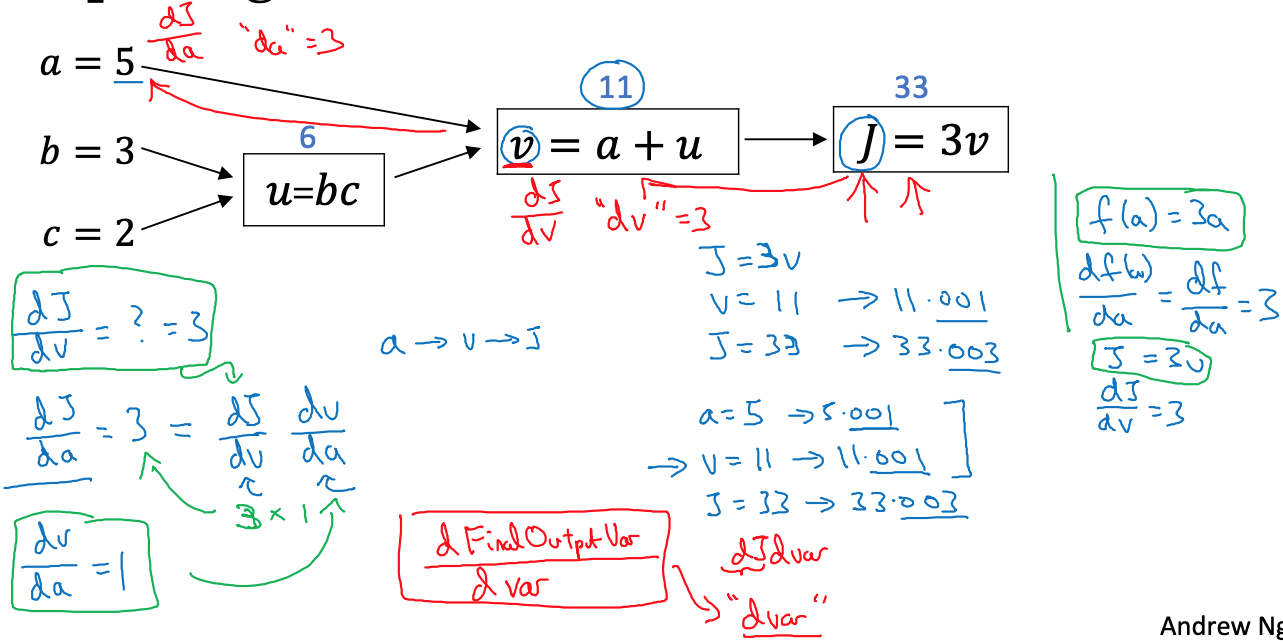
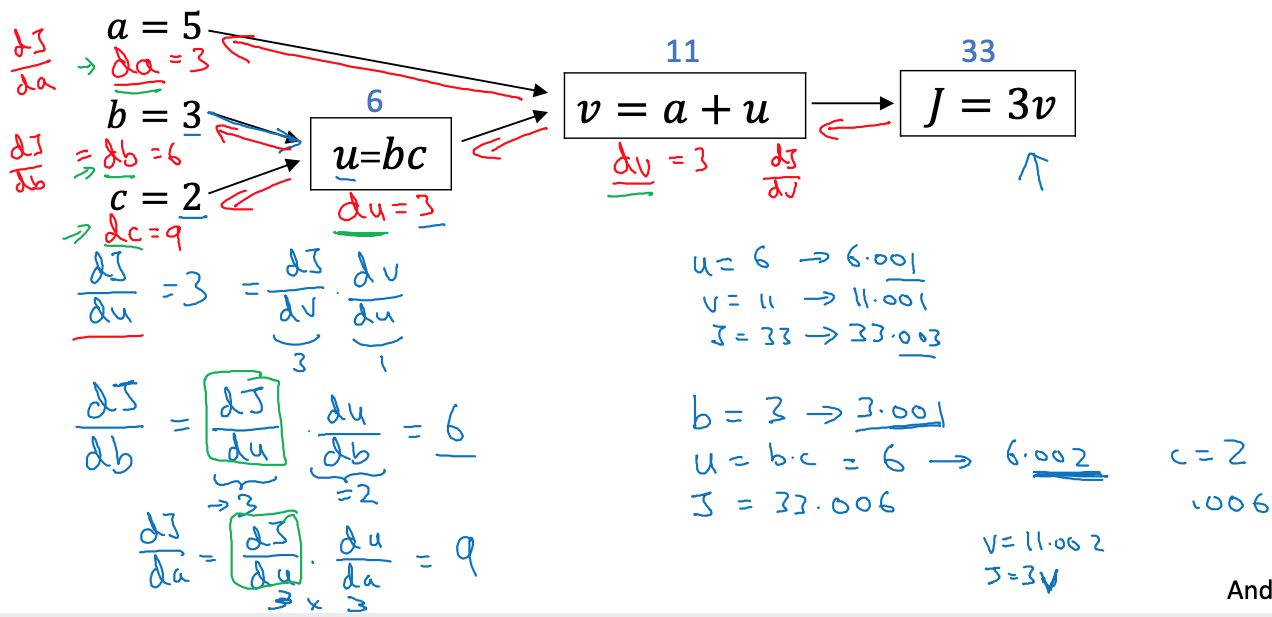
按计算图计算导数
深度神经网络
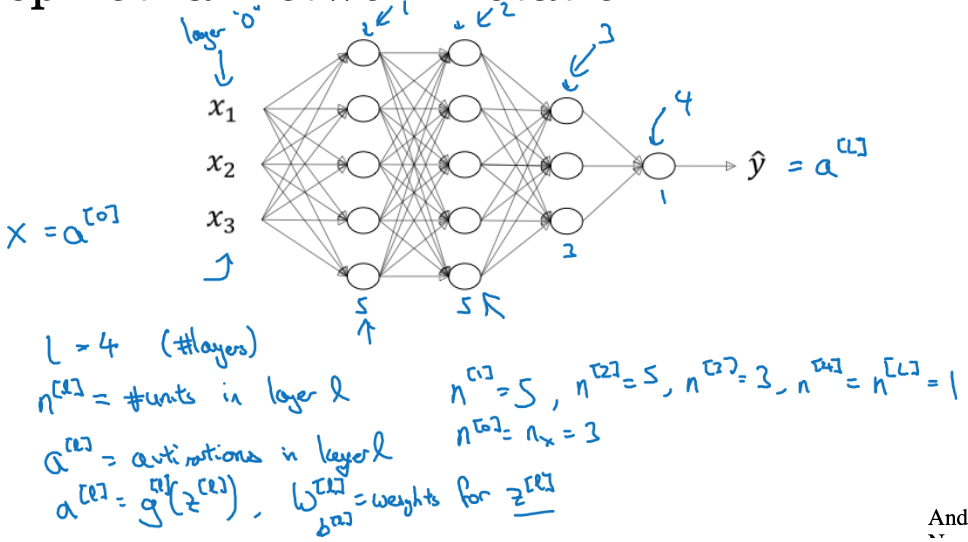
表示符号
L 表示层数
n[1], 表示 1 层中的节点数
z[1], 表示 1 层中的 (W[1]*x[0] +b[1])
a[1], 表示 1 层中的激活值 g(z[1]),g 常用 ReLU
RNN
- 可以直观理解为相比传统的 NN 增加了时序记忆能力。但 Transformer 这种大网络中,也增加了类似 CNN 的抽象能力 (即 Multi-head attention)。
应用
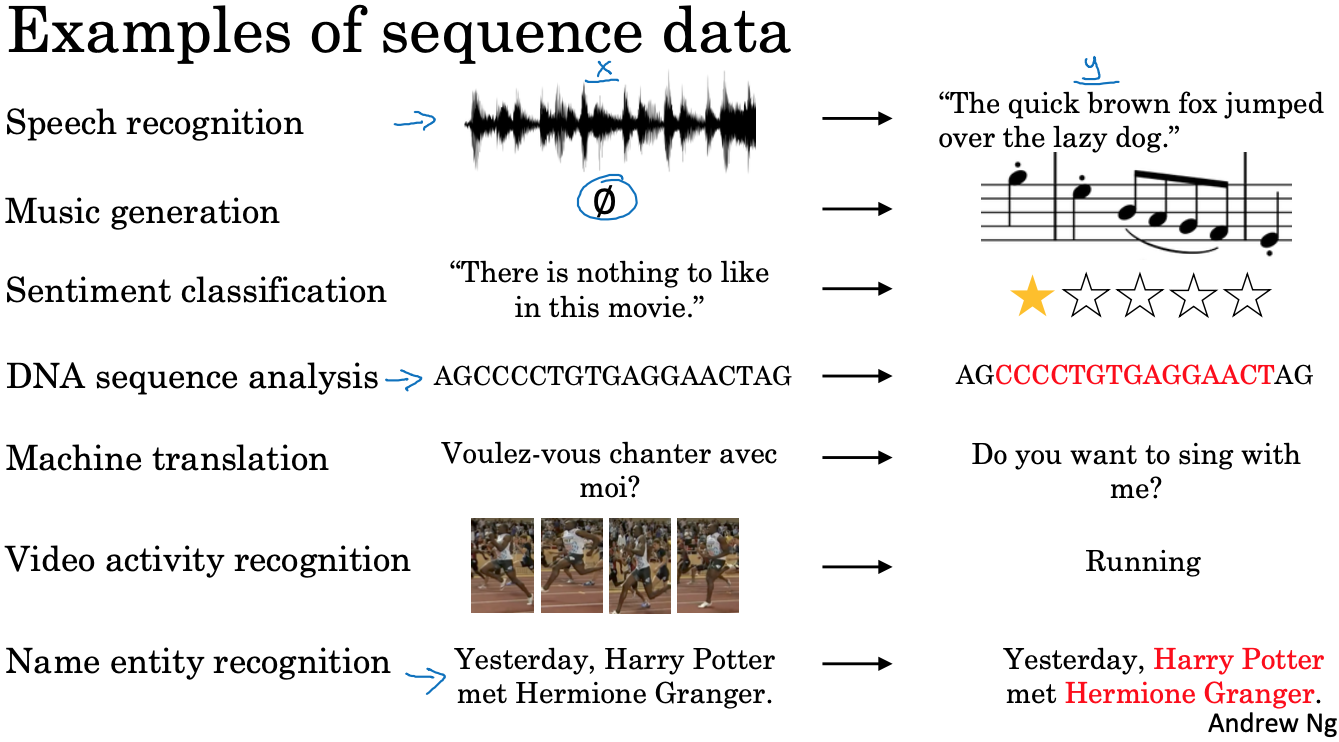
- 语音识别、音乐生成、情感分类、DNA 序列分析、机器翻译、视频行为识别、命名实体识别
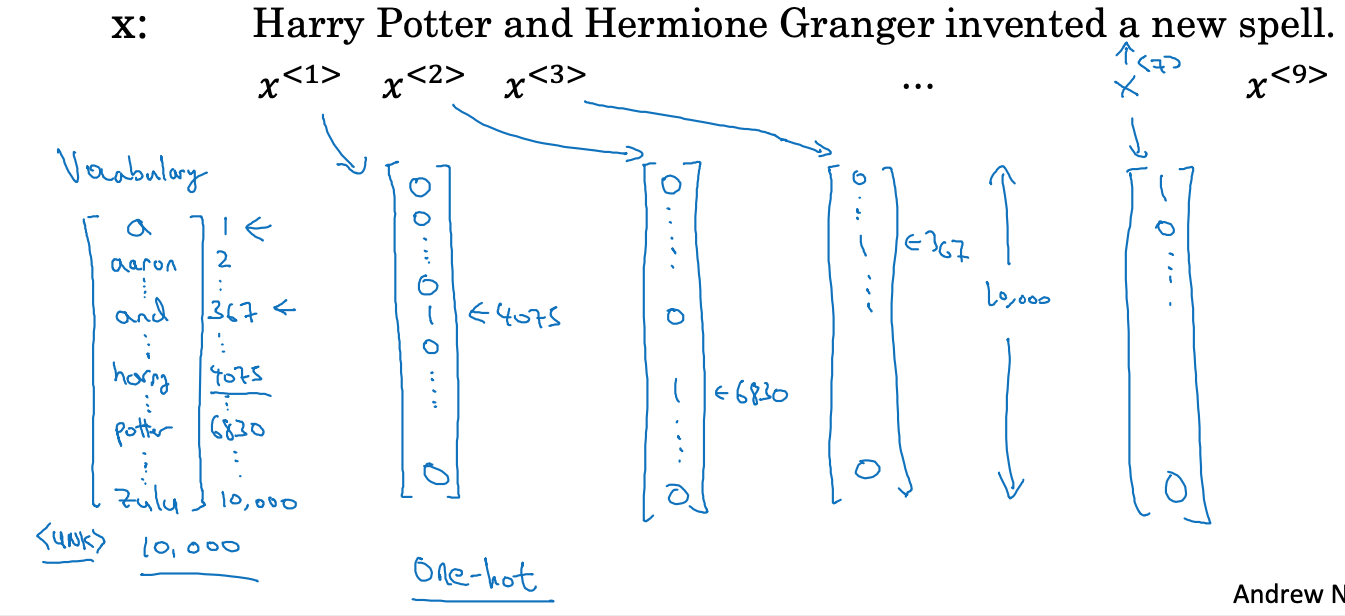
词表示 (word representation)
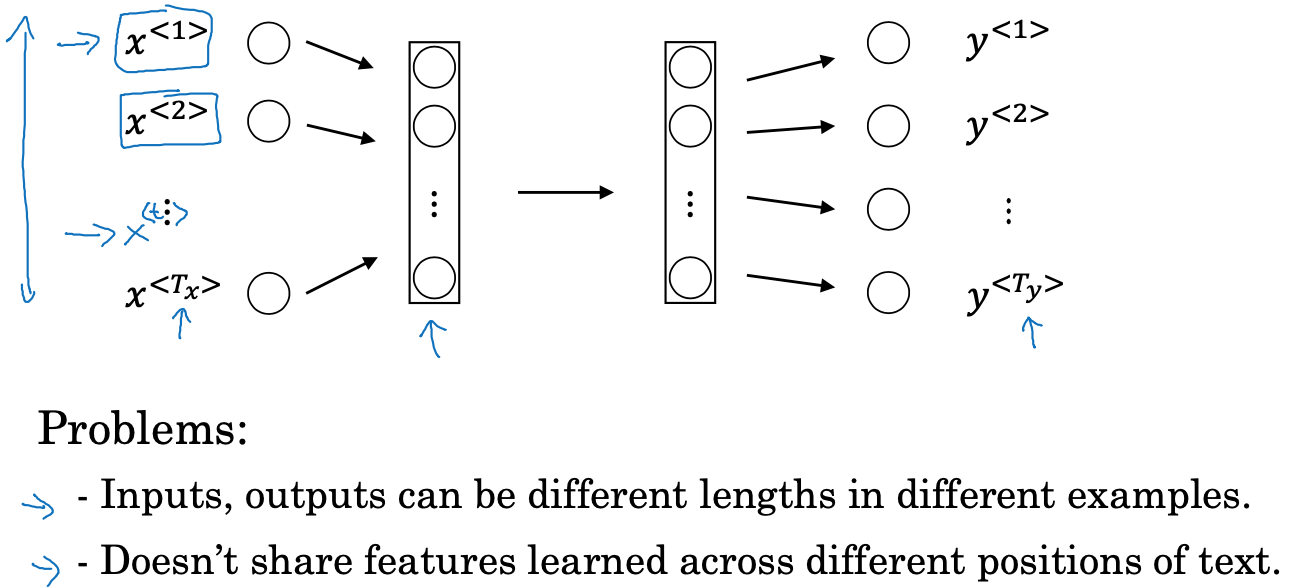
为什么不用标准的神经网络?
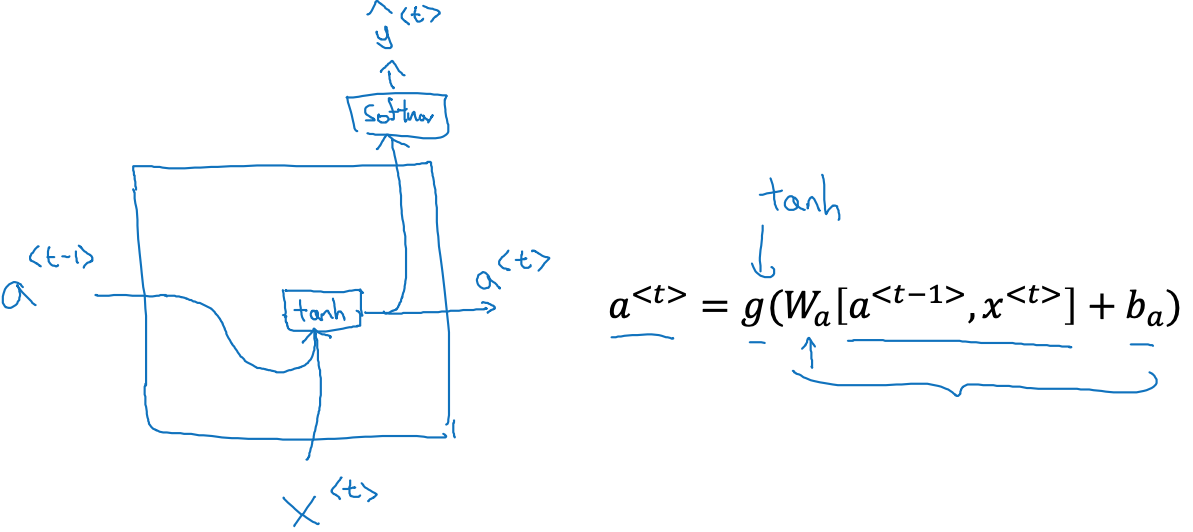
简单的 RNN
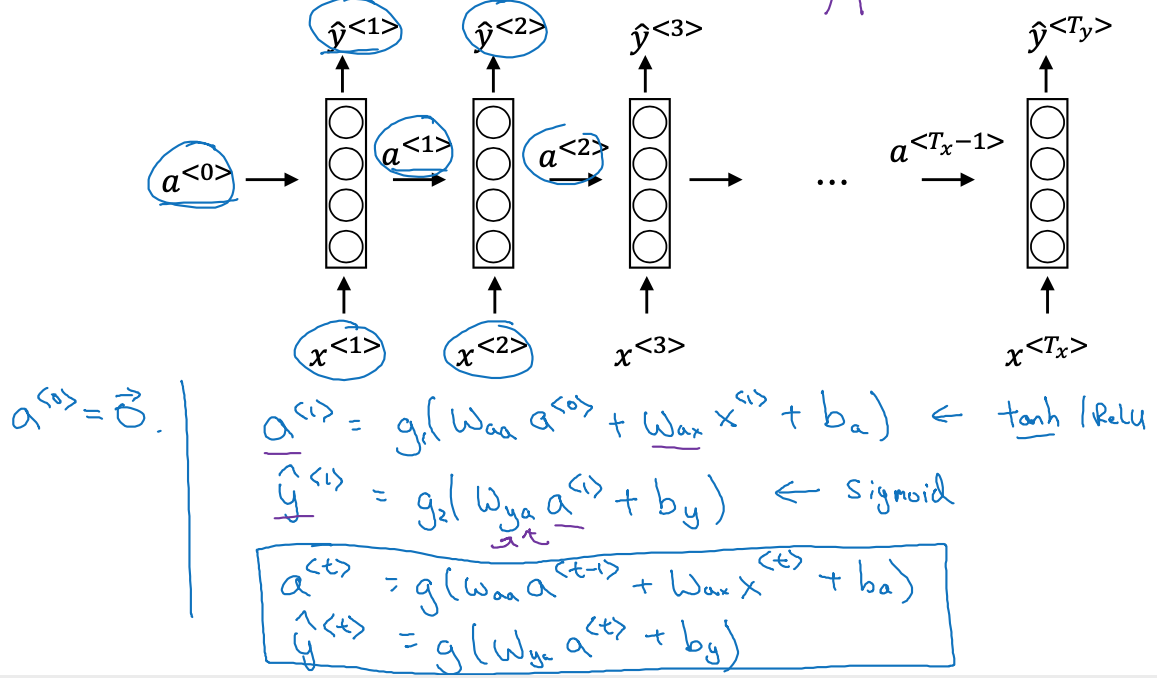
前向传播 (Forward propagation)
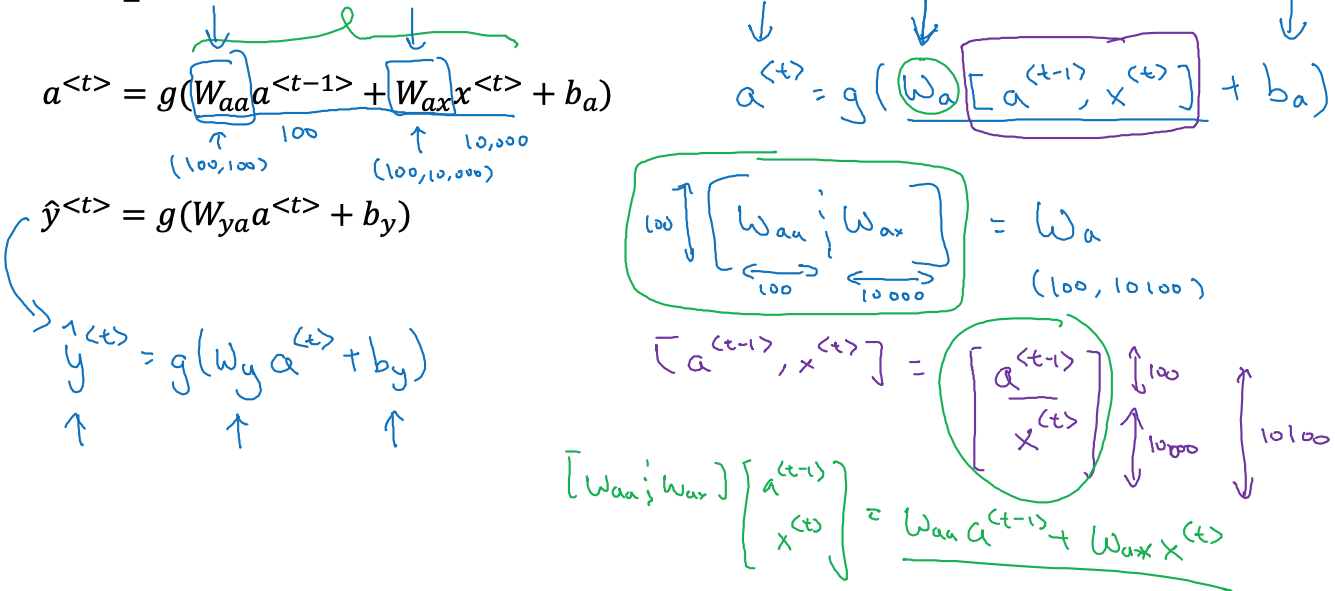
简化的标记符
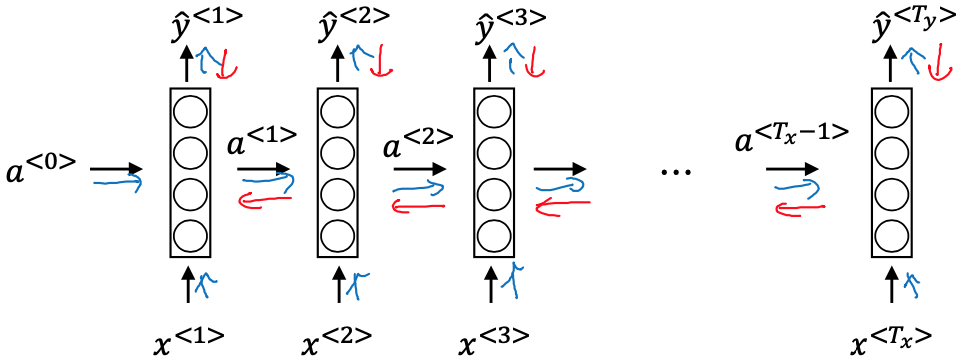
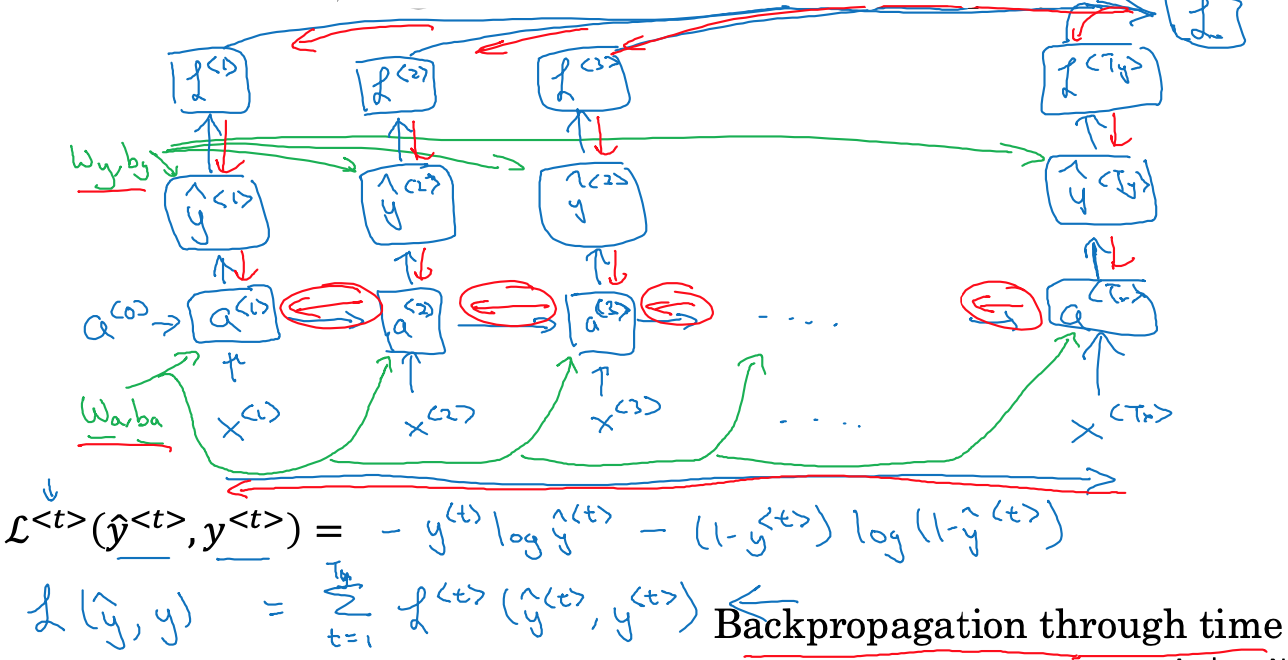
时间反向传播 (backpropagation through time)
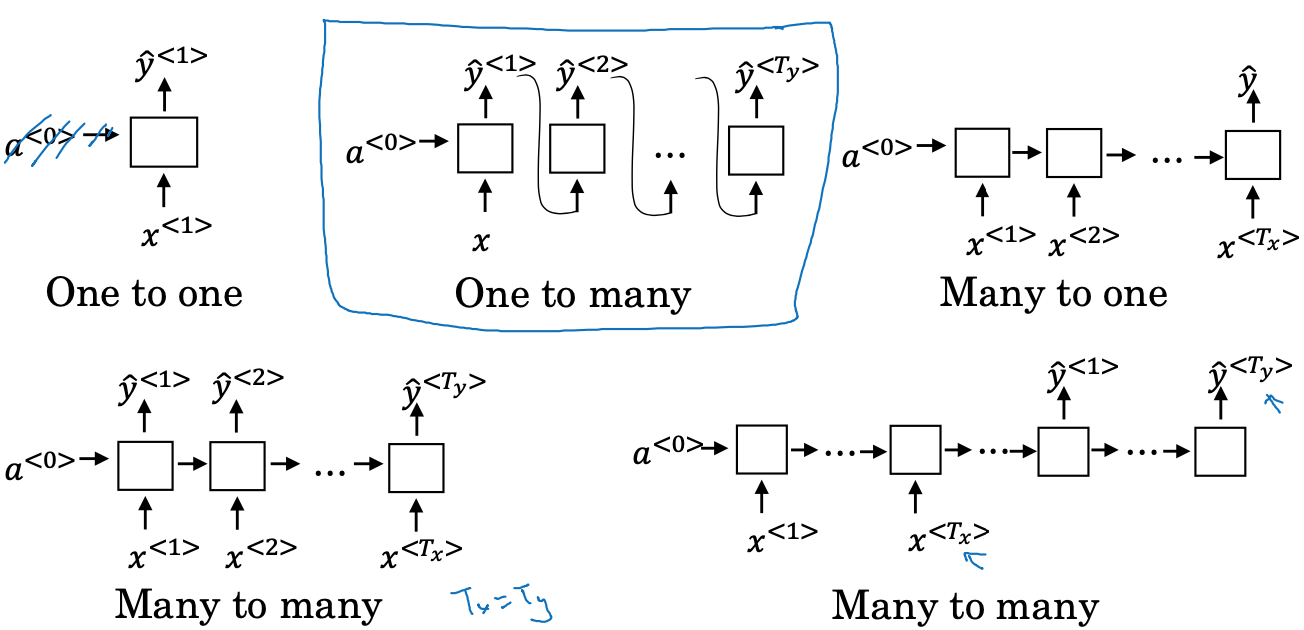
RNN 类型
- 多对多,多对一,一对一,一对多
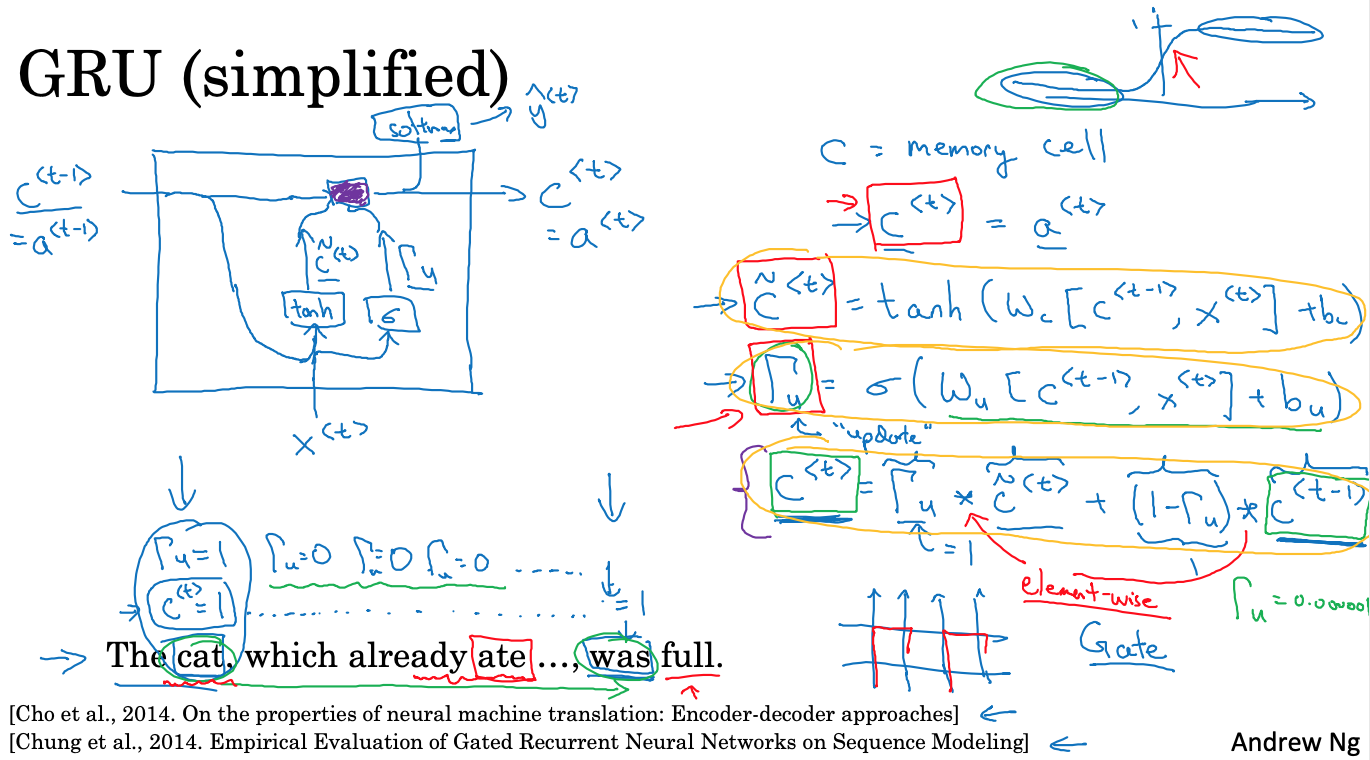
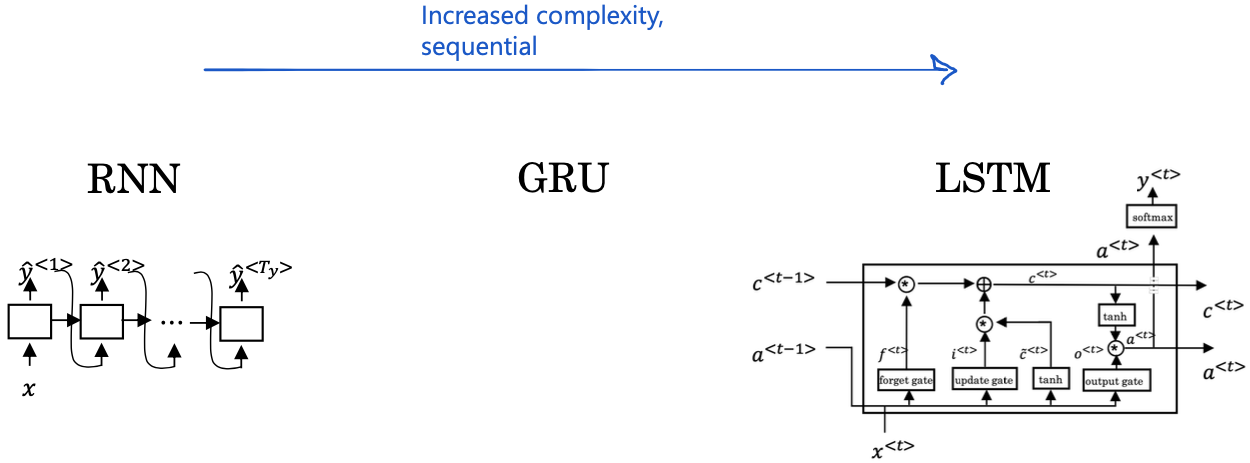
GRU (Gated Recurrent Unit)
RNN unit
GRU (simplified)
完整的 GRU
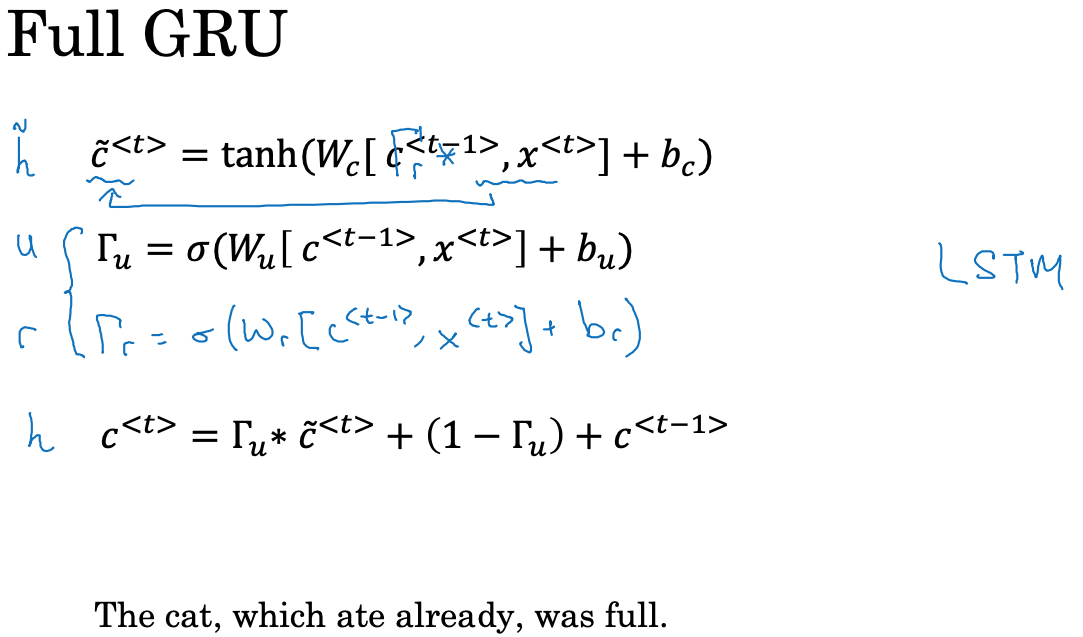 u=update, r=remember
*LSTM (long short term memory)
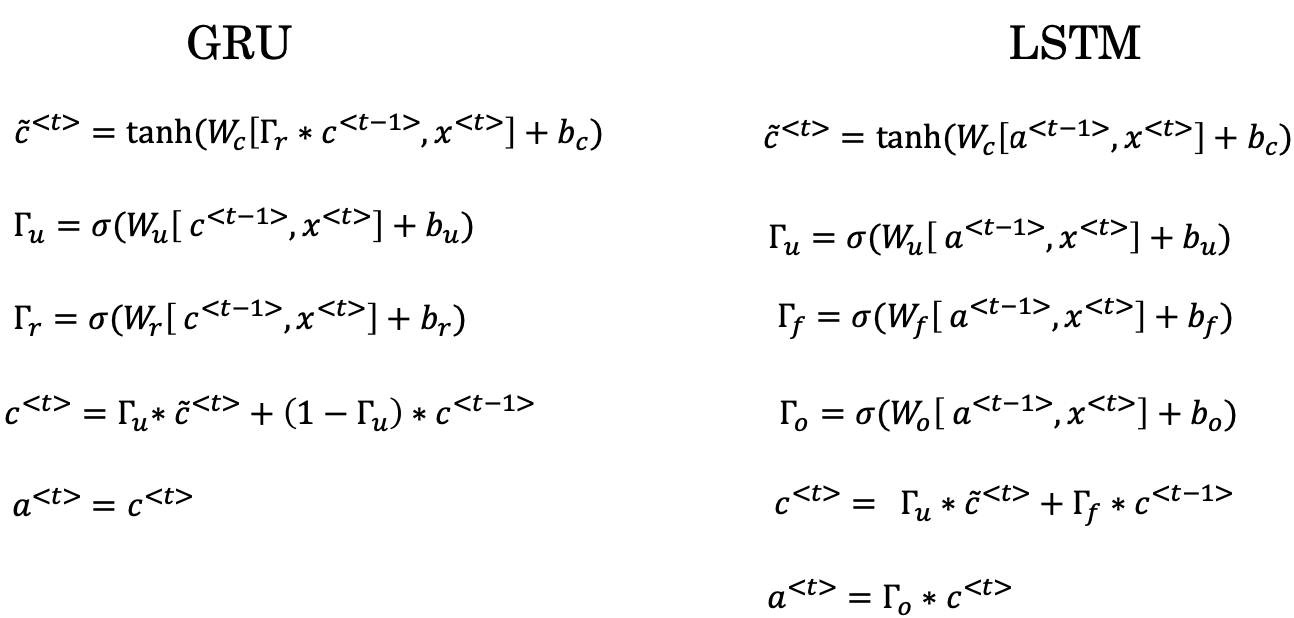 u=update, r=remember, 0=output, f=forget
GRU removed a
Significantly improve computing effenciency.
前向传播 Forward Illustration
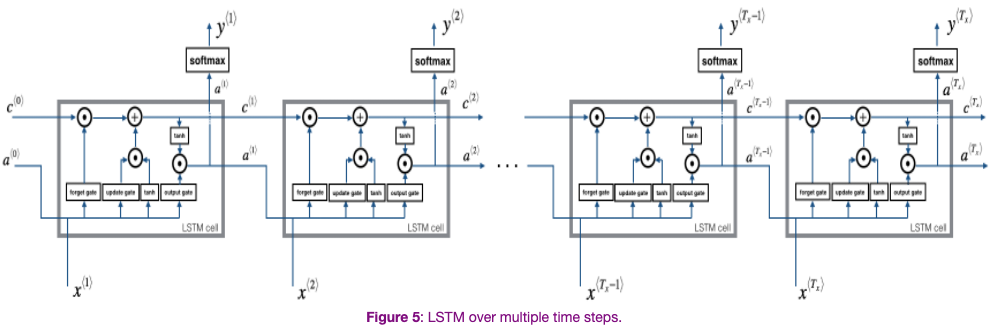
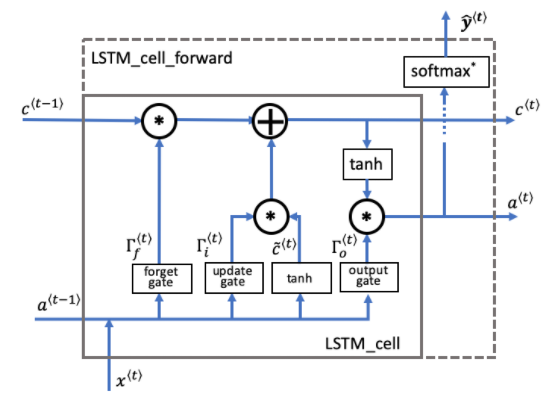 A gate is a sigmoid function with w and b. Softmax also contains a w and b.
Forget gate

Wf: forget gate weight 𝐖𝑓bf: forget gate bias 𝐛𝑓ft: forget gate Γ⟨𝑡⟩
Candidate value

cct: candidate value 𝐜̃⟨𝑡⟩
Update gate

Wiis the update gate weight 𝐖𝑖biis the update gate bias 𝐛𝑖itis the update gate 𝚪⟨𝑡⟩𝑖
Cell state

c: cell state, including all time steps, 𝐜 shape (𝑛𝑎,𝑚,𝑇𝑥)c_next: new (next) cell state, 𝐜⟨𝑡⟩ shape (𝑛𝑎,𝑚)c_prev: previous cell state, 𝐜⟨𝑡−1⟩, shape (𝑛𝑎,𝑚)
Output gate

Wo: output gate weight, 𝐖𝐨bo: output gate bias, 𝐛𝐨ot: output gate, 𝚪⟨𝑡⟩𝑜a: hidden state, including time steps. 𝐚 has shape (𝑛𝑎,𝑚,𝑇𝑥)a_prev: hidden state from previous time step. 𝐚⟨𝑡−1⟩ has shape (𝑛𝑎,𝑚)a_next: hidden state for next time step. 𝐚⟨𝑡⟩ has shape (𝑛𝑎,𝑚)y_pred: prediction, including all time steps. 𝐲𝑝𝑟𝑒𝑑 has shape (𝑛𝑦,𝑚,𝑇𝑥)yt_pred: prediction for the current time step 𝑡. 𝐲⟨𝑡⟩𝑝𝑟𝑒𝑑 has shape (𝑛𝑦,𝑚)
代码
def lstm_cell_forward(xt, a_prev, c_prev, parameters):
    # Retrieve parameters from "parameters"
    Wf = parameters["Wf"] # forget gate weight
    bf = parameters["bf"]
    Wi = parameters["Wi"] # update gate weight (notice the variable name)
    bi = parameters["bi"] # (notice the variable name)
    Wc = parameters["Wc"] # candidate value weight
    bc = parameters["bc"]
    Wo = parameters["Wo"] # output gate weight
    bo = parameters["bo"]
    Wy = parameters["Wy"] # prediction weight
    by = parameters["by"]

    # Retrieve dimensions from shapes of xt and Wy
    n_x, m = xt.shape
    n_y, n_a = Wy.shape

    # Concatenate a_prev and xt (≈1 line)
    print(a_prev.shape)
    print(xt.shape)
    concat = np.concatenate((a_prev, xt), axis=0)

    # Compute values for ft, it, cct, c_next, ot, a_next using the formulas given figure (4) (≈6 lines)
    ft = sigmoid(Wf.dot(concat) + bf)
    it = sigmoid(Wi.dot(concat) + bi)
    cct = np.tanh(Wc.dot(concat) + bc)
    c_next = ft * c_prev + it * cct
    ot = sigmoid(Wo.dot(concat) + bo)
    a_next = ot * np.tanh(c_next)

    # Compute prediction of the LSTM cell (≈1 line)
    yt_pred = softmax(Wy.dot(a_next) + by)

    # store values needed for backward propagation in cache
    cache = (a_next, c_next, a_prev, c_prev, ft, it, cct, ot, xt, parameters)

    return a_next, c_next, yt_pred, cache
反向传播
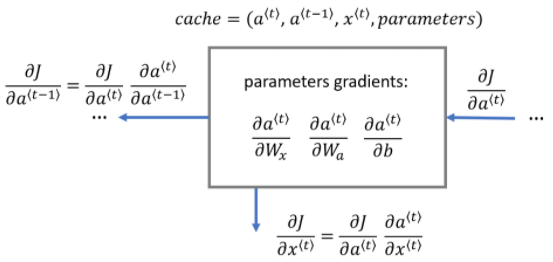
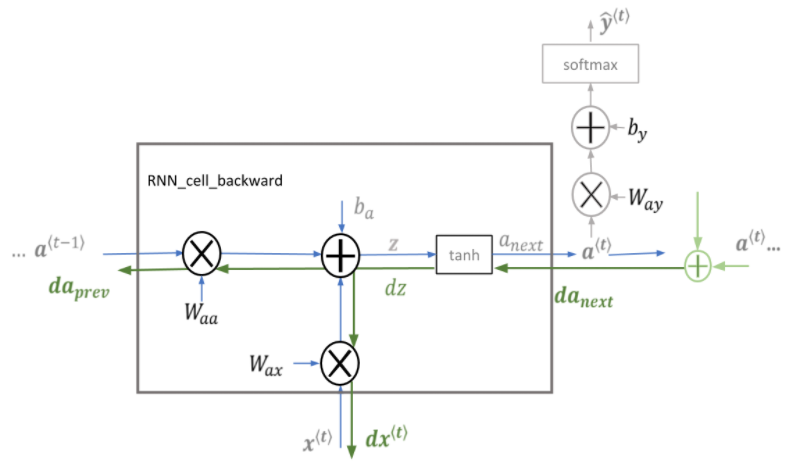
公式

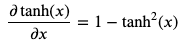



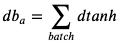
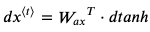

𝑑𝑥⟨𝑡⟩ is represented by dxt,
𝑑𝑊𝑎𝑥 is represented by dWax,
𝑑𝑎𝑝𝑟𝑒𝑣 is represented by da_prev,
𝑑𝑊𝑎𝑎 is represented by dWaa,
𝑑𝑏𝑎 is represented by dba,
dzis not derived above but can optionally be derived by students to simplify the repeated calculations.
代码
ef rnn_cell_backward(da_next, cache):
    # Retrieve values from cache
    (a_next, a_prev, xt, parameters) = cache

    # Retrieve values from parameters
    Wax = parameters["Wax"]
    Waa = parameters["Waa"]
    Wya = parameters["Wya"]
    ba = parameters["ba"]
    by = parameters["by"]

    # compute the gradient of dtanh term using a_next and da_next (≈1 line)
    dtanh = da_next * (1 - np.tanh(Wax.dot(xt) + Waa.dot(a_prev) + ba) ** 2)

    # compute the gradient of the loss with respect to Wax (≈2 lines)
    dxt = Wax.transpose().dot(dtanh)
    dWax = dtanh.dot(xt.transpose())

    # compute the gradient with respect to Waa (≈2 lines)
    da_prev = Waa.transpose().dot(dtanh)
    dWaa = dtanh.dot(a_prev.transpose())

    # compute the gradient with respect to b (≈1 line)
    dba = np.sum(dtanh, axis=1, keepdims = True)

    # Store the gradients in a python dictionary
    gradients = {"dxt": dxt, "da_prev": da_prev, "dWax": dWax, "dWaa": dWaa, "dba": dba}

    return gradients
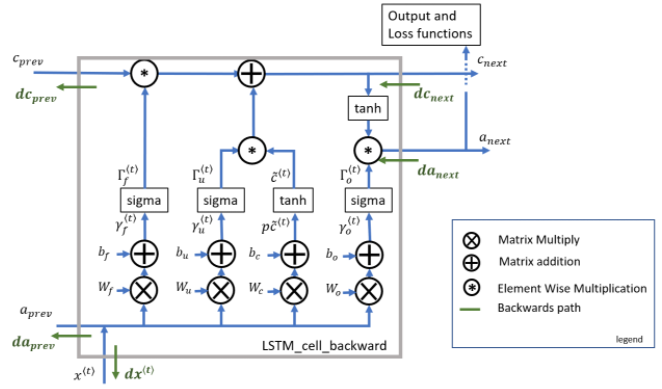
反向信息传递
公式
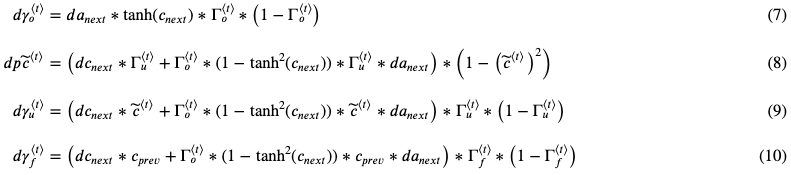
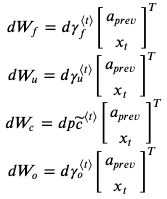
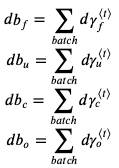


𝑑𝛾⟨𝑡⟩𝑜 is represented by
dot,𝑑𝑝𝑐˜⟨𝑡⟩ is represented by
dcct,𝑑𝛾⟨𝑡⟩𝑢 is represented by
dit,𝑑𝛾⟨𝑡⟩𝑓 is represented by
dft
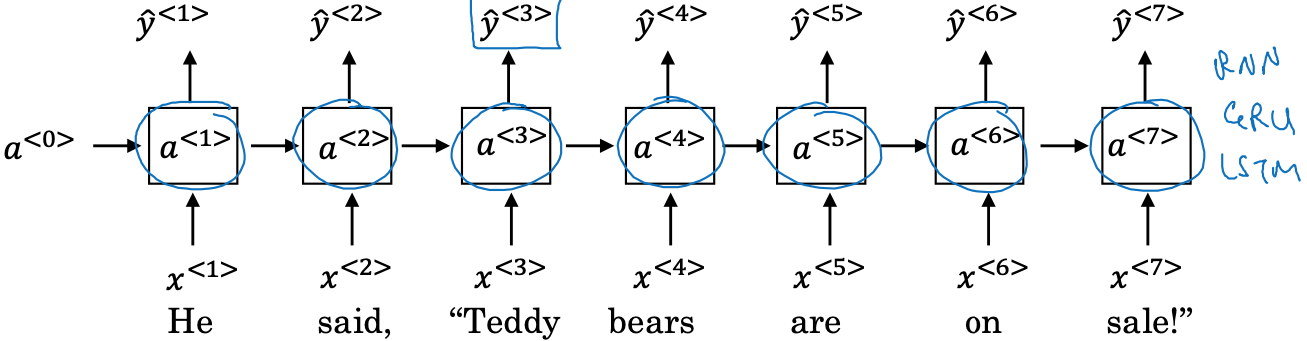
其他 RNN
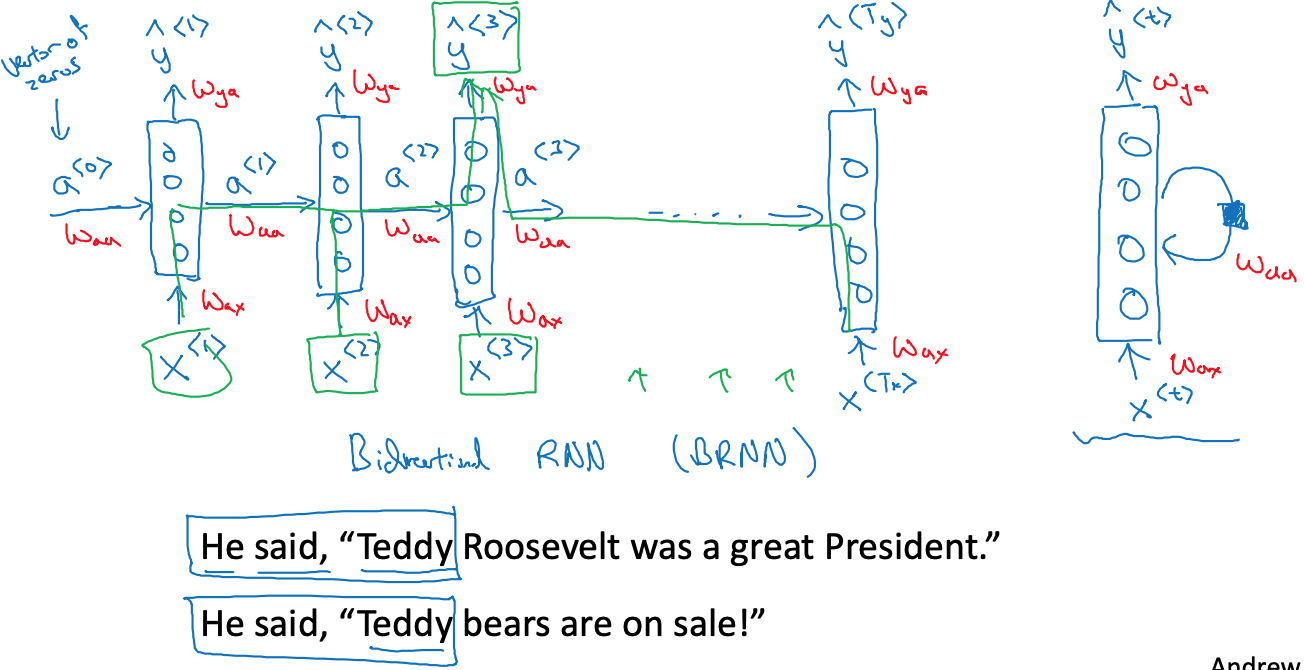
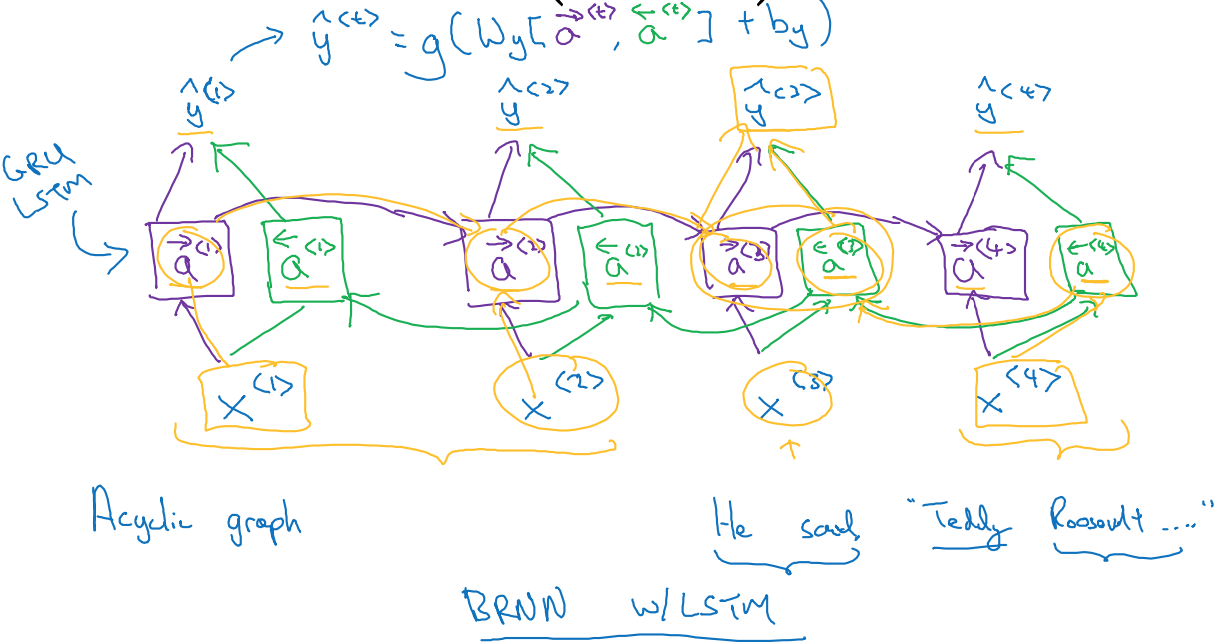
双向 RNN (Bidirectional RNN)
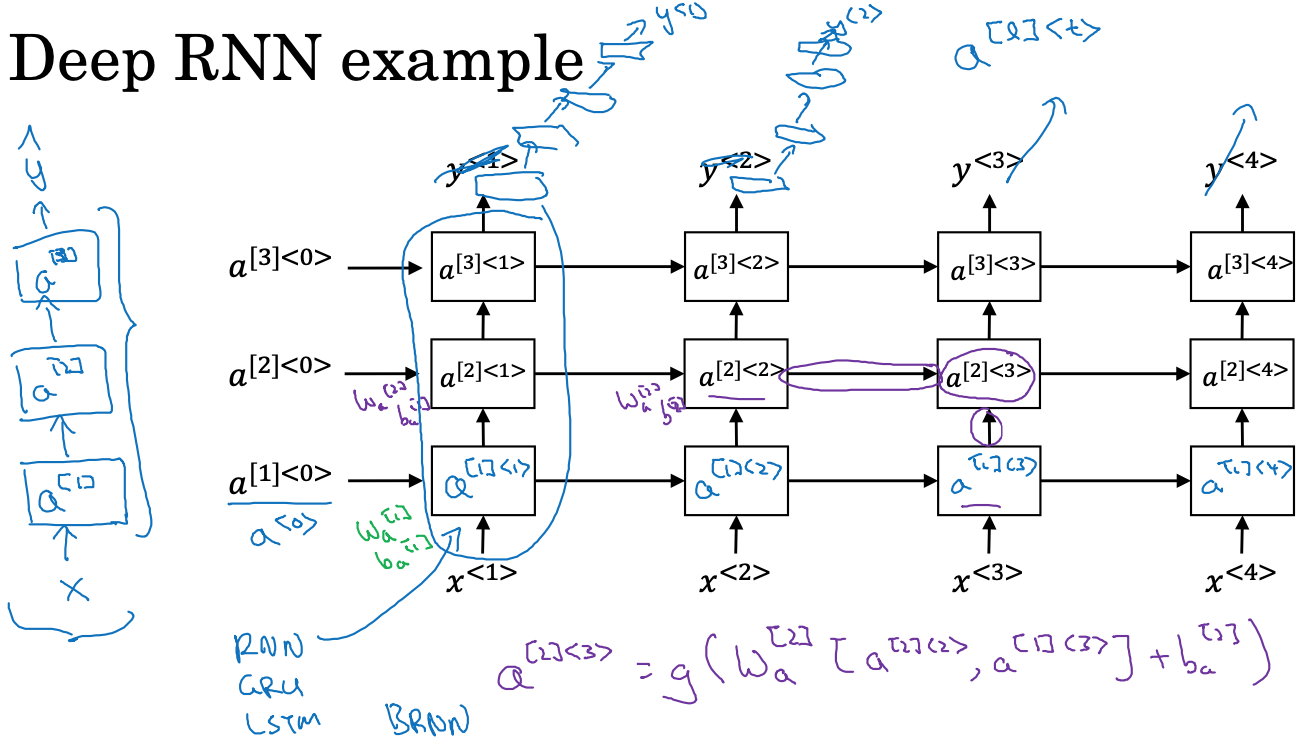
Deep RNN
*Transformers / BERT
Vaswani et al. 2017, Attention Is All You Need
动机 (Motivation) 和直觉 (Intuition)
动机 (Motivation)
- RNN -> GRU -> LSTM 是在时序上增加复杂度
直觉 (Intuition)
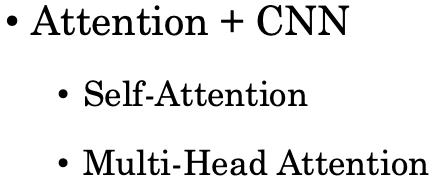
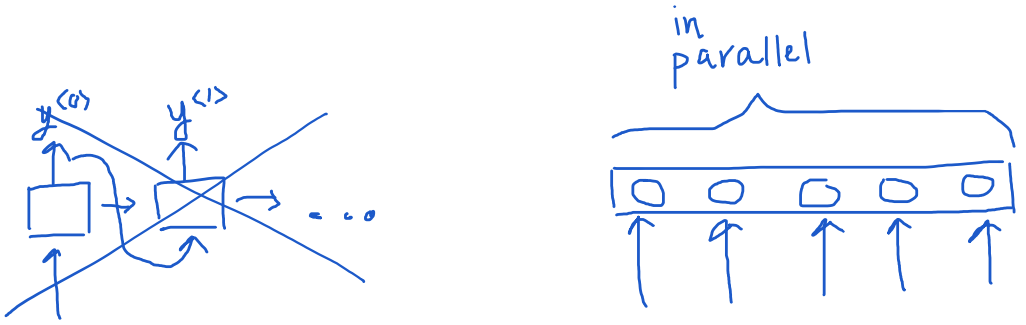
- 能否通过注意力机制 (Attention) 和 CNN 在平行层面增加抽象层次?
自注意力机制 (Self-attention)
自注意力机制的直觉

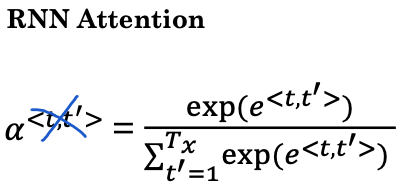
整体上和 RNN 中的 attention 机制相似,都有 softmax 计算
不同之处是,为每一个词增加了 K 和 V 向量表示,类似于数据库中的 k 和 v,如下
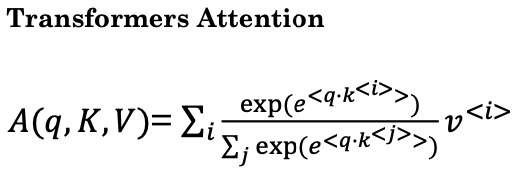
计算过程
计算A<3> 时,会对附近词的 K 和 V 都纳入计算,K 作为 attention 权重输入, V 作为 attention 数值的输入
对应的向量公式:
。dk 是一个 scale 项,对结果的影响可以忽略。
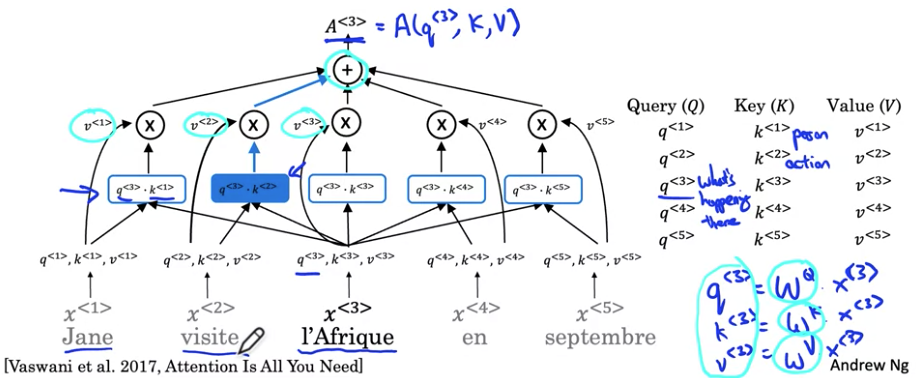
 。dk 是一个 scale 项,对结果的影响可以忽略。
Multi-Head Attention
每一个 head 就像是问了一个问题,不同问题对应的附近词的权重会不相同
在计算 Multi-head attention 的时候,会把各个 head 的计算结果拼接在一起来计算出一个总体的权重。
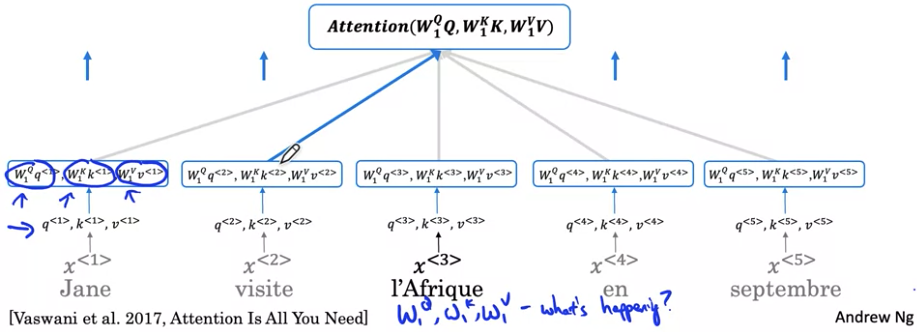

Transformer 详情
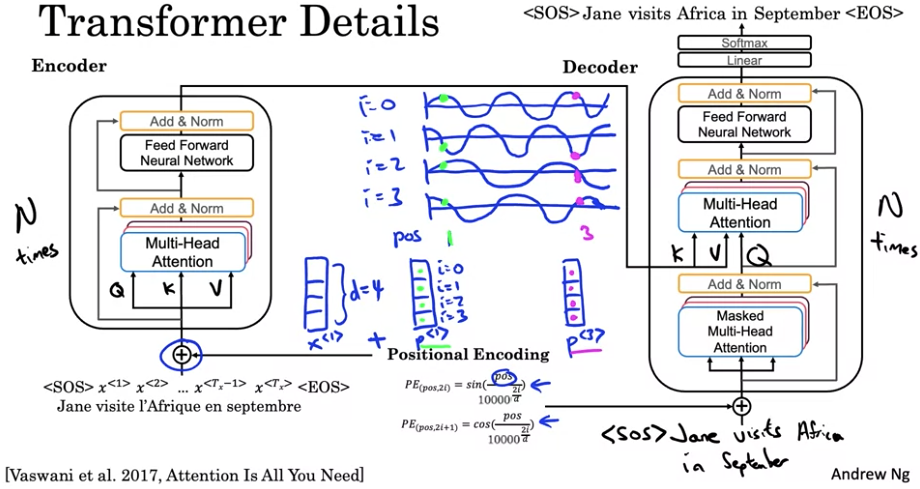
核心框架 Encoder & Decoder
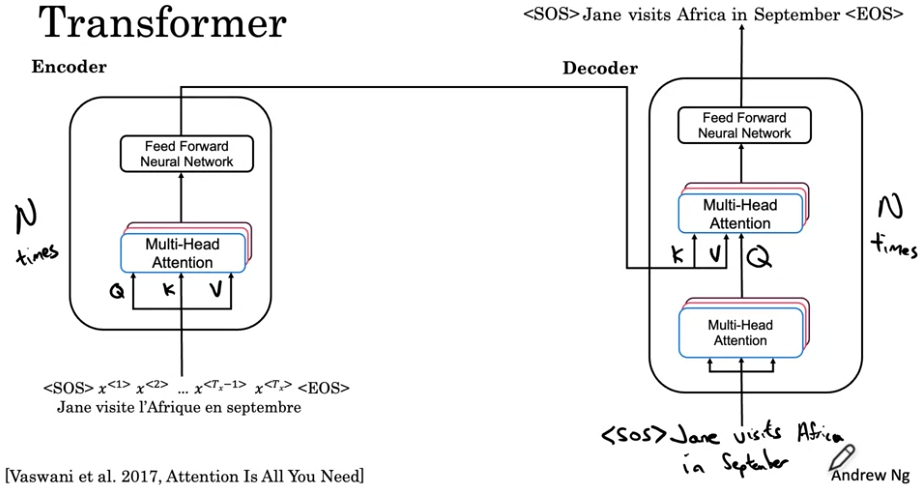
Encoder 和 Decoder 都会计算 N 次, Decoder 上次的输出,会加入到下次的输入。
如何获得 K 和 V 向量?
提升 transformer 性能的其他机制
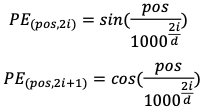
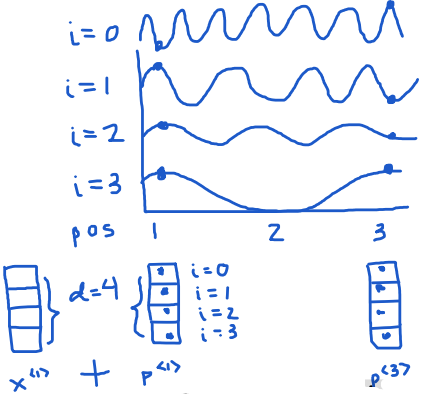
位置编码 (Positional Encoding)
ResNet connections:将位置信息传递到整个架构中。
Add & Norm: 可以加块训练速度。
Linear & Softmax layer:来预测下一个词。
Masked mult-head attention:在训练过程中模拟真实预测的场景,每次增加一个新词。