 Xiaopeng Xu
SCI 论文写作
原课程B站地址:https://www.bilibili.com/video/BV1zv41177JQ
笔记来源:https://blog.csdn.net/weixin_43093481/article/details/119299915
by 斯坦福 Kristin Sainani 教授
总结:
时间分配:70% 预写作,10% 初稿写作,20% 修正优化。
初稿写作顺序:图表,Results,Methods,Introduction,Discussion, Abstract。
修正:大声读出文章;动词检查;消除冗余;结构检查(检查逻辑,增加排比句);寻求外部反馈。
检查确定无病句,无与常识不符的错误观点
确定每一条立论的句子都有文献证据或实验证据的支持
对 baseline 方法保持尊重,不要有激烈的批评。
对比分析中,需要有足够的对比工作。
图片提交 TIFF 格式时,需要至少有 300dpi (每 inch 300 个像素点)无压缩。
代码需要提交到 github,原始数据和代码需要再 Zenodo 存档。其中,Zenodo 可从 github 生成版本。
最终检查:内容一致性、数值一致性、参考文献。
0. 前言
本文共分为七章,从宏观到具体,详细介绍了学术论文的写作方法,并结合大量实例,以供参考学习。
第一章从宏观角度出发,说明了论文写作从构思到最后终稿所需的三大阶段,介绍了合理的时间分配原则和各阶段的主要任务;
第二章详细说明了论文的写作方法及规范,先说明了论文各章节的写作顺序,然后按次顺序依次给出了各章节的写作方法、规范与技巧;
第三章进一步深入到具体句子层面的写作,介绍了简化句子、主动语态、注重动词这三个英语写作的核心方法;
第四章说明了英语中标点的使用方法及规范,通过不同标点的使用可让文章更加生动易读;
第五章说明了段落的写作原则,如何分段、如何写出逻辑清晰的段落;
第六章收集并总结了对于学术论文的常见错误观点,切中要害,推荐一定要看!
第七章介绍了整个论文的投稿过程,以及如何回复编辑邮件;
个人推荐前两章一定要看,能够基本理清思路,明白论文各部分该如何写;第六章所提问题十分典型,推荐阅读!其余章节可各取所需。
1.论文写作三大阶段 *(L4.2, L4.3)
三大阶段:
一篇论文从最开始的构思到最终的终稿成文,可分为三大阶段:预写作、初稿、修正。
预写作:
收集、综合、组织信息,处理好所有需要的数据
头脑风暴,提前想好文章重点是什么
构思观点、构建大纲
初稿:
将所有想法和观点、数据用结构化散文形式结合
主要关注逻辑结构,不必过于关注具体句子
修正:
大声朗读文章,检查语句是否通顺
简化句子,删除不必要的单词或短语
检查动词,使用强动词,判断动词是否合适
询问其他人意见
时间分配原则:
70%时间进行预写作、10%时间进行初稿写作、20%时间进行修正。
1.1 预写作阶段 (L4.3)
要点:
不要收集信息和写作同时进行
先收集和组织信息,然后再开始写作
注意事项
信息管理:
构建个人信息管理系统,将日常论文中信息整理汇总记录 (石墨,Google Sheets, Mendeley, Keynote)
- 花费更多时间整理组织信息,就能花费更少时间写作
用路线图形式 (roadmap) 组织关键信息,更易于阅读和具有逻辑性
头脑风暴:
随时思考:不要坐在电脑前思考,用任何空闲时间来思考文章,寻找灵感
想出文章的关键点/重点,即最想让读者记住的东西
设计文章格式
记录一些优美的句子
文章布局:
相同的观点应该放在一起
相同内容的段落应该放在一起
不要多次使用反观点 Don’t “Bait-and-Switch” your reader too many times.
- When discussing a controversy, follow: arguments (all) > counter-arguments (all) > rebuttals (all)
1.2 初稿写作阶段 (L4.4)
要点:
不要完美主义
初稿的目的:用合理方式将想表达的观点通过句子组合起来
更注重逻辑层面的结构,而不是具体句子细节
高效快速完成初稿,越快越好,避免拖延导致思路不连贯
例子 1
Errors in publication occur when the authors have typos, omissions, or such poor writing of the methods that others cannot figure out what they did or reproduce their tables and figures. Sometimes there’s just so much to write up that errors will occur in almost every case.
- 修改后:Published papers frequently have typos, omissions, and otherwise poor documentation of methods. These errors make it impossible to figure out exactly what was done or to reproduce the results.
例子 2
The finding of these HLA alleles may have some practical implications as well. Now we all divide up into those who carry archaic DNA and those who don’t. A potential implication is that people who carry archaic HLAs could be more prone to autoimmunity. Autoimmunity is associated with HLA factors. There could be downsides to archaic HLAs. Since we’ve evolved separately from Neanterdals for a few hundred thousand years, we may have evolved important differences in the proteins that interact with HLA. The archaic HLAs may interact more poorly with some of these proteins, potentially causing mistakes, like autoimmunity. “This is all just speculation. But we have been apart for all this time, so it would be very surprising if there weren’t differences,” Parham says. “It would solve a long-standing puzzle.”
- 修改后:Neanderthal (or Denisovan) proteins continue to live on and function inside us; and this may also have a downside, Parham notes. Neanderthals evolved separately from us for a few hundred thousands years, so their proteins may be somewhat mismatched to our immune systems and could play a role in autoimmune disease. Autoimmunity is poorly understood but known to be related to HLA types. “This is all just speculation. But we have been apart for all this time, so it would be very surprising if there weren’t differences,” Parham says. “It would solve a long-standing puzzle.”
例子 3
It’s also difficult to study the biology because the brain is so inaccessible. Cancer scientists can take out a tumor and look directly at the cells, but autism researchers cannot directly study brain cells (except on autopsy), let alone developing brain cells. Stanford is on the cutting edge of solving this problem—in fact, Dolmetsch’s solution is so innovative it seems straight out of a science fiction novel.
修改后:It’s also difficult to access the brain. Scientists can slice cancer cells out of a tumor and directly study them, but they can’t just scoop cells out of the brain, let alone the developing brain. Stanford is on the cutting edge of solving this problem—in fact, Dolmetsch’s solution seems straight out of a science fiction novel.
最终版:Another impediment: access to the brain. Scientists can slice cancer cells out of a tumor and study them directly, but they can’t just scoop cells out of the brain. Stanford is on the forefront of solving this problem—in fact, Dolmetsch’s solution seems straight out of a science fiction novel.
1.3 修正阶段 (L4.5)
要点:
(1) 大声读出文章:大脑以不同方式处理读和写,通过读出文章能发现很多写作时忽视的问题
(2) 动词检查:标记出句子中所有动词,检查是否出现下列问题:
- 弱动词:使用过于平淡的动词,不够生动
- 被动语态:应避免使用被动语态
- 动词埋没:动词与主语距离过远,导致句子难以理解
例:
(3) 消除冗余:关注以下问题:
过于复杂臃肿的单词和短语
空洞无意义的单词和短语
过长的单词或短语,用短单词替代
不必要的术语和缩写
无意义的同义词替换
不必要的修饰副词 (very, really, quite, basically)
(4) 结构检查:
标出每个段落的主旨句
重新布局各段落,让相同主旨的段落在一起
(5) 寻求外部反馈:
让别人看看你的初稿,尤其是非专业人士,他们更能发现:
文章的主要发现
文章的重点内容
文章的重要性
并让他们标记出觉得难懂的句子和段落
1.4 最终检查 (L4.6)
检查内容:
论文投稿前进行最终检查,主要关注:内容一致性、数值一致性、参考文献
内容一致性:
检查文中是否存在相互矛盾或不一致的数据等
例子:
“We followed participants for a minimum of 2 years” (methods section)
“The average follow-up time was 1.5 years” (results section)
数值一致性:
检查摘要中的数据是否和实验结论一致
检查文章中的数据是否和图表中一致
检查各图表中的数据是否一致
参考文献:
检查是否存在失效的引用,即无法找到引用文章
例子:“These data are particularly disturbing as the UVC emission is even larger than ambient sunlight on a mountain (13,14).”
Reference 13=broken URL link; searching on the site turns up no relevant information
Reference 14=contains no mention of ambient sunlight, mountains, or UVC light
引用信息不能支持文章论点
夸大或误解引用信息
引用传播/二手引用,未直接引用原始文章
Always cite/go back to primary sources!
Assume that other authors have made errors in citing sources!
引用编号错误,文中标号与引用文章标号不匹配
2.初稿写作* (L5)
初稿写作顺序:
Tables and Figures
Results
Methods
Introduction
Discussion
Abstract
2.1 表格与图表 (Tables and Figures) (L5.1)
重要性:
通常被最先阅读,会直接影响编辑对全文的评价 Editors, reviewers, and readers may look first (and maybe only) at titles, abstracts, and tables and figures!
图表和表格需要独立且完整,读者无需阅读其他内容即可理解 Figures and tables should stand alone and tell a complete story. The reader should not need to refer back to the main text.
“An article about computational science in a scientific publication isn’t the scholarship itself, it’s merely advertising of the scholarship. The actual scholarship is the complete software development environment and the complete set of instructions which generated the figures.”—Jon Claerbout, Stanford
要点:
用最少数量的图表和表格讲明事情 Use the fewest figures and tables needed to tell the story.
图表和表格中不要出现重复数据 Do not present the same data in both a figure and a table.
表格与图表区别:
Figures
Visual impact
Show trends and patterns
Tell a quick story
Tell the whole story
Highlight a particular result
Tables
Give precise values
Display many values/variables
2.1.1 表格 (L5.1)
标题:
能表明该表格的重点或主题 Identify the specific topic or point of the table
表格中各部分 (标题、列标题) 使用相同关键词 Use the same key terms in the table title, the column headings, and the text of the paper
保持简洁 Keep it brief!
脚注:
根据各期刊的指导使用脚注
- A standard series is: *, †,‡,¶,#,**,††, etc.
使用脚注强调数据的重要性和不同点
- E.g., *p<.01 vs. control by ANOVA
使用脚注解释实验细节或缩写
E.g., EDI is the Eating Disorder Inventory (reference)
Amenorrhea was defined as 0-3 periods per year
格式:
推荐直接使用期刊提供的表格模板
大多数期刊使用三水平线表格
需要遵循期刊对表格的要求 Follow journal guidelines RE:
Roman or Arabic numbers
centered or flush left table number, title, column, headings, and data
capital letters and italics
the placement of footnotes
the type of footnote symbols
正确的表格格式:
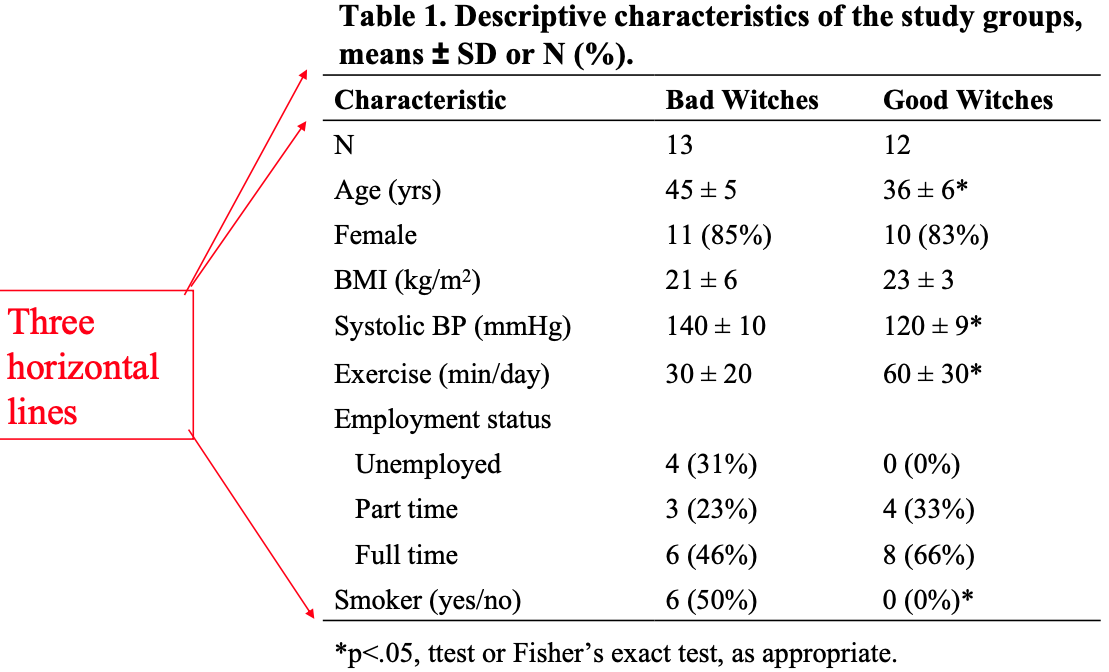 或
或
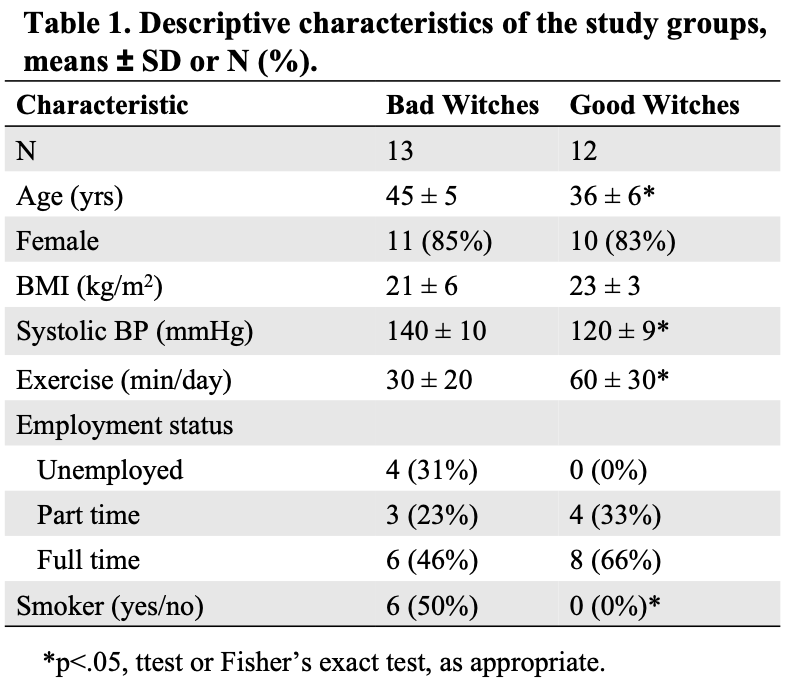
注意事项
保证所有内容都正确对齐,这样看起来会更专业
表格中数值的精确度要合理
给出指标的单位
去掉非必要的列
2.1.2 图表 (L5.1)
图表类型:
主要证据 (Primary evidence):展示和实验有关的数据
图表 (Graphs):包含折线图、柱状图、点阵图等
图画 (Drawings and diagrams):展示实验流程、因果关系等
题注 Figure legends:
要点:让图表独立完整
内容:
标题 Brief title
关键实验细节 Essential experimental details
符号定义 Definitions of symbols or line/bar patterns
图表解释 Explanation of panels (A,B,C,D, etc.)
统计数据 Statistical information (tests used, p-values)
例子:
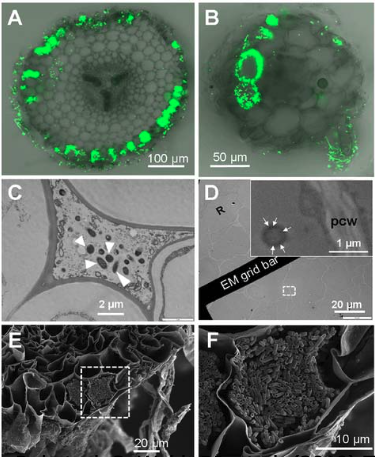
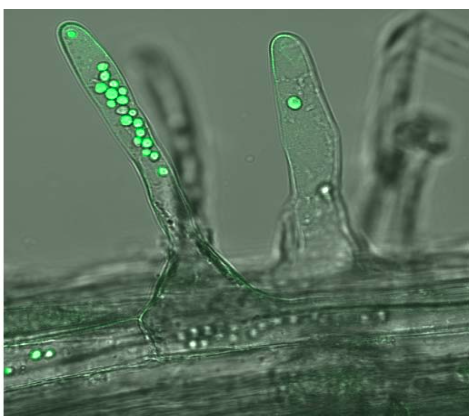
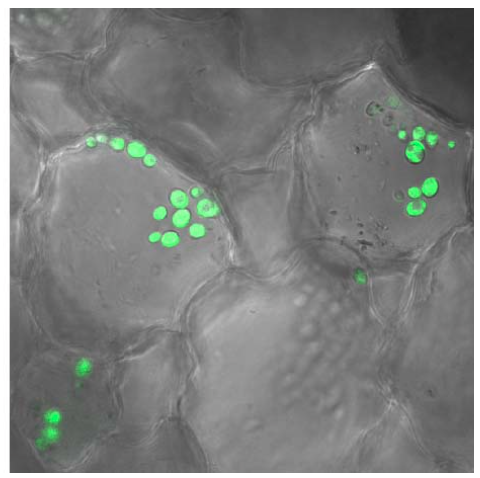
Figure 2. Root transverse sections and electron micrographs of tomato and Arabidopsis show GFP E. coli in the apoplast and inside root cells. E. coli was detected inside tomato roots (A, C and D, E and F) and Arabidopsis roots (B). (A and B) Fluorescent images of transverse sectioned roots taken by CLSM. (C and D) Images taken by a transmission electron microscope. White triangles in (C) indicate E. coli cell present in apoplast. (D) Roots were probed with immunogold-labeled anti-GFP revealing E. coli in root cortex cells. Sub-image in (D) is a detail of dash-white square box. Gold labeling is marked with white arrows. Rhizodermis cell (R) and plant cell wall (pcw) is indicated. (F) is a detail image of (E) showing plant cells containing E. coli, and both images were taken by SEM.
(1) 主要证据(Primary Evidence):
定义:用来展示实验结果或实验中使用的关键数据
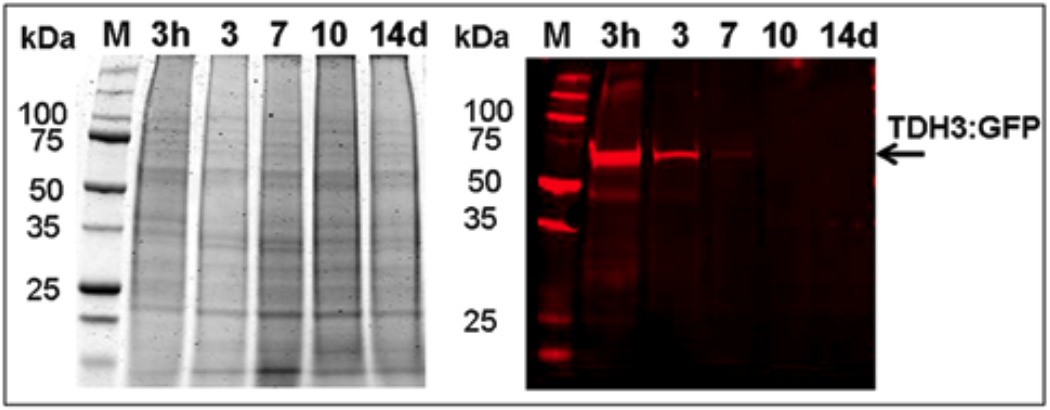
electron micrographs, gels, photographs, pathology slides, X-rays, etc.
indicates data quality
“Seeing is believing”
例:
Figure 2. Root transverse sections and electron micrographs of tomato and Arabidopsis show GFPE. coli in the apoplast and inside root cells.
(2) 图表(Graphs):
要点:确保简洁易读、逻辑清晰,不适合表达过于复杂的数据(应用表格)
类型:line graphs, scatter plots, bar graphs, individual-value bar graphs, histograms, box plots, and survival curves.
常见类型:
折线图:用于展示随时间变化的趋势 Used to show trends over time, age, or dose (can display group means or individuals)

柱状图:用于同一时间点不同类别数据间比较。简单直观,易于理解 Used to compare groups at one time point; tells a quick visual story
最好能显示数值散点图:表示两变量间的关系,如线性关系。包含各独立数据信息,信息密度较大 Used to show relationships between two variables (particularly linear correlation); Allows reader to see individual data points=more information!
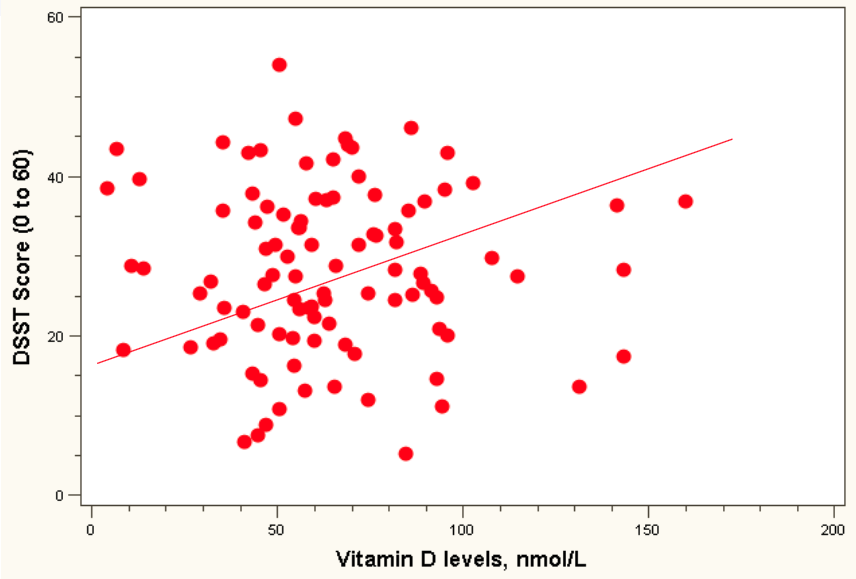
- 反例,散点图中的线会产生误导性,要小心使用。
- 反例,散点图中的线会产生误导性,要小心使用。
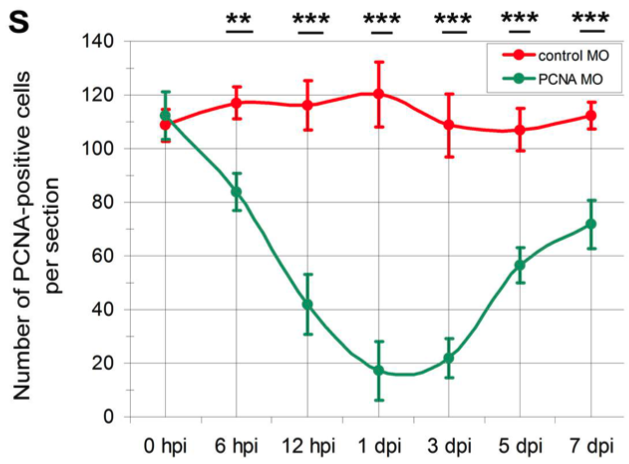
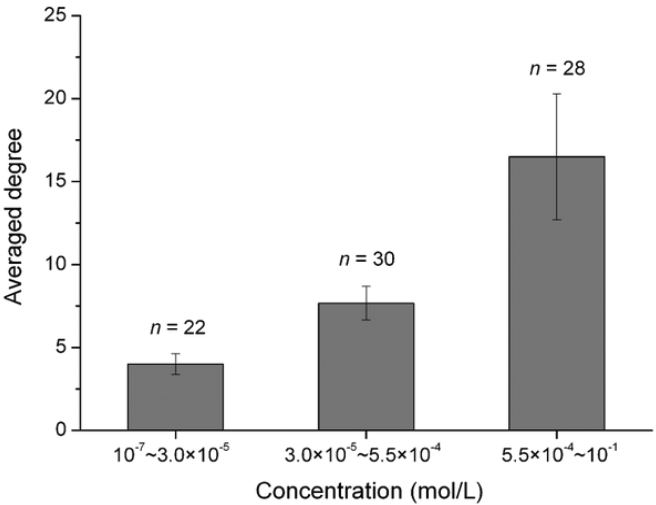 最好能显示数值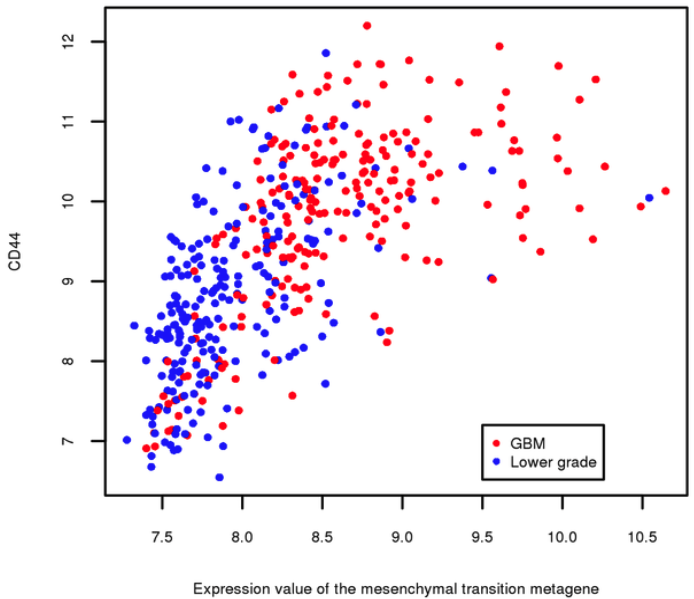
使用图表的小提示:
Tell a quick visual story
Keep it simple!
Make it easy to distinguish groups (e.g., triangles vs. circles vs. squares is not easy!)
If it’s too complex, maybe it belongs in a table
反例:过于复杂,不够简洁直观,不易理解
过于复杂的数据,应该用表格展示。
反例1:
右图中太多 *,看着很混乱
柱图和线图中的信息重复,其实并不需要
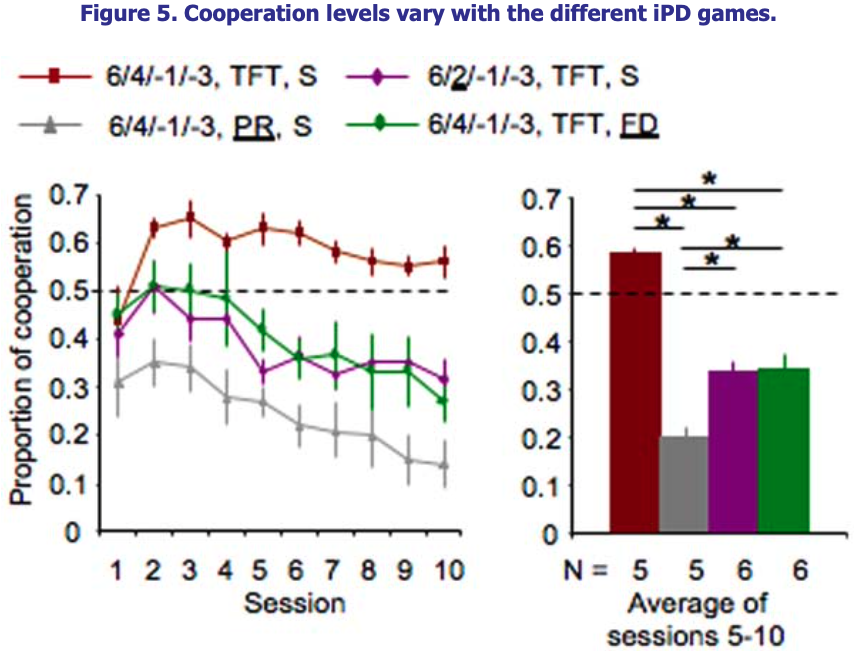 反例2:
反例2:
- 图中展示了太多信息,且无法从图中直接看到 pattern。不如转成表格。
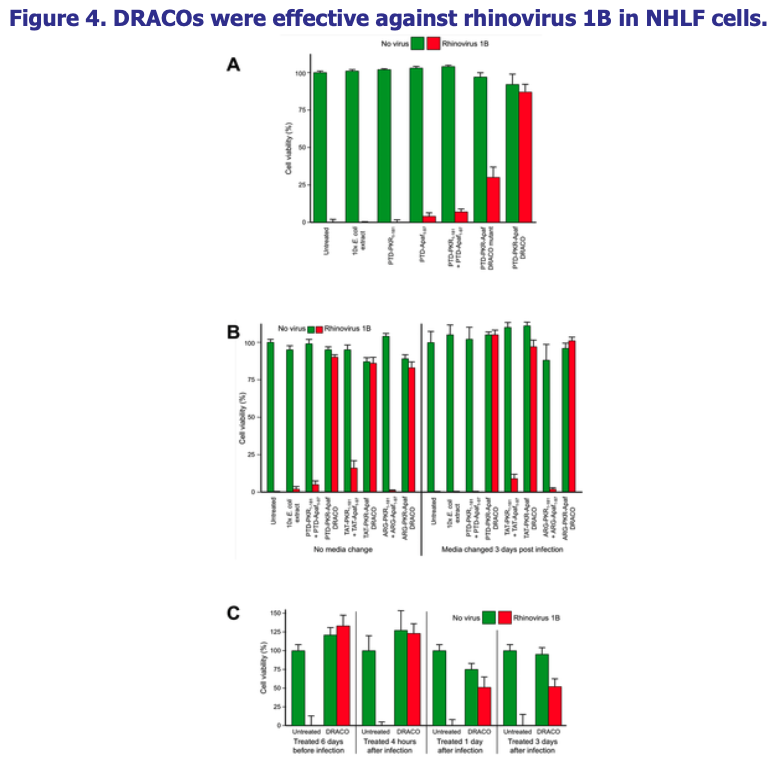
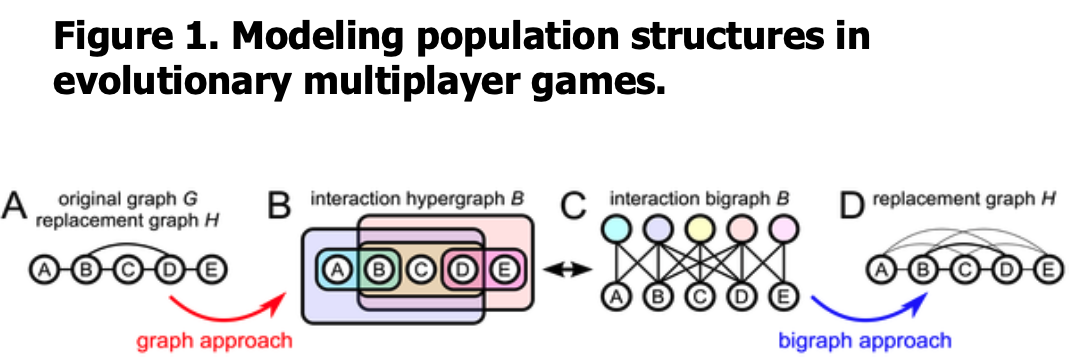
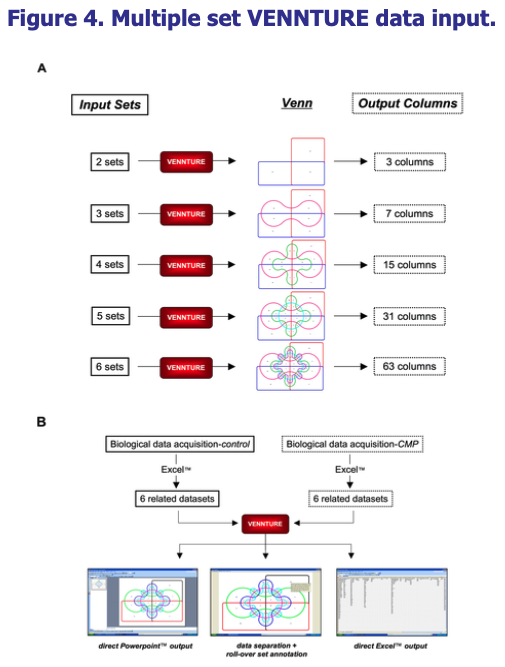
(3) 图画 (Diagrams and Drawings)
可用来表示实验设置、实验流程、因果关系等
illustrate an experimental set-up or work-flow
indicate flow of participants
illustrate cause and effect relationships or cycles
give a hypothetical model
没有规定格式,可以自由发挥(漫画等皆可)
- represent microscopic particles or microorganisms as cartoons
例子:
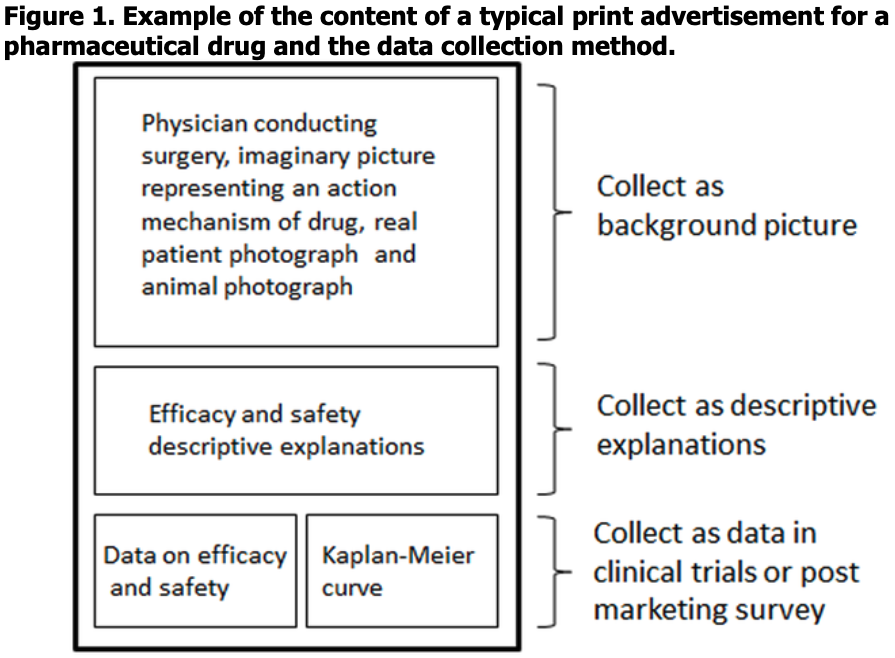
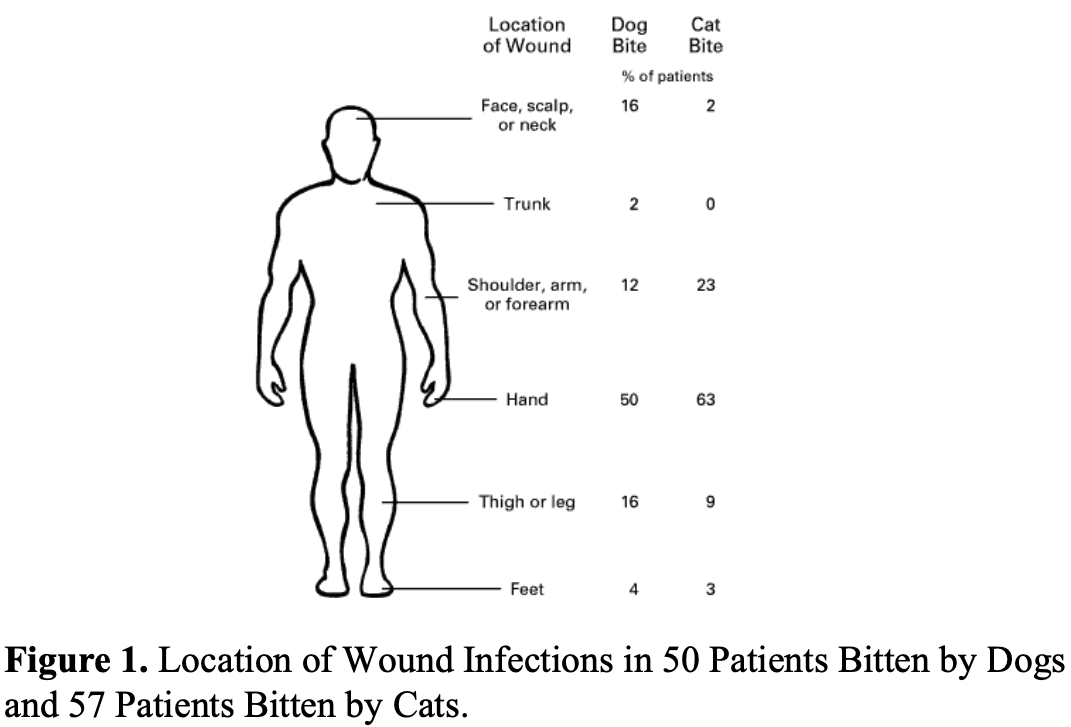
(4) 其他补充材料:
在论文投稿时,可以在附加中添加视频等其他材料,编辑很乐于接受这些补充材料!
2.2 结果 (Results) (L5.2)
注意:结果部分不仅仅是对实验结果的展示,还要对实验结果进行高层次摘要
要点:
总结实验结果并展示 Summarize what the data show
指出存在的关系 Point out simple relationships
说明大趋势 Describe big-picture trends
引用图表来提供数据支持观点 Cite figures or tables that present supporting data
避免对图表中已有信息进行简单重复,不是对图表内容的复述 Avoid simply repeating the numbers that are already available in tables and figures
例子:
“Over the course of treatment, topiramate was significantly more effective than placebo at improving drinking outcomes on drinks per day, drinks per drinking day, percentage of heavy drinking days, percentage of days abstinent, and log plasma - glutamyl transferase ratio (Table 3).”
“The total suicide rate for Australian men and women did not change between 1991 and 2000 because marked decreases in older men and women (Table 1) were offset by increases in younger adults, especially younger men.7”
反例:
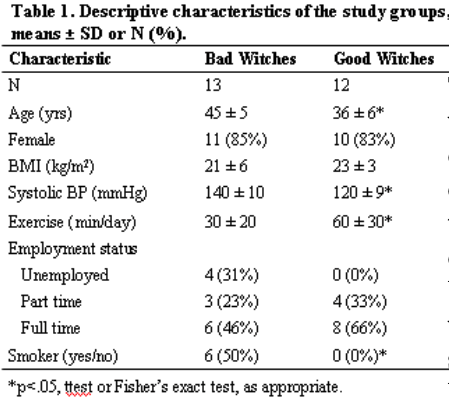
Original:
The characteristics of the bad witches and the good witches are shown in Table 1. There was a significant difference in age between the groups. The mean age of the bad witches was 45 ± 5; and the mean age of the good witches was 36 ± 6. There was no significant difference in gender between the groups, with the bad witches having 85% females and the good witches having 83% females. BMI was not significantly different between the groups, which both had normal BMIs. Systolic blood pressure and exercise were significantly different. The bad witches had a mean blood pressure of 140 ± 10, whereas the good witches had a mean blood pressure of 120 ± 9. Estimated daily exercise was higher in the good witches (60 ± 30) than the bad witches (30 ± 20). Employment was not significantly different between the two groups…
Revised:
The witches were, on average, lean and predominantly female (Table 1). Bad witches were significantly older, had higher blood pressures, exercised less, and were more likely to smoke than good witches. More bad witches were unemployed, but this difference did not reach statistical significance.
建议:
如果内容较多,可用子标题将其分成多个子部分
对图表中信息进行补充说明
如果图表中没有提供数值,可给出精确的数据
给出不同统计数据:如果图表中给出绝对值,结果中可给出百分比变化以补充信息
只重复/强调重要数据
讨论负面结果,不要只说好的方向
不要乱用 “significant”,除非已经做了统计显著性分析
不应包含实验方法等具体实验过程,应放在方法论部分。注意不要在结果部分讨论分析的动机
不应包含对结果意义的评论,应放在讨论部分
反例
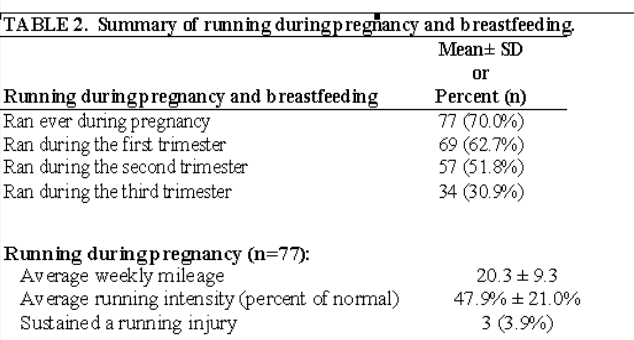
Original:
The majority of runners ran during pregnancy (70.0%, 77/110), with 62.7% running during the first trimester, 51.8% during the second trimester, and fewer than one third (30.9%) during the third trimester (Table 2). From the 77 women who ran during pregnancy, we observed the average weekly mileage during pregnancy for those who ran to be 20.3 ± 9.3 miles. Average running intensity was reported to be 47.9% ± 21.0% as a percent of non-pregnant running effort. A small number (3.9%, 3/77) reported sustaining a running injury while pregnant.
Edited:
Seventy percent of runners (n=77) ran sometime during pregnancy, and almost a third ran through the third trimester (Table 2). On average, women who ran during pregnancy greatly curtailed their training—cutting their weekly mileage and running intensity to about half of pre-pregnancy efforts. Only 3 (3.9%) reported sustaining a running injury while pregnant.
时态问题
已经完成的动作,需要用过去时 Use past tense for completed actions:
We found that…
Women were more likely to…
Men smoked more cigarettes than… The average reaction time was…
可以用一般现在时:作者的论断,表格的说明和数据中发现可以用
Use the present tense for assertions that continue to be true, such as what the tables show, what you believe, and what the data suggest:
Figure 1 shows…
The findings confirm…
The data suggest…
We believe that this shows…
例子
Information was available for 7766 current cigarette smokers. Of these, 1216 (16%) were classified as hardcore smokers. Table 1 gives characteristics of all the smokers. The most striking difference was that hardcore smokers were about 10 years older on average and tended to be more dependent on tobacco. Significantly more hardcore smokers had manual occupations, lived in rented accommodation, and had completed their full time education by the age of 16 years. There was no difference by sex.
使用主动语态 Use the active voice!
会更加生动!
因为讨论的主题是实验,可以自由使用“we”,来保持 active voice。
例子 1. Comparison with Californian estimates
Using the same definition of hardcore smoking as adopted in the Californian study, we found a prevalence of 17% across all age groups and 19% among smokers aged 26 compared with a figure of 5% for this group in the US study. When we added the Californian requirement of 15 cigarettes a day to our criteria we found a prevalence of 10% among smokers aged 26, still twice the prevalence in California
例子 2. Differences in attitudes and beliefs by level of dependence
To test whether it was appropriate to exclude a measure of cigarette dependence from our criteria for defining hardcore smoking, we compared attitudes and beliefs by dependence in hardcore and other smokers (table 4). For most items, beliefs were similar in low and high dependence hardcore smokers but strikingly different from those of other smokers. For example, almost 60% of both low and high dependency non-hardcore smokers agreed that improved health would be a major benefit from quitting whereas among hardcore smokers only 27% of low dependency and 32% of high dependency smokers agreed. Similar differentiation in beliefs by hardcore smoking status, but not dependence level, emerged for other items, especially those related to health
2.3 方法论 (Methods) (L5.3)
要点:
(1) 给出清晰的全局概述,说明实验具体流程,做了什么
(2) 给出足够信息使读者能够复现实验
(3) 给出尽可能完整的信息,但同时要简单易读,不要过于复杂。常用方法:
a. 分成多个子部分:使用子标题细分
b. 引用常用方法:常用方法可直接引用他人文章,避免文章过于复杂。例:Each peptide was covalently coupled to agarose (AminoLink Kit, Pierce Chemical), and 30-to-200-ml quantities of each crude polyclonal antiserum were affinity-purified with the use of the appropriate immobilized peptide, as previously described.13
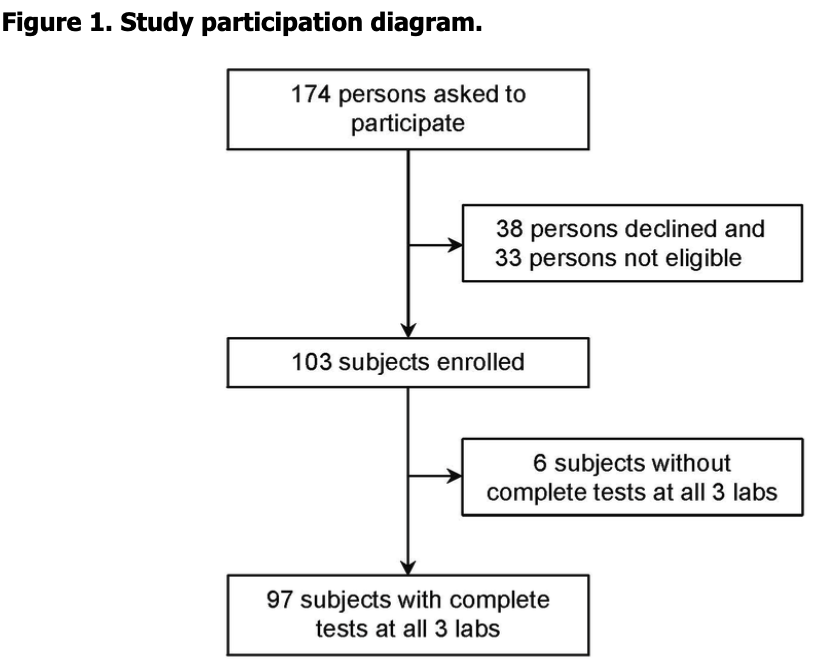
c. 用流程图或表格等方式展现:简洁直观,易于理解
(4) 在该部分可以使用术语、被动语态等更书面化的表达
可用被动语态:更强调方法和变量、易于读者找到关键词。
可用较多术语:确保描述更具体,更准确。
例1:For sequencing, amplicons were purified with ExoSAP- Codes. The partial nucleotide sequences of the polymerase gene were aligned with published coronavirus sequences, using CLUSTAL W for Unix (version 1.7).
例2:Peptides were synthesized by the Biopolymer Core Facility, Massachusetts General Hospital, Boston. Peptides representing portions of the FGF-23 precursor — [Cys70]FGF-23(51–69)amide, [Tyr185] FGF-23(186–206)amide, [Tyr223]FGF-23(206–222)amide, and [Tyr224]FGF-23(225–244)amide — were coupled to keyhole limpet hemocyanin, emulsified with complete Freund’s adjuvant, and used for subcutaneous immunization of eight goats (with approximately 100 μg per animal); each…
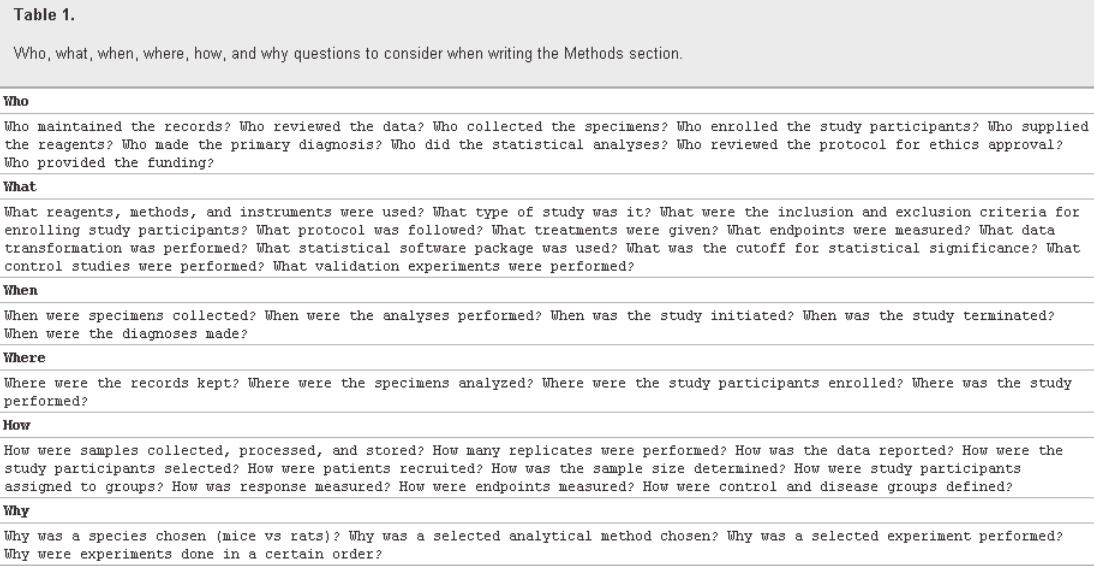
写法/原则:
通用原则:who、what、when、where、how、why
以医学为例:
Materials
- Drugs, buffers, chemicals, gases, reagents, celllines, etc.
Participants/subjects
Animals (state that the research was approved by the appropriate committee at your institution)
Humans (statethattheresearchwasapprovedbytheappropriate committee at your institution)
Experimental protocol/study design
Measurements
Howwerethedependentandindependentvariablesmeasured
- Instruments (telescope, microscope, weighing scale, questionnaire, etc.)
Analyses
时态的使用:
说明方法时用过去时:因为实验已经完成 Report methods in past tense (“we measured”)
说明数据时用现在时:数据用于支持当前文章观点 But use present tense to describe how data are presented in the paper (“data are summarized as means ± SD”)
可使用被动语态:
Passive:
- E.g., Oral temperatures were measured. Emphasizes the method or variable.
Active:
E.g., We measured oral temperatures
More lively, but sacrifices having the material/method/variable as the subject of the sentence
Requires creativity to avoid starting every sentence with We!
2.4 导入 (Introduction) (L5.4)
标准规范:
长度:通常3段,2~5段
内容:不要过多综述大问题,而应针对文章要解决的具体小问题进行详细说明
写作流程:
简单介绍大背景,已有信息
说明问题所在,未知信息
针对具体问题/假设进行说明:即本文研究的主要假设和目的
简单介绍本文使用的方法和原因
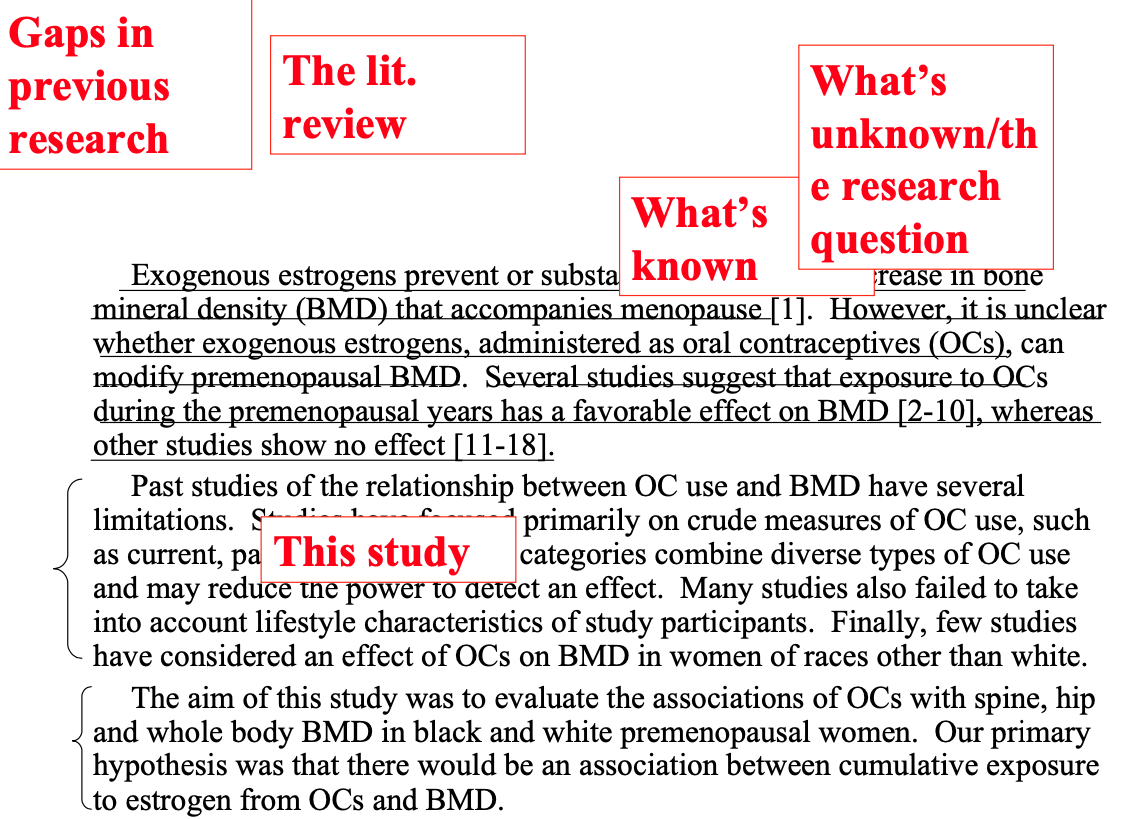
标准结构:三段结构
第一段:已知信息,说明大背景
第二段:未知信息,前人研究的局限或问题
第三段:本文要解决的问题、本文实验方法、本文方法的创新点和重要性
技巧:
保持段落简短
面对一般读者写作,应清晰、简洁、非技术
一步步让读者知道问题是什么,循循善诱
- Known > Unknown > Question/hypothesis
强调本文方法如何解决这种问题,本文方法的优势 (the unknown)
清晰说明本文研究的问题/目标/假设
- “We asked whether”; “Our hypothesis was”; “We tested the hypothesis that”; “Our aim/s were”
不需要包含实验结果和对结果的分析
高层次总结,不要具体说明之前人都做了哪些事(属于讨论部分)
例子:
2.5 讨论 (Discussion) (L5.5)
特点:
- 是自由度最大的部分,能充分展示写作水平,也是最具挑战性的部分
写作流程:
I.e., what do my results mean and why should anyone care?
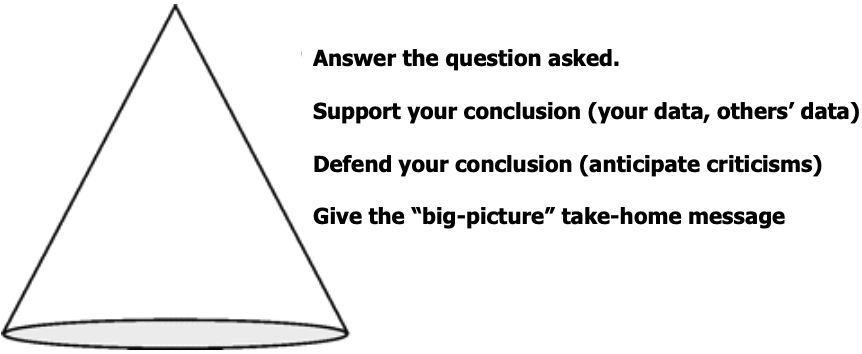
回答问题:回答在导入部分提出的假设
支持观点:引用自己或他人的数据支持观点
维护观点:对可能的反对观点进行辩驳
展望:未来发展,本文研究的重要性
标准结构:7段结构
写作流程:
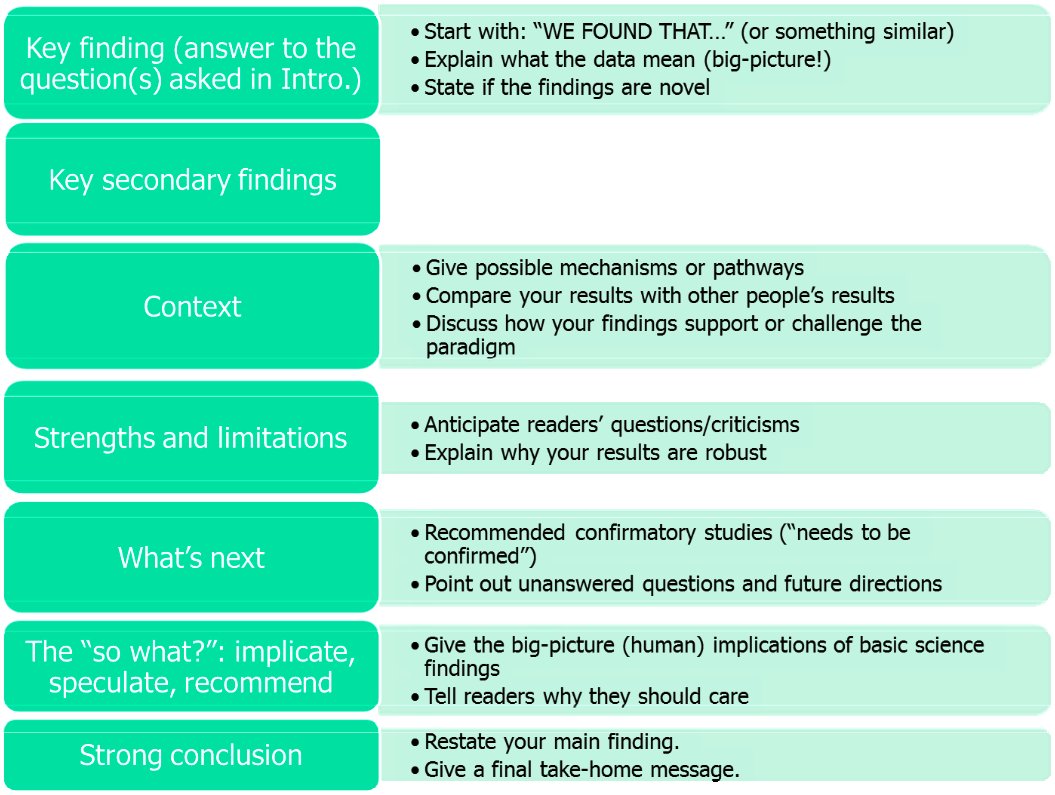
技巧:
展示写作水平:
使用主动语态 Use the active voice
用讲故事的方式 Tell it like a story
开头结尾强调结论/贡献 “We found that…”
不要远离数据:聚焦于数据能实际证明的事物,而不是希望能证明的事物 Focus on what your data do prove, not what you had hoped your data would prove
关注局限/缺点:不要写过于广泛空洞的缺点,更关注本文,更实际的缺点 Focus on the limitations that matter, not generic limitations
确保信息清晰一致 Make sure your take-home message is clear and consistent
时态:
过去时:引用其他人的研究细节、结论、分析、背景等
现在时:数据支持了什么
例子:
导入部分提出假设:The differences in health benefits between a carbohydrate-restricted diet and a calorie- and fat-restricted diet are of considerable public interest. However, there is concern that a carbohydrate-restricted diet will adversely affect serum lipid concentrations.1 Previous studies demonstrating that healthy volunteers following a low-carbohydrate diet can lose weight have involved few subjects, and few used a comparison group that followed consensus guidelines for weight loss.2,3 The reported effects of a carbohydrate-restricted diet on risk factors for atherosclerosis have varied.2,3,4 We performed a study designed to test the hypothesis that severely obese subjects with a high prevalence of diabetes or the metabolic syndrome [a] would have a greater weight loss, [b] without detrimental effects on risk factors for atherosclerosis, while on a carbohydrate- restricted (low-carbohydrate) diet than on a calorie- and fat- restricted (low-fat) diet.
讨论部分给出对假设的检验与分析:We found that severely obese subjects with a high prevalence of diabetes and the metabolic syndrome lost more weight in a six-month period on a carbohydrate- restricted diet than on a fat- and calorie-restricted diet. [answer to a] The greater weight loss in the low- carbohydrate group suggests a greater reduction in overall caloric intake, rather than a direct effect of macronutrient composition. [mechanisms] However, the explanation for this difference is not clear. Subjects in this group may have experienced greater satiety on a diet with liberal proportions of protein and fat. However, other potential explanations include the simplicity of the diet and improved compliance related to the novelty of the diet. [possible mechanisms/unanswered questions]Subjects in the low-carbohydrate group had greater decreases in triglyceride levels than did subjects in the low-fat group; nondiabetic subjects on the low-carbohydrate diet had greater increases in insulin sensitivity, and subjects with diabetes on this diet had a greater improvement in glycemic control. No adverse effects on other serum lipid levels were observed. [answer to b] Most studies suggest that lowering triglyceride levels has an overall cardiovascular benefit.14,15,16 Insulin resistance promotes such atherosclerotic processes as inflammation,17 decreased size of low-density lipoprotein particles,18 and endothelial dysfunction.19 Impaired glycemic control in subjects with other features of the metabolic syndrome markedly increases the risk of coronary artery disease.20 As expected, we found that the amount of weight lost had a significant effect on the degree of improvement in these metabolic factors.[comparison to previous studies and paradigms] However, even after adjustment for the differences in weight loss between the groups, assignment to the low-carbohydrate diet predicted greater improvements in triglyceride levels and insulin sensitivity. **[unexpected]**Subjects who lost more than 5 percent of their base-line weight on a carbohydrate-restricted diet had greater decreases in triglyceride levels than those who lost a similar amount of weight while following a calorie- and fat-restricted diet. **[supporting details]**There was a consistent trend across weight-loss strata toward a greater increase in insulin sensitivity in the low-carbohydrate group, although these changes were small and were not significant within each stratum. **[supporting details: dose/response]**Although greater weight loss could not entirely account for the greater decrease in triglyceride levels and increase in insulin sensitivity in the low-carbohydrate group, we cannot definitively conclude that carbohydrate restriction alone accounted for this independent effect. [mechanisms] Other uncontrolled variables, such as the types of carbohydrates selected (e.g., the proportion of complex carbohydrates or the ratio of carbohydrate to fiber), or other unknown variables may have contributed to this effect. In addition, more precise measurements of insulin sensitivity than we used would be needed to confirm this effect of a carbohydrate-restricted diet. **[limitations/future studies]**Many of our subjects were taking lipid-lowering medications and hypoglycemic agents. Although enrolling these subjects introduced confounding variables, it allowed the inclusion of subjects with the obesity-related medical disorders typically encountered in clinical practice. Analyses from which these subjects were excluded still revealed greater improvements in insulin sensitivity and triglyceride levels on a carbohydrate-restricted diet than on a fat- and calorie-restricted diet. **[limitations and how they were addressed]**Our study included a high proportion of black subjects, a group previously underrepresented in lifestyle- modification studies. [strength] As compared with the white subjects, the black subjects had a smaller overall weight loss. Future studies should explore whether greater weight loss in this population can be achieved by more effective incorporation of culturally sensitive dietary counseling. **[future directions]**The high dropout rate in our study occurred very early and affected our findings. The very early dropout of these subjects may indicate that attrition most closely reflected base-line motivation to lose weight, rather than a response to the dietary intervention itself. **[limitation]Taken together, our findings demonstrate that severely obese subjects with a high prevalence of diabetes and the metabolic syndrome lost more weight during six months on a carbohydrate-restricted diet than on a calorie- and fat-restricted diet. The carbohydrate-restricted diet led to greater improvements in insulin sensitivity that were independent of weight loss and a greater reduction in triglyceride levels in subjects who lost more than 5 percent of their base-line weight. [conclusion; restate answers to a and b] These findings must be interpreted with caution, however, since the magnitude of the overall weight loss relative to our subjects’ severe obesity was small, and it is unclear whether these benefits of a carbohydrate- restricted diet extend beyond six months. Furthermore, the high dropout rate and the small overall weight loss demonstrate that dietary adherence was relatively low in both diet groups.[big picture]**This study proves a principle and does not provide clinical guidance; given the known benefits of fat restriction, future studies evaluating long-term cardiovascular outcomes are needed before a carbohydrate- restricted diet can be endorsed. [take-home message]
注意:不要一上来就指出自己文章的不足。
时态的使用:
Past, when referring to study details, results, analyses, and background research:
We found that
Subjects may have experienced
Miller et al. found
Present, when talking about what the data suggest: The greater weight loss suggests The explanation for this difference is not clear. Potential explanations include
2.6 摘要(Abstract) (L5.6)
功能/特点:
概述全文主要内容
强调各部分的重要内容
限制长度:100-300字
自完整:自成体系,不需要阅读文章其他部分就可以理解
包含关键词
大多数读者只阅读摘要部分
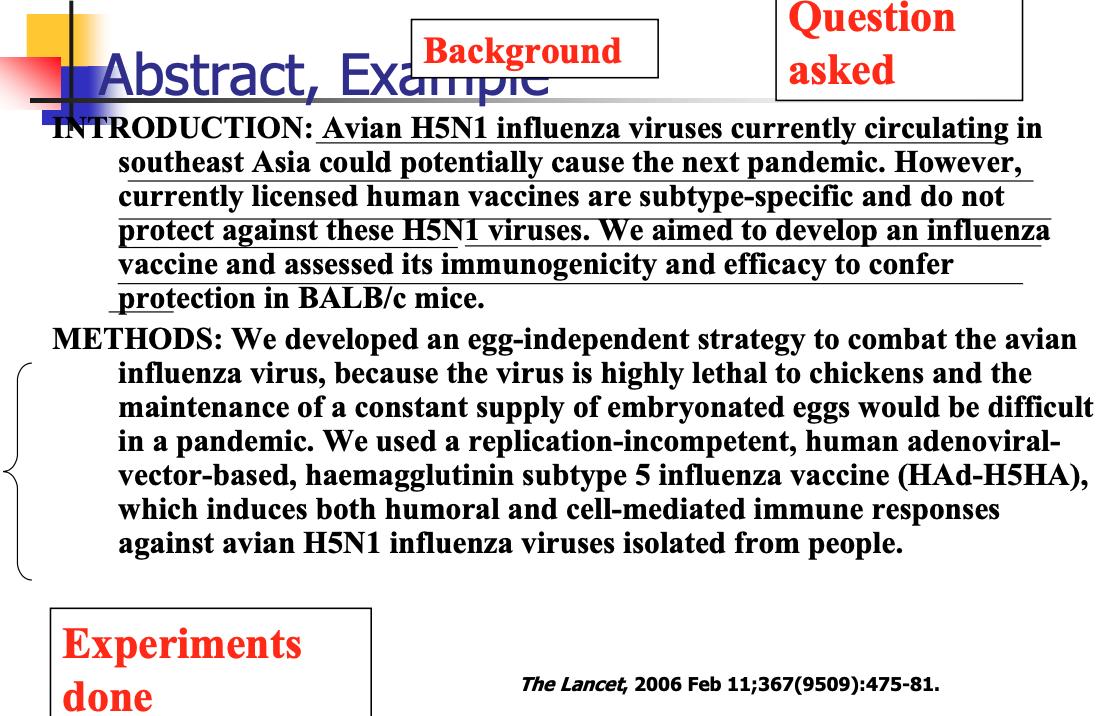
写作流程:
背景:一句话说明本文所属领域
问题/目的/假设:说明本文研究问题
实验:说明关键材料和关键方法
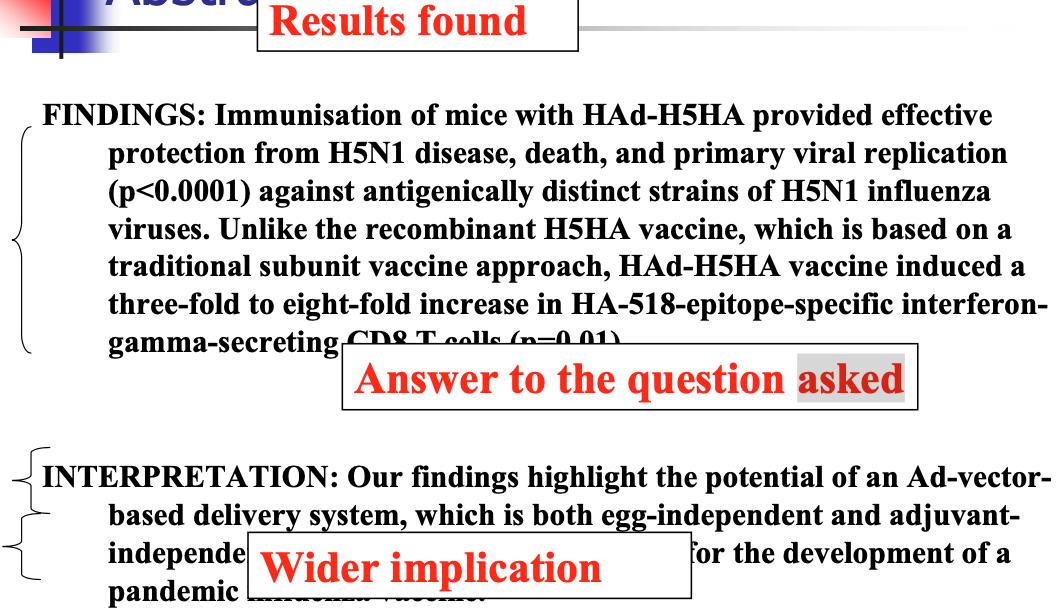
结果:关键结果、关键数据
总结:说明本文最重要的贡献 The answer to the question asked/take-home message
重要性:说明本文的重要性 Implication, speculation, or recommendation
结构:
可以是结构化的 (有子标题),也可以是非结构的;视具体期刊规定
技巧:
最后写摘要部分:可以从文章各部分中摘取句子
例子:
结构型:
非结构型:
Empirical research with nonhuman primates appears to support the view that causal reasoning is a key cognitive faculty that divides humans from animals. The claim is that animals approximate causal learning using associative processes. The present results cast doubt on that conclusion. Rats made causal inferences in a basic task that taps into core features of causal reasoning without requiring complex physical knowledge. They derived predictions of the outcomes of interventions after passive observational learning of different kinds of causal models. These competencies cannot be explained by current associative theories but are consistent with causal Bayes net theories.
2.7 其他部分 (L6.2)
2.7.1 作者 (Authorship)
作者身份分配:
- 作者是需要对文章承担责任的人,不要随意把别人列为作者,因为他们不想为你的文章负责
作者排序:
- 按着贡献排序,第一作者通常是完成初稿的人
利益冲突/版权转让:
- 论文投稿时,所有作者要填写表格,说明利益冲突
所有作者需要签署版权转让
一些期刊会明确要求作者说明自己参与了文章的哪部分内容
2.7.2 致谢 (Acknowledgments)
内容:
资助来源
对文章提供了一些帮助,但并未被列为作者的人
2.7.3 参考文献 (References)
建议:
推荐使用文献管理软件自动处理参考文献,避免很多麻烦和可能的错误
参考期刊指导,确定参考文献排列顺序
参考期刊指导,弄清是否有数量限制
参考期刊指导,遵循规定的格式
3.具体句子写作方法 (L1, L2)
3.1 什么是好的写作 (L1.1)
好的写作的特点:
能够清晰、高效的表达观点
优雅有风格,需要花费时间反复修改
好的作者的特点:
有内容:明确想表达什么
有逻辑:文章逻辑通顺
遵守规则:文章符合学术论文的一些标准规范
如何成为好的作者:
学习相关课程
大量阅读、模仿
多进行写作,任何类型的写作均有帮助
改掉坏习惯,无需故作"学术"
在写作前先讨论/口头描述你的研究
换位思考,尽可能吸引读者
不要等待"灵感"
写作对所有人而言都很难,接受这一现实
反复修改,没人能在第一次就达到完美
要学会裁剪内容,不能太拘泥于自己的句子。找到更合理的表达方法
找一个好的编辑/指导者
敢于冒险
3.2 高效写作原则 (L1.3)
高效写作的原则:
(1) 简化句子:删除无意义词和短语
(2) 使用主动语态(主语+动词+对象)
(3) 注重动词使用:使用强动词,避免将动词转化为名词,注意主语与动词距离
实例分析:
原文:
Dysregulation of physiologic microRNA (miR) activity has been shown to play an important role in tumor initiation and progression, including gliomagenesis. Therefore, molecular species that can regulate miR activity on their target RNAs without affecting the expression of relevant mature miRs may play equally relevant roles in cancer.
问题分析:
(1) 使用大量名词而不是动词,导致句子过长 (Blue)
(2) 使用意思不清晰的词、无实际意义的词 (Green)
(4) 使用非必要的术语和缩写:读者需猜测/回忆缩写含义,使阅读不连贯 (Red)
(5) 使用被动语态:日常英语中几乎不用,会导致理解障碍 (Grey)
(6) 主语与动词间距离过远:导致句子难以理解,没突出动词的作用 (Gold)
修改后句子:
Changes in microRNA expression play a role in cancer, including glioma. Therefore, events that disrupt microRNAs from binding to their target RNAs may also promote cancer.
3.4 简化句子 (L1.4, L1.5)
什么是好的句子:
在能准确表达意思的前提下,句子越短越好!
“The secret of good writing is to strip every sentence to its cleanest components. Every word that serves no function, every long word that could be a short word, every adverb that carries the same meaning that’s already in the verb, every passive construction that leaves the reader unsure of who is doing what—these are the thousand and one adulterants that weaken the strength of a sentence. And they usually occur in proportion to the education and rank.”
– William Zinsser in On Writing Well, 1976
简化句子方法:
- 消除不必要的词:用最短的句子来表达意思,消除任何不必要的词
Be vigilant and ruthless
- After investing much effort to put words on a page, we often find it hard to part with them.
But fight their seductive pull…
- Try the sentence without the extra words and see how it’s better—conveys the same idea withmore power
通常能被消减的内容:
(1)无用且冗长的单词和短语:
As it is well known
As it has been shown
It can be regarded that
It should be emphasized that
(2)无意义的单词和短语:
basic tenets of
methodologic
important
(3)可以被替换的长单词或短语
- muscular and cardiorespiratory performance
(4)非必要的术语和缩写
muscular and cardiorespiratory performance
Gliomagenesis
miR
(5)意思重复的词或短语
studies/examples
illustrate/demonstrate
challenges/difficulties
successful solutions
(6)副词
- very, really, quite, basically, generally, etc.
其他可替代的短语
| Wordy version | Crisp version |
|---|---|
| A majority of | most |
| A number of | many |
| Are of the same opinion | agree |
| Less frequently occurring | rare |
| All three of the | the three |
| Give rise to | cause |
| Due to the fact that | because |
| Have an effect on | affect |
2.消除否定词:几乎所有否定词都可以被替换
例如:
She was not often right.
- She was usually wrong.
She did not want to perform the experiment incorrectly.
- She wanted to perform the experiment correctly.
They did not believe the drug was harmful.
- They believed the drug was safe.
常见否定替换:
| Not honest | dishonest |
|---|---|
| Not harmful | safe |
| Not important | unimportant |
| Does not have | lacks |
| Did not remember | forgot |
| Did not pay attention to | ignored |
| Did not succeed | failed |
3.消除 there are/is:
例如:
There are many ways in which we can arrange the pulleys.
- We can arrange the pulleys in many ways.
There was a long line of bacteria on the plate.
- Bacteria lined the plate.
There are many physicists who like to write.
- Many physicists like to write.
The data confirm that there is an association between vegetables and cancer.
- The data confirm an association between vegetables and cancer.
4.消除不必要的介词:
例如:
For example, “that” and “on” are often superfluous:
• The meeting happened on Monday.
• The meeting happened Monday.
• They agreed that it was true.
• They agreed it was true.
示例一:
- “This paper provides a review of the basic tenets of cancer biology study design, using as examples studies that illustrate the methodologic challenges or that demonstrate successful solutions to the difficulties inherent in biological research.”
删减后为:
- This paper reviews cancer biology study design, using examples that illustrate specific challenges and solutions.
示例二:
- “As it is well known, increased athletic activity has been related to a profile of lower cardiovascular risk, lower blood pressure levels, and improved muscular and cardio-respiratory performance.”
删减后为:
Increased athletic activity is associated with lower cardiovascular risk, lower blood pressure, and improved fitness.
Increased athletic activity lowers cardiovascular risk and blood pressure, and improves fitness. (stronger level of evidence)
示例三:
- “The experimental demonstration is the first of its kind and is a proof of principle for the concept of laser driven particle acceleration in a structure loaded vacuum.”
删减后为:
- The experiment provides the first proof of principle of laser-driven particle acceleration in a structure-loaded vacuum.
3.5 使用主动语态 (L2.1, L2.2, L2.3)
原因:英语中不常用被动语态,会使句子更长、更复杂、难以理解
被动语态:
结构:对象+动词+主语/对象+动词
Object-Verb-Subject or just Object-Verb
Classic example: “Mistakes were made.”
Passive verb = a form of the verb “to be” + the past participle of the main verb
The main verb must be a transitive verb (that is, take an object).
例子:被动句
(1) My first visit to Boston will always be remembered by me.Active:I will always remember my first visit to Boston.
(2) She is loved.
- Which evokes the question, “Who’s loving her?”
(3) “Cigarette ads were designed to appeal especially to children.”
- “We designed the cigarette ads to appeal especially to children.”
将被动句变为主动句:
技巧:找出主语/责任主体
例子:
By applying a high resolution, 90 degree bending magnet downstream of the laser electron interaction region, the spectrum of the electron beams could be observed.
- Active:We could observe the spectrum of the electron beams by applying a high resolution, 90 degree bending magnet downstream of the laser electron interaction region.
General dysfunction of the immune system has been suggested at the leukocyte level in both animal and human studies.
- Active:Both human and animal studies suggest that diabetics have general immune dysfunction at the leukocyte level.
论文中主语选择:
结论:在论文中可以使用"We"和"I"作为主语!
原因:
使用主动语态使句子更简单易读
不使用第一人称并不能增加文章客观性
作为作者,需要对文章内容负责
期刊推荐使用主动语态:
大多数期刊要求作者使用主动语态写作,例如 Science 等
示例:the paper of DNA structure
https://www.exploratorium.edu/origins/coldspring/printit.html
可以使用被动语态的情况:
情况:方法论 (Methods) 部分,可以使用被动语态
原因:更关注结果而不是是谁做的。读者通常不会逐句读方法论部分,被动语态更突出关键词,易于读者找到重点
3.6 注重动词 (L2.4, L2.5)
原则:
使用强动词
避免将动词名词化
避免主语与动词距离过远
技巧:
(1) 使用强动词:
原因:动词是英语句子的灵魂,是整个句子的核心,使用强动词会使句子生动形象
“Loud music came from speakers embedded in the walls, and the entire arena moved as the hungry crowd got to its feet.”
- “Loud music exploded from speakers embedded in the walls, and the entire arena shook as the hungry crowd leaped to its feet.”
(2) 选择正确动词:
The WHO reports that approximately two-thirds of the world’s diabetics are found in developing countries, and estimates that the number of diabetics in these countries will double in the next 25 year.
- The WHO estimates that two-thirds of the world’s diabetics are found in developing countries, and projects that the number of diabetics in these countries will double in the next 25 years.
(3) 少用"to be"和"be 动词”:过于平淡,尝试用强动词代替
减少 Is are was were be been am… 的使用。
(4) 不要将动词变为名词:
例子:
During DNA damage, recognition of H3K4me3 by ING2 results in recruitment of Sin3/HDAC and repression of cell proliferation genes.
- During DNA damage, H3K4me3 recruits ING2 and Sin3/HDAC, which together repress cell proliferation genes.
将名词短语用动词代替:
| Obtain estimates of | estimate |
|---|---|
| Has seen an expansion in | has expanded |
| Provides a methodologic emphasis | emphasizes methodology |
| Take an assessment of | assess |
| Provide a review of | review |
| Offer confirmation of | confirm |
| Make a decision | decide |
| Shows a peak | peaks |
| Provide a description of | describe |
(5) 避免主语与动词过远:确保动词和主语靠近,出现在句子开头
例子:
One study of 930 adults with multiple sclerosis (MS) receiving care in one of two managed care settings or in a fee-for-service setting found that only two-thirds of those needing to contact a neurologist for an MS- related problem in the prior 6 months had done so (Vickrey et al 1999).
修改后:One study found that, of 930 adults with multiple sclerosis (MS) who were receiving care in one of two managed care settings or in a fee-for-service setting, only two-thirds of those needing to contact a neurologist for an MS-related problem in the prior six months had done so (Vickrey et al 1999).
3.7 常见语法问题 (L2.6)
1.“Data are” not “Data is”:
data是复数形式,要接"are"
2.Affect vs. Effect
affect 通常是动词,表示影响
effect 通常是名词,表示影响
3.Compared to vs. Compared with:
compare to:表示比较不同事物的相同特性
compare with:表示比较相同事物的不同特性 (used more often in science)
4.That vs. Which:
That:限定性代词 “That” is the restrictive (defining) pronoun
Which:非限定性代词 “Which” is the nonrestrictive (non-defining) pronoun
例子:
What’s the difference between these two?
The vial that contained her RNA was lost.
The vial, which contained her RNA, was lost. (which 从句信息可删除,不影响意思)
5.Singular antecedents:注意主语单复数
4.标点的使用 (L3.1, L3.2)
- 功能:改变句子结构,丰富句子结构
例子:
Original: Many types of cells and tissues develop a kind of directionality. Certain events happen toward one end of the cell or tissue or the other. It’s a phenomenon called cell polarity.
- Using a colon: Many cells and tissues develop a kind of directionality called cell polarity: certain events happen toward one end of the cell or tissue.
各标点的强度:
分割句子的强度:不同符号分隔句子的力度不同
- 逗号<冒号<横杠<括号<分号<句号
正式程度:一些符号更多出现在正式书面表达中
- 破折号<括号<其他
4.1 分号 (Semicolon)
功能:
(1) 连接两个独立的从句
Kennedy could be a cold and vain man, and he led a life of privilege. But he knew something about the world; he also cared about it.
It was the best of times; it was the worst of times.
(2) 并列列举
- They dramatically reduced the number of series in production: in 1935, fourteen series were circulating; in 1940, nine; by 1980, when the syndicate was in its final years, only four.
4.2 括号(Parentheses)
功能:插入对单词/句子的解释说明,表示括号中的内容不重要,可以跳过
例子:
What kind of teenager beats up on the misfit, sissy kid, pinning him down and violently cutting his hair with a pair of school scissors—the incident from Romney’s youth that the Washington Post famously reported (and Romney famously didn’t really deny) back in May?
This is troubling because, while there are plausible biological stories to connect red meat with cancer and heart disease, it seems unlikely that eating too much red meat could directly cause accidents and injuries. (Unless, as one of my students quipped, red meat eaters are swerving to avoid cows!)
4.3 冒号 (Colon)
功能:用在独立从句后,用于列举、引用、解释说明、总结、强调
例子:
列举、解释说明:
- The hydrogen bonds are made as follows: purine position 1 to pyrimidine position 1; purine position 6 to pyrimidine position 6.
列举、强调:
Washington has a simple solution to most governments it doesn’t like: isolate them, slap sanctions on them, and wait for their downfall.
The woman suffers from lack of experience and a chronic Democratic disease: compound sentences.
引用、多个引用(列举):
- The “Ask not” line follows right after an exhortation modeled on Franklin Roosevelt’s “rendezvous with destiny”: “In the long history of the world, only a few generations have been granted the role of defending freedom in its hour of maximum danger. I do not shrink from this responsibility—I welcome it.” The note throughout is one of alarm: “The trumpet summons us again”; “the burden of a long twilight struggle”; “that uncertain balance of terror.”
强调、补充:
- Companies use Marsh for the same reason that home sellers use real-estate agents: the agent’s knowledge and experience is supposed to help the client get the right deal at the right price.
列举的原则:
Rule of three’s:在进行列举时,通常举不超过3个例子
- They gradually reduced the number of employees: in 1980, the company had 300 employees; in 1995, 150; by 2005, when the company was in its final years, only 11.
反例:错误用法
对名词的列举应当是名词而非介词Two aspects of alcohol use are related to brain injuries: as a factor associated with risk of an injury such as a motor vehicle crash, and as a factor in TBI diagnosis, recovery, or survival after injury.
- 正确做法:Two aspects of alcohol use are related to brain injuries: its association with risk of injury, such as motor vehicle crash, and its post-injury influences on TBI diagnosis, recovery, or survival after injury.
顺序应当正确,列举需要在后In one project we have a nutritionist, a psychologist, statisticians, a computer specialist, and dietitians: a whole range of specialties.
- 正确做法:In one project we have a whole range of specialties: a nutritionist, a psychologist, statisticians, a computer specialist, and dietitians.
4.4 破折号 (Dash)
功能:强调、插入定义或描述,有很强的表达力度,不应过度使用
“A dash is a mark of separation stronger than a comma, less formal than a colon, and more relaxed than parentheses.”—Strunk and White
“Use a dash only when a more common mark of punctuation seems inadequate.”—Strunk and White
i.e. Reserve this tool for the really tough jobs!
例子:
强调:
- The drugs did more than prevent new fat accumulation. They also triggered overweight mice to shed significant amounts of fat—up to half their body weight.
下定义:
- To establish that the marrow cells—also called adult stem cells or endothelial precursor cells—can colonize the eye, Friedlander and his colleagues first transplanted stem cells from an adult mouse into the eyes of newborn mice.
强调、补充:
- Researchers who study shipworms say these mislabeled animals—they’re clams, not worms—are actually a scientific treasure.
长描述 (插入语):
The store—which is windowless and has clusters of unsmiling security guards standing at its entrances, as if it were the embassy of a particularly beleaguered nation—caters to rich Brazilians, members of the ten per cent of the population who command nearly half the national income, and wear Chanel, Valentino, or Dolce & Gabbana.
Baseball is the only game that’s played every day, which is why its season often seems endless, right up to the inning and the out—the little toss over to first base—when, wow, it ends.
5. 段落 (L3.3, L3.4, L3.5, L4.1)
5.1 排比 parallelism (L3.3)
功能:使用排比写法能让段落更具逻辑性,且保持清晰易读,推荐使用
例子:
Unparallel:Locusts denuded fields in Utah, rural Iowa was washed away by torrents, and in Arizona the cotton was shriveled by the blazing heat.
- ParallelLocusts denuded fields in Utah, torrents washed away rural Iowa, and blazing heat shriveled Arizona’s cotton.
NASA’s intrepid Mars rover, Curiosity, has been through a lot in the past year. It flew 354 million miles, blasted through the Mars atmosphere, deployed a supersonic parachute, unfurled a giant sky crane, and touched down gently on the surface of Mars.
原则:
(1) 能用"and",“or”,“but"相连的并列的观点都可以改为排比
例子:
The velocity decreased by 50% but the pressure decreased by only 10%.
- SVX but SVX
We aimed to increase the resolution and to improve picture quality.
- Infinitive phrase and infinitive phrase.
(2) 列举观点可改为排比 ( 注意 rule of 3’s)
例子:
Not Parallel:If you want to be a good doctor, you must study hard, critically think about the medical literature, and you should be a good listener.
Parallel:If you want to be a good doctor you must study hard, listen well, and think critically about the medical literature.
- (imperative, imperative, imperative)
Parallel: If you want to be a good doctor, you must be a good student, a good listener, and a critical thinker about the medical literature.
- (noun, noun, noun)
Not Parallel:This research follows four distinct phases: (1) establishing measurement instruments (2) pattern measurement (3) developing interventions and (4) the dissemination of successful interventions to other settings and institutions.
- Parallel:This research follows four distinct phases: (1) establishing measurement instruments (2) measuring patterns (3) developing interventions and (4) disseminating successful interventions to other settings and institutions.
练习
Not Parallel:Bates describes the five principles for the success of decision support systems in clinical settings: speed, real-time delivery, integration into workflow, simplicity and to avoiddata entry.
Parallel:Bates describes the five principles for the success of decision support systems in clinical settings: speed, real-time delivery, integration into workflow, simplicity, and the avoidance of data entry.
5.2 段落规范 (L3.4)
段落写作规范:
一个段落表达一个观点,避免一个段落过长,通常3~5句话
尽可能早的给出段落主旨
组织好段落结构,逻辑流顺畅,可用排比并列句、连接词等方法
第一句和最后一句更容易被读者关注,最后一句应强调观点
连接词:
只在必要时使用,避免使用次数过多
不要使用花哨的连接词,只用最简单的连接词,如 but,and,if
*行文缺乏逻辑,不能靠增加逻辑性的连接词有所改观。还得考修改段落/文章逻辑来优化。
逻辑流:
时间上:从过去到现在,顺序进行,易于理解
内容上:从一般到具体,突出文章重点
逻辑上:逻辑链条应清晰合理,论据能支持观点 (if a then b; a; therefore b)
实例分析:
例子1
原句:
Usually, when a defendant absconds, a bondsman hires a bounty hunter to find and arrest him within the grace period (which, in California, is six months). If that fails, the bondman tries to seize any collateral that the defendant put down to secure the bond, or sues the defendant’s “indemnitors,” who signed the bail application as guarantors. But Zabala hadn’t put down any collateral, and so far Green—one of the few bondsmen who always do their own bounty hunting—had found neither him nor his indemnitors. The grace period was nearly up. Soon, Green would have to pay the court thirty-one thousand dollars.
检验逻辑流:符合时间顺序进行+从一般到具体
检验逻辑结构:逻辑结构合理
检查连接词:符合少量、简单原则
段末强调:尾句总结整段观点,强调主旨
A bondsman has these and only these options:
- Hire a bounty hunter to find and arrest the guy within a grace period.
- If (1) fails, seize collateral or sue indemnitor.
- Pay the money herself.
In this case,
- Grace period nearly done without arrest.
- No collaterol, no indemnitors.
Green (the bondswoman) will be responsible for the $31,000.
例子2
Most scents remain constant in their quality over orders of magnitude of concentration (12). Nevertheless, at high concentrations, quality tends to be negatively correlated with intensity, as was the case, for example, for the cinnamon oil used in this study. Hence, reliability of absolute scorings was achieved by calibrating the amount of perfume ingredients with initial ratings for intensity against a reference substance of known concentration. The final concentrations were in principalchosen in a way such that individual ratings showed variance among participants within the sliding scale between 0 and 10 (meaning that people could decide whether they liked a scent or not). This procedure seemed successful for most scents; however, the concentrations for bergamot (highest average ratings) and vetiver (lowest average rating) could probably been reduced even more, as both scents did not show any discriminating power at the level of common alleles (people agreed largely on the quality of these two scents)(see Table 2). Interestingly, the pooled rare alleles showed discriminating power for…
修改后:
Perfume quality and intensity may be negatively correlated (if a scent is too strong, most people will reject it independent of their preference). Hence, we chose the final concentration of each perfume ingredient so that it had similar intensity to a reference scent (1- butanol). The resulting concentrations appeared appropriate for most scents, as participants’ preferences varied along the sliding scale between 0 and 10. However, people largely agreed on the quality of bergamot (highest average ratings) and vetiver (lowest average rating), so lower or higher concentrations may have been needed for these scents.
6.常见错误观点* (L2.2, L3.6)
(1) 学术论文应充满"学术性”,故弄玄虚,使用大量花哨修辞、单词、句式:
说明:学术性是由研究的内容和成果带来的,论文只是对研究的说明和分享,故弄玄虚只会让文章难以理解,并不会使文章更具学术性。清晰易读的文章才是最好的。
(2) 为体现客观性,避免使用"We"、“I"做主语 (L2.2):
说明:
应该且必要使用"We”、“I"做主语,作者需要对文章负责
利于使用主动语态,不需要为了避免使用"We”、“I"而改变句式
(3) 为了避免一个词多次出现,使用同义词替换:(L3.6)
说明:
可以重复!可以重复!可以重复!
随意替换不仅毫无意义,还会导致表达意思出现偏差
对于关键词和专有名词,更应多次重复,以进行强调和确保表达清晰明确
同义词替换的前提
做同义词替换前需要考虑两个问题:
增加同义词是否是需要的?
如果需要,使用同义词是否真的比重复原单词更好?
可去掉的同义词
To avoid repetition, writers have needlessly (and amusingly) come up with the following synonyms:
Banana “the elongated yellow fruit”
Beaver “the furry, paddle-tailed mammal”
Mustache “under-nose hair crops”
Milk from a cow “the vitamin-laden liquid” from a “bovine milk factory”
Skis “the beatified barrel staves”
灾难性的同义词
在其他写作中,错用同义词或许只是不优雅或制造笑点。在学术文章中,这会是一个灾难。
读者可能会认为在指代一个不同的设备、模型、组、变量、等等。
(4) 文章中使用很多缩写,经常自创缩写 (L3.6):
说明:
可以重复使用单词,不要为了避免重复单词而使用缩写
通常不要自创缩写,只使用通用的、约定俗成的缩写 (如RNA、DNA)
在必须使用缩写时,确保在文章每个部分都重新给出缩写的定义,因为读者可能跳读
7. 论文发表流程 (L6.3)
发表流程:
(1) 选定想要发表的目标期刊
(2) 阅读该期刊的作者指南,了解文章格式
(3) 在线投稿
(4) 得到结果
(5) 修改与重投
(6) 被接受,进行发表前校对
如何回复编辑邮件:
最常见结果:拒绝但接受重投
- 并不是坏事,而是好的结果,修改问题后重投即可
回复编辑:
开头:保持礼貌
逐个问题修改:针对审阅意见逐条解决并回复
附件:标记修改内容的修改稿
文章问题分布:
- 60%的文章问题出现在写作和图表上、只有40%的文章是研究本身有问题
8. 其他类型的文章 Reviews, Letters to the Editor, Case Reports (L6.1)
好的写作例子 Example of good writing!
“The lesson of optogenetics is that the old, the fragile, and the rare—even cells from pond scum or from harsh Saharan salt lakes—can be crucial to comprehension of ourselves and our modern world. The story behind this technology underscores the value of protecting rare environmental niches and the importance of supporting true basic science. We should never forget that we do not know where the long march of science is taking us or what will be needed to illuminate our path.”
—Karl Deisseroth, November 2010, Scientific American “Controlling the Brain with Light” (on Optogenetics)
8.1 Review 写作
Goals:
Synthesize and evaluate the recent primary literature on a topic.
Summarize the current state of knowledge on a topic.
Address controversies.
Provide a comprehensive list of citations.
Non-systematic vs. Systematic reviews vs. Meta-analysis
Non-systematic review
Sometimes called a “narrative” review.
May not be comprehensive.
May evaluate the studies qualitatively rather than quantitatively.
Systematic review
Attempts to find and summarize all relevant studies. May even include unpublished work.
Follows a rigorous search strategy using pre-defined exclusion and inclusion criteria. Searches multiple databases.
Evaluates the quality of each study using rigorous, pre-defined criteria. (often quantitative)
Meta-analysis
- A systematic review that additionally uses statistical techniques to pool data from independent studies (sometimes including unpublished studies)
Structure
(Abstract)
Introduction
General background/what’s known
What’sunknown
Clear statement of the aim of the review
The body of the paper/main analysis
Explain the search strategy (databases, exclusion criteria, and inclusion criteria).
Summarize the literature; organized based on methodology or theme.
Analyze, interpret, critique, and synthesize studies.
Conclusion and future directions
What recommendations can you make?
What gaps remain in the literature? What future studies would help fill in these gaps?
Literature cited
Tips for Reviews
Contact a journal editor early in the process to find out if that journal is interested in your review.
Define a clear, narrow purpose for the review.
Develop a strategy for searching the literature. (meet with an information specialist)
Carefully read and organize the relevant papers. (pre-writing step!)
Write for a wide audience. Write well!
8.2 Letters to the editor 写作
Critique/respond to a specific article that the journal has recently published.
Must be timely (received within a few weeks of the original paper).
Must be concise.
- Generally 200-400 words/1 table or figure/maximum of 5-10 references.
Letters to the editor: structure
Overview (1 paragraph)
Cite the recent article you are replying to
Praise the authors for their contribution
E.g., “The study is relevant, well-designed, and has an intriguing hypothesis.”; “We found the article to be excellent and highly relevant.”
Succinctly state the main problem/issue
E.g., “The paper is misleading due to several problems with the statistical analysis and interpretation.”
Succinct explanation of the issue or issues (1- 3 paragraphs)
- Extremely focused.
Brief conclusion/parting thought (if space; 1-2 sentences within the last paragraph).
Letters to the editor: tips
Follow the journal’s instruction for letters to the editor!
Keep the tone as positive and polite as possible.
Be specific and focused. Remove all unnecessary clutter.
Clearly articulate how the problem you’ve identified may impact the main conclusion/take-home message of the original paper .
8.3 Case reports
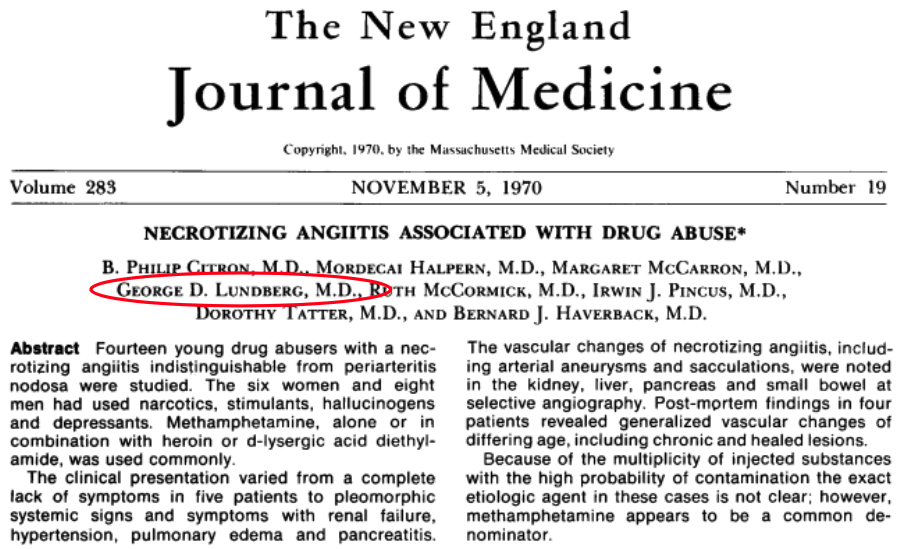
Case reports: structure
Abstract
Introduction
- What is the significance of the case/s?
Case description/s
- The patient’s presenting signs and symptoms; medical and social history; medications; results of exam and lab tests; differential diagnosis; final diagnosis; treatments and outcomes.
Discussion
Interpretations
What does/do the case/cases suggest?
Questions for further research
References
Tables/Figures
8.4 Others
Commentaries
Opinion pieces/editorials
Book reviews
Explanatory pieces/columns
参考资料
Books on writing:
On Writing Well,William Zinsser
The Elements of Style, Strunk and White
Sin and Syntax,Constance Hale
Books on scientific writing:
Mimi Zeiger. Essentials of Writing Biomedical Research Papers, McGraw Hill Professional
Successful Scientific Writing: A Step-by-Step Guide for the Biological and Medical Sciences, Matthews and Matthews
Guidebook to better medical writing, RobertIles
Scientific writing and communication, Angelika Hofmann.
Clinical Chemistry Guide to Scientific Writing: http://www.aacc.org/publications/clin_chem/ccgsw/Pages/default.aspx#
Articles on scientific writing:
Tips from journals:
Editorials:
- Friedman GD. Be kind to your reader. Am J Epidemiol. 1990 Oct; 132(4): 591-3.